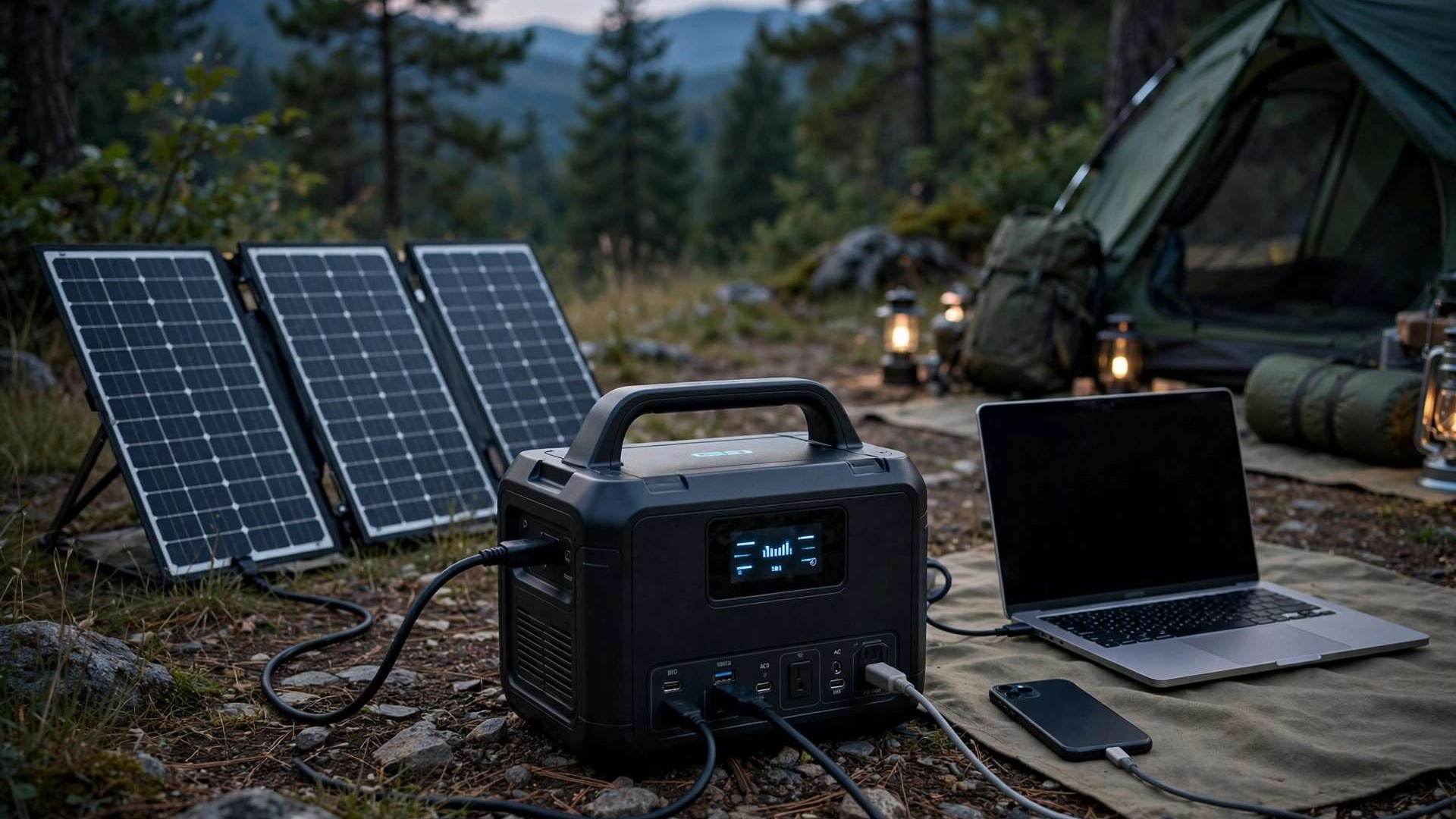
When the power goes out — or when you're deep in the woods with a dead phone — a portable power station is the modern answer. These silent, fume-free battery boxes have replaced noisy gas generators for most households and campers. In 2026 they're more powerful, longer-lasting, and cheaper per watt-hour than ever. Here's how to pick the right one.
What Size Do You Actually Need?
Capacity is measured in watt-hours (Wh). Rough rule of thumb: 200–500 Wh handles phones, laptops, cameras, and small lights for a weekend camping trip. 1,000–2,000 Wh keeps a home fridge, Wi-Fi router, and medical devices running through a multi-day blackout. Add up the wattage of what you'll power and multiply by the hours you need — then pick a station with 30% extra headroom. Also check the continuous output wattage: it must exceed your highest-watt device.
Battery Type Matters: Go LiFePO4
The single most important spec in 2026 is battery chemistry. LiFePO4 (lithium iron phosphate) batteries last 3,000–4,000 charge cycles — roughly 10 years of regular use — compared to about 800 cycles for older lithium-ion models. They're also more heat-stable and safer. Nearly every reputable brand has switched to LiFePO4 by 2026, so treat any station still using older chemistry as a hard pass.
Solar Charging & Useful Features
A power station paired with foldable solar panels becomes a self-refilling generator — perfect for off-grid trips and long outages. Look for a fast MPPT solar input (check the max solar wattage the unit accepts). Other features worth having: pass-through charging (use it while it charges), a clear display showing input/output watts, multiple port types (USB-C, USB-A, AC outlets, 12V car port), and an app with ECO mode that cuts standby drain during long storage.
Smart Buying Tips
Buy from brands with a real warranty (3–5 years) and local service, since these units are heavy to ship back. Charge your station to about 80% for storage and top it up every 3–6 months — batteries self-discharge over time. And don't size only for today: if you might buy an electric cooler or work remotely from a cabin later, buying one size up now is cheaper than replacing the whole unit.
A good portable power station is quiet insurance — you forget it exists until the lights go out, and then it's the best purchase you've ever made. Still deciding between models? Ask US AI's free chat to compare two stations spec by spec before you buy.