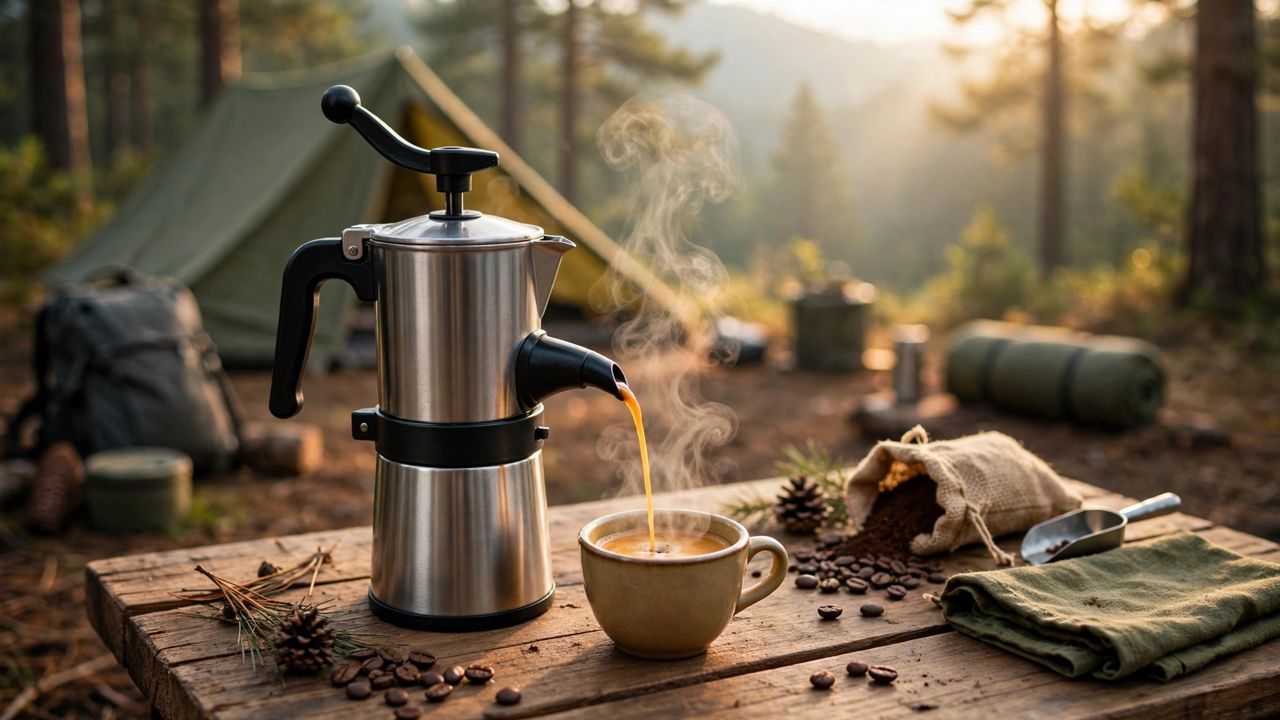
Real espresso used to need a $500 machine bolted to your kitchen counter. In 2026, palm-sized brewers pull genuine 9-bar shots on a mountain trail, in a hotel room, or at your desk. Here's what these gadgets can (and can't) do.
How Portable Espresso Works
Every model does the same job: force hot water through finely ground coffee at high pressure. Manual versions use a hand pump or lever — you supply the pressure. Electric ones heat the water and pump it themselves with a battery. Both produce real espresso with crema, not just strong coffee.
Manual vs Electric: Pick Your Style
Manual brewers ($40–$120) are lighter, cheaper, nearly indestructible, and work anywhere — but you bring your own hot water. Electric models ($100–$250) heat water themselves in 3–4 minutes and need almost no effort, at the cost of weight and battery charging. Some electric models also work with USB-C power banks, which is handy on long trips. Travelers and campers: go manual. Office and road trips: go electric.
What Actually Matters
Look for true 9-bar (or higher) pressure — that's the espresso standard. A pressurized basket is forgiving with pre-ground coffee; a non-pressurized basket tastes better but demands a good grinder. Check capacity (single vs double shot), easy disassembly for cleaning, and whether it works with capsules if that's your thing.
Tips for Great Shots Outdoors
Fresh beans and a fine, consistent grind make the biggest difference — pre-ground coffee goes stale fast. Pre-warm the brewer with hot water in cold weather, tamp level, and pull the shot within 25–30 seconds. Rinse the basket right after brewing; dried coffee grounds are a pain to clean on the trail.
A portable espresso maker won't replace your favorite café, but it kills the $5-a-day habit and upgrades every trip. For the price of a month of lattes, coffee anywhere is yours.