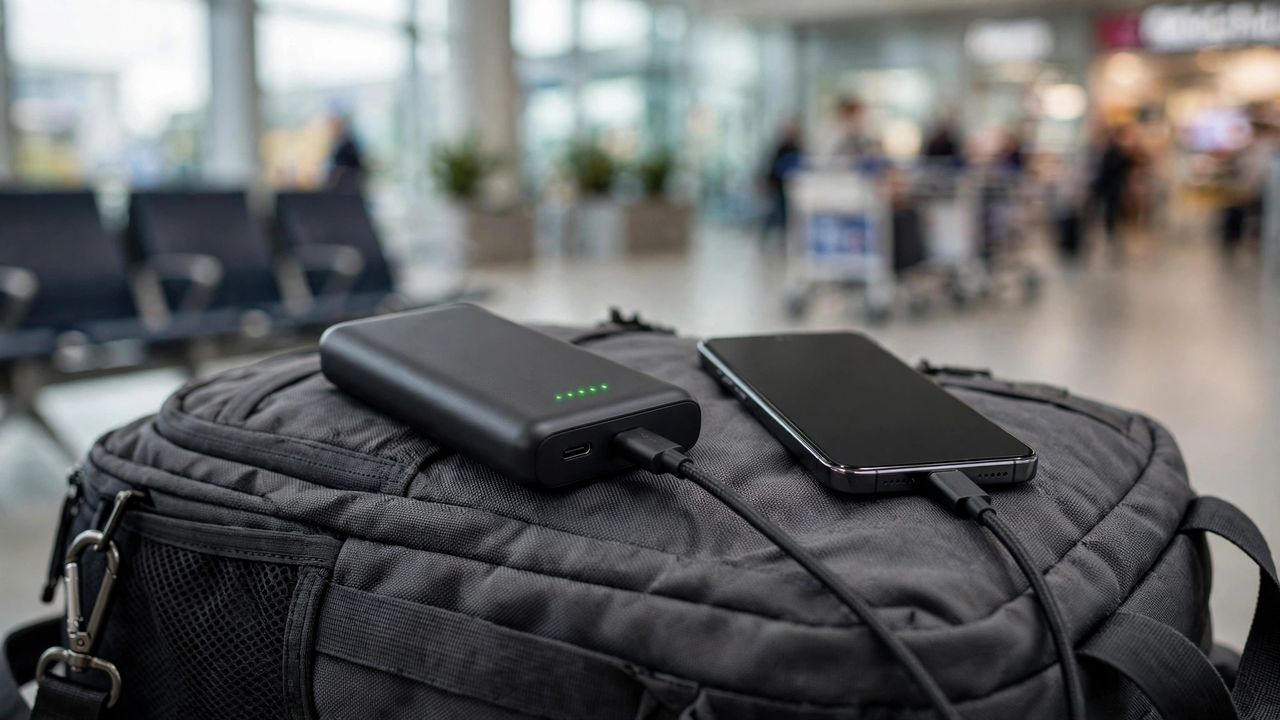
A dead phone at the worst moment is everyone's nightmare. In 2026 portable chargers are lighter, charge faster and even top up laptops — but with hundreds of models on the shelves, picking the right one is confusing. Here is a practical guide to choosing the best power bank for your needs.
1. Pick the right capacity
Capacity is measured in mAh. A 5,000 mAh bank charges a phone once; 10,000 mAh gives about two full charges; 20,000 mAh handles phones and tablets for days. For flights, keep in mind that airlines cap loose batteries at 100 Wh (roughly 27,000 mAh) — stay under that and you board without problems.
2. Check the charging speed
Slow charging wastes time. Look for USB-C Power Delivery (PD) of 20W or more for phones, and 65W+ if you want to charge a laptop. Also check that the power bank supports your phone's fast-charge protocol — PD, QC or PPS — so you actually get the advertised speed.
3. Ports, size and extras
Two ports (USB-C + USB-A) let you charge two devices at once. If you travel light, choose a slim 10,000 mAh model with a built-in cable so you never forget one. Handy extras: a digital battery display, airline-safe labeling, and pass-through charging so the bank charges your phone while it recharges overnight.
4. Safety and durability
Only buy chargers with real over-charge, short-circuit and temperature protection. A metal or reinforced body survives backpack abuse, and reputable brands honor warranties. Avoid suspiciously cheap no-name banks — a failing battery is a fire risk.
Match capacity to your routine: commuters do fine with 10,000 mAh, while frequent flyers and creators should go for 20,000+ mAh with fast PD charging. Choose once, charge everywhere, and never watch that red battery icon again.