Your Phone Is Enough to Begin
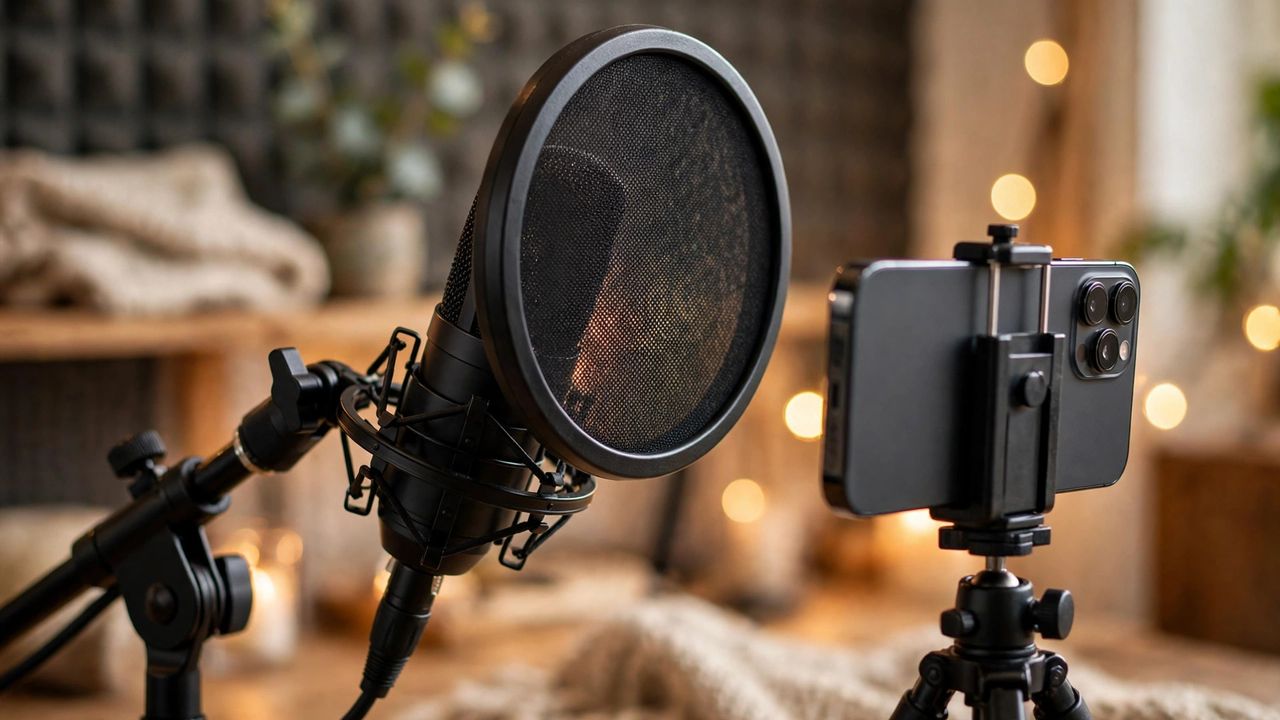
Forget expensive studios. A modern phone microphone in a quiet room sounds better than a pricey mic in an echoey kitchen. Record a test, listen on earphones, and notice the difference: room noise matters more than gear. A blanket over your head (seriously) or a closet full of clothes beats most "soundproofing" hacks.
The Minimum Viable Setup
When you're ready to upgrade, spend money in this order: a budget USB microphone, then cheap closed-back earphones, then a pop filter. Keep the mic a fist's width from your mouth, slightly off-axis to avoid harsh "p" sounds. Record at a consistent volume — shouting-to-whispering is an editing nightmare.
Structure Beats Scripting
Don't read a full script — you'll sound like a robot. Use a bullet-point outline: hook, three main points, call to action. Aim for episodes between 15 and 30 minutes at first; it's easier to edit, easier to stay consistent, and plenty for one strong idea.
Edit Lightly, Publish Everywhere
Free editors like Audacity or your phone's apps handle the basics: cut long pauses and mistakes, normalize volume, and add light noise reduction. Don't chase perfection — listeners forgive "um" but not boring. Then upload to a free podcast host, which distributes your RSS feed to Spotify, Apple, and everywhere else automatically.
Publish five episodes before judging anything. The first one teaches you; the fifth one is when the show actually starts.