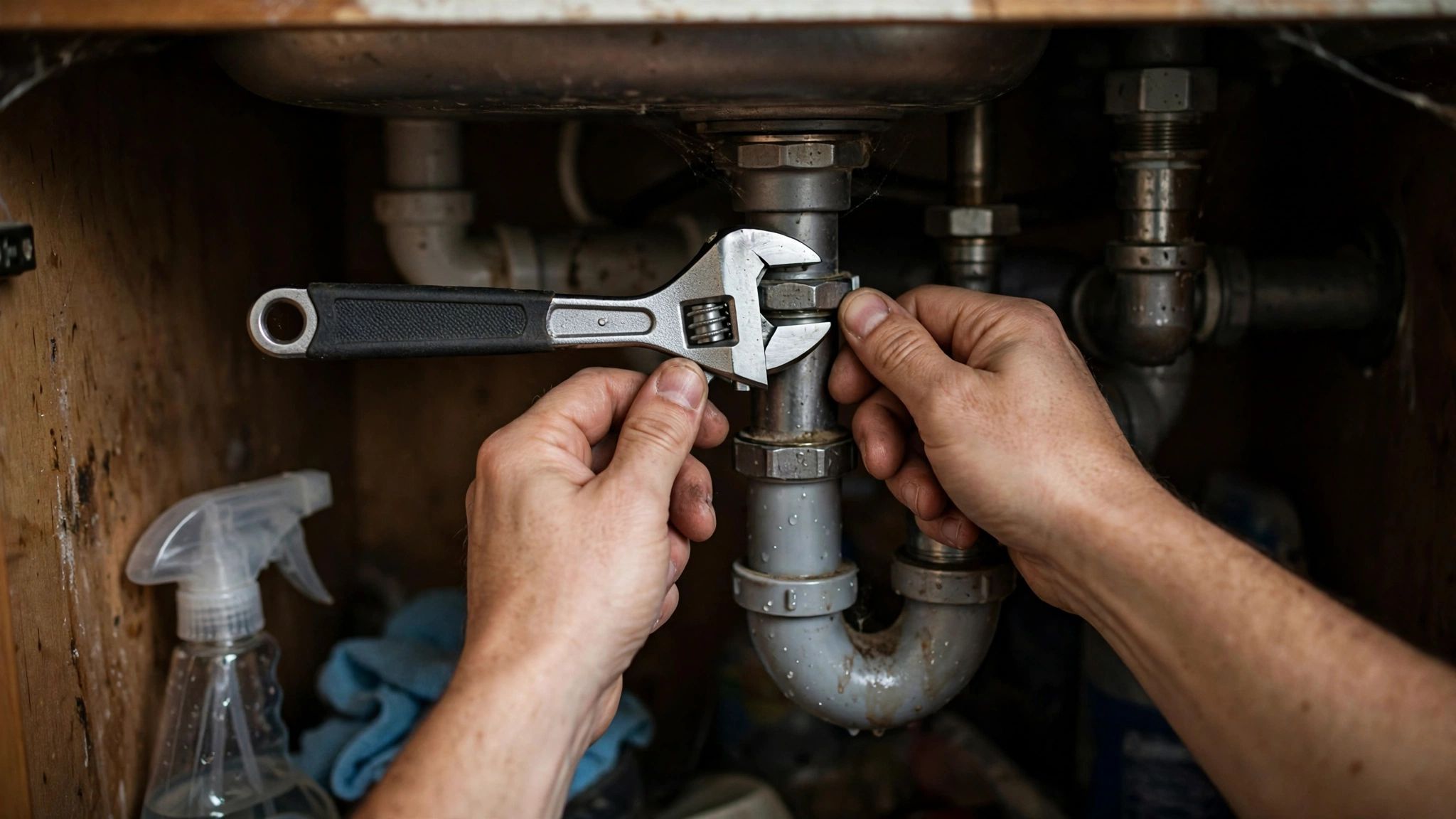
Plumbing emergencies feel scary, but most common problems — clogs, drips, running toilets — are simple fixes anyone can learn. A few basic skills save hundreds in plumber call-outs, and you will be surprised how satisfying it feels to fix things with your own hands. Know where your main water shut-off valve is before you need it — that knowledge alone prevents disasters.
Find Your Main Shut-Off Valve
Locate it today — usually near the water meter or where the main line enters your home. Turn it clockwise to stop all water in an emergency. In a burst-pipe emergency, seconds matter more than skill. Show every adult in the house where it is.
Unclog Drains Without Chemicals
Start with a plunger, then try a drain snake for stubborn clogs. A mix of baking soda, vinegar, and hot water clears mild buildup safely. Harsh chemical drain cleaners damage pipes and rarely fix the real blockage.
Fix a Dripping Faucet
Most drips come from a worn washer or cartridge. Turn off the water supply, disassemble the handle, and replace the worn part — replacements cost just a few dollars. A faucet dripping once per second wastes thousands of gallons a year.
Silence a Running Toilet
Lift the tank lid: usually the flapper is worn or the chain is tangled. A new flapper costs under ten dollars and installs in minutes with no tools. A running toilet can waste hundreds of gallons a day — fix it this weekend.
Five Tools Every Home Needs
Plunger, adjustable wrench, plumber's tape, drain snake, and a bucket. This small kit handles most household plumbing jobs. The right inexpensive tool beats the wrong expensive guess every time.
When to Call a Professional
Call a plumber for sewer smells, water stains on ceilings, no hot water, or anything involving gas lines. Knowing when to stop is the most valuable DIY skill of all.