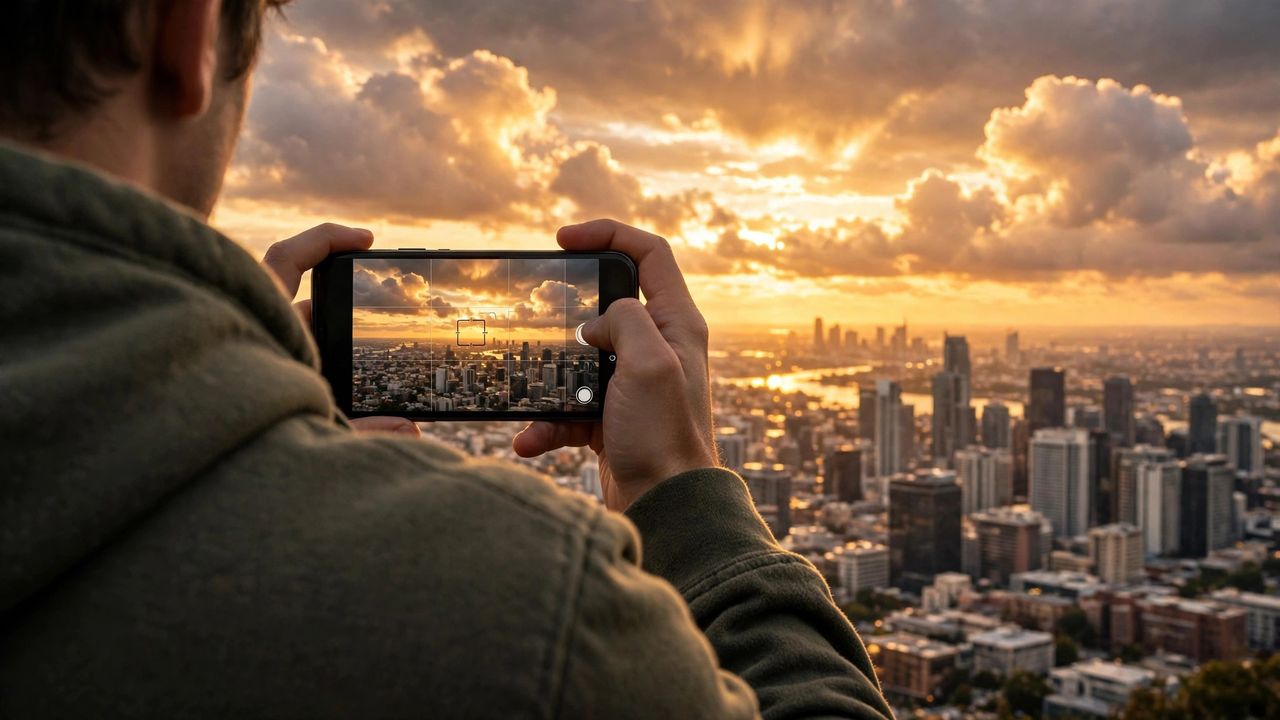
The camera in your pocket is more powerful than professional gear from a decade ago — but most people never touch the settings that unlock it. Pro phone photographers in 2026 do not have better phones; they have better habits. A few small changes to how you shoot will transform flat, dull snapshots into photos you actually want to print and share.
Shoot in the right light, every time
Light is 80 percent of a great photo. The golden hour — the hour after sunrise and before sunset — gives warm, flattering light that makes everything look better. Indoors, move your subject near a window and turn off overhead lights, which create harsh shadows. Never shoot with a bright window directly behind your subject. Backlighting blows out the background and turns faces into silhouettes; reposition so the light falls on the face instead.
Lock focus and exposure like a pro
Tap the screen to focus, then long-press to lock focus and exposure — this stops the camera from constantly adjusting while you frame the shot. Once locked, slide the exposure control down slightly for richer colors and less washed-out skies. Lock exposure slightly darker than the auto setting for most outdoor shots. It is easier to brighten shadows later in editing than to recover blown-out highlights.
Turn on the settings pros use
Enable the grid lines to follow the rule of thirds, turn on HDR for high-contrast scenes, and shoot in your phone's high-resolution or RAW mode when you plan to edit. Burst mode is your friend for moving subjects — hold the shutter and pick the sharpest frame. Keep your lens clean: a quick wipe on your shirt fixes most blurry photos. Smudged lenses are the number-one cause of hazy phone photos, and the fix takes two seconds.
Edit with a light touch
You do not need expensive editing apps. Start with your phone's built-in editor: straighten the horizon, crop out distractions, bump shadows slightly, and add a touch of warmth. The goal is enhancement, not transformation. Stop editing when the photo looks like what your eyes saw. Over-saturated, over-sharpened photos scream "filter" and age badly; natural edits look timeless and professional.
Great phone photography is not about gear — it is about light, focus, and a minute of editing. Practice these tips for a week and compare your results to your old photos; the difference will surprise you. Your 2026 camera roll is about to get a lot more impressive, and you never needed a new phone for that.