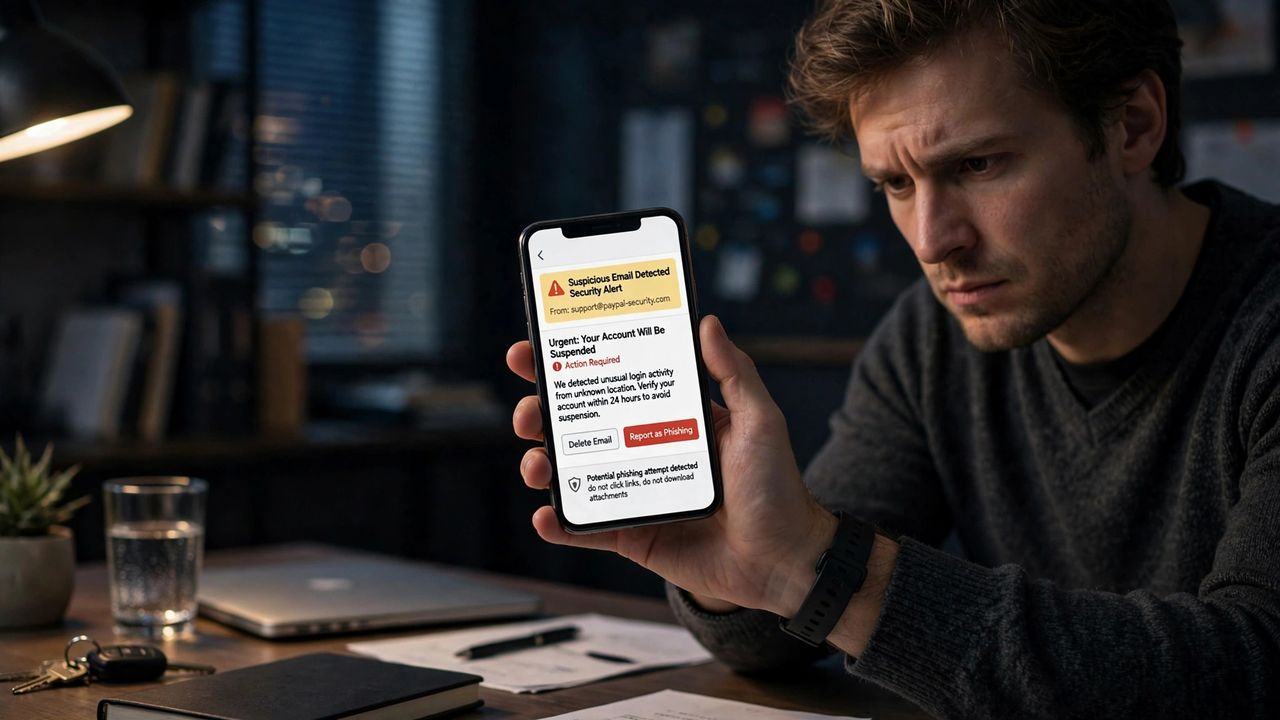
Phishing in 2026 isn't broken English from a stranger — AI writes perfect messages, fake login pages look identical to the real thing, and scams arrive by email, SMS, and QR codes. The good news: once you know the tricks, they become easy to spot.
1. Learn the classic warning signs
Scammers create urgency: "Your account will be locked in 24 hours!" Always check the sender's real address — hover before you click. Watch for small misspellings in links, generic greetings ("Dear customer"), and attachments you didn't ask for. Legit companies never ask for passwords by email.
2. Beware QR codes and delivery scams
Fake QR codes on parking meters and restaurant menus now steal payment details. Never scan a QR code that's been stickered over another one. "Your parcel is held" texts with a link are almost always scams — go to the courier's official site yourself instead of tapping the link.
3. What to do if you clicked
Don't panic — act fast. If a download started, disconnect, change your password immediately from the official site, and turn on 2FA. If you entered card details, call your bank to freeze the card. Report the message to your email provider and to your country's anti-fraud agency.
4. Build a scam-proof habit
Pause before every unexpected link or payment request — even a 30-second pause breaks most attacks. Keep your phone and apps updated, and tell older family members about new scam types: awareness is the best free protection.
Phishing works because it rushes you. Slow down, verify through official channels, and report what you find. The scammer's best weapon is your haste — take it away and the scam falls apart.