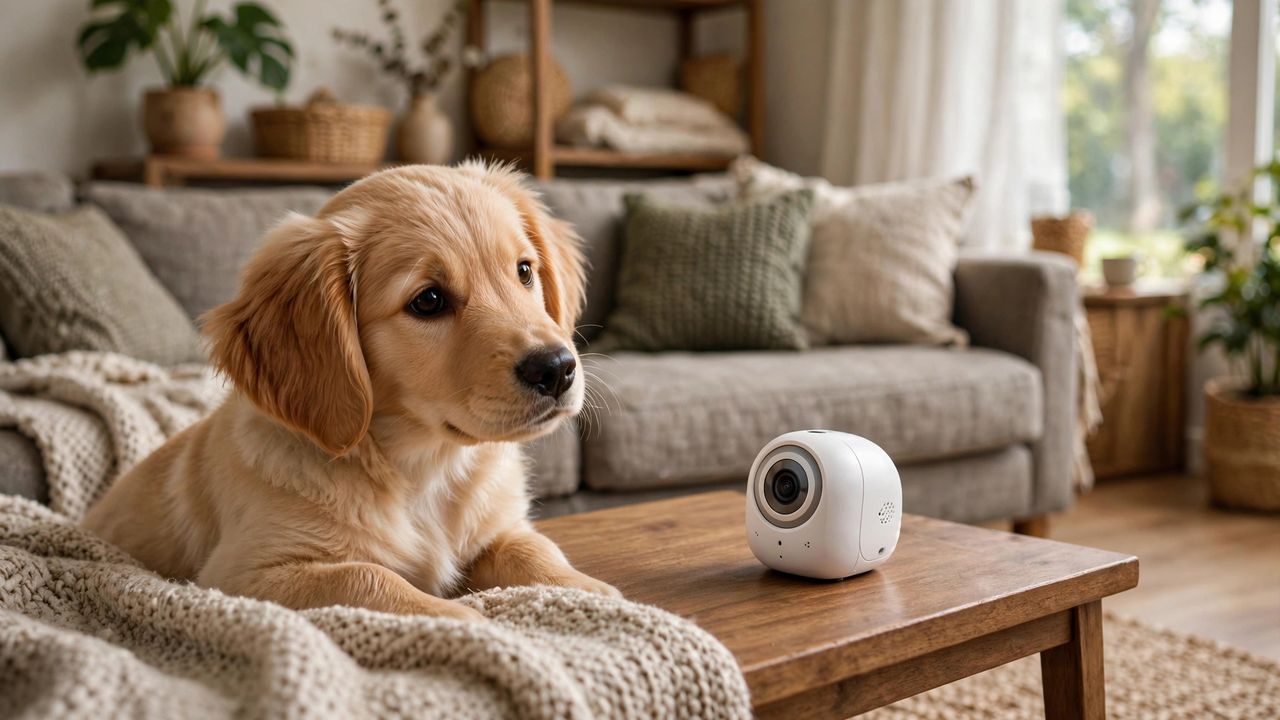
Leaving your pet home alone is never easy — but in 2026 you don't have to guess what they're up to. Modern pet cameras let you watch a live stream from your phone, talk to your dog or cat with two-way audio, and even toss them a treat from your desk. Whether you're at work, on vacation, or just out for groceries, the right camera turns separation anxiety (yours and theirs) into a fun check-in. Here's how to pick one that actually fits your pet and your home.
Video quality and night vision matter most
A blurry stream defeats the whole purpose, so look for at least 1080p resolution with a wide-angle lens that covers the whole room. Pets are most active at dawn and dusk — and plenty of mischief happens at night — so real infrared night vision is essential, not a gimmick. Some cameras now track movement automatically and follow your pet around the room. Prioritize clear night vision and a wide field of view over flashy extras — you'll actually see your pet, not a dark blur.
Two-way audio and treat dispensers keep pets calm
Two-way audio lets you soothe an anxious dog with your voice or call your cat away from the curtains. Treat-tossing cameras go further: you load bite-size treats and fling them remotely, turning check-ins into a game. Just be cautious — a very shy pet may find a disembodied voice spooky at first, so introduce the feature slowly. Use two-way audio for calming reassurance, and treat dispensers as a reward system — not a replacement for real interaction when you get home.
Watch out for subscription traps and storage
Many cameras work fine for live viewing with no subscription, but saving clips or getting smart alerts often costs $5–$10 a month. Check what the free tier includes before you buy — some brands lock motion detection history behind a paywall. Also look for local storage options like a microSD slot if you'd rather avoid monthly fees entirely. Add up the subscription cost over two years before buying — a cheap camera with an expensive plan costs more than a pricier camera with free storage.
Placement and safety tips for a worry-free setup
Mount the camera where your pet actually spends time — near their bed, not the front door. Keep cords tucked away or use a battery-powered model so a curious chewer can't reach them. If you share your home, tell family members (or roommates) about the camera to respect everyone's privacy. Test the app on your phone first: alerts should arrive in seconds, not minutes. Place the camera at your pet's eye level near their favorite spot — a camera aimed at an empty hallway tells you nothing.
The best pet camera is the one you'll actually open every day. Pick a model with clear video, reliable night vision, and features that match your pet's personality — a nervous rescue dog needs soothing audio, while a bored young cat might love treat games. Once it's set up, checking in becomes the best part of your workday.