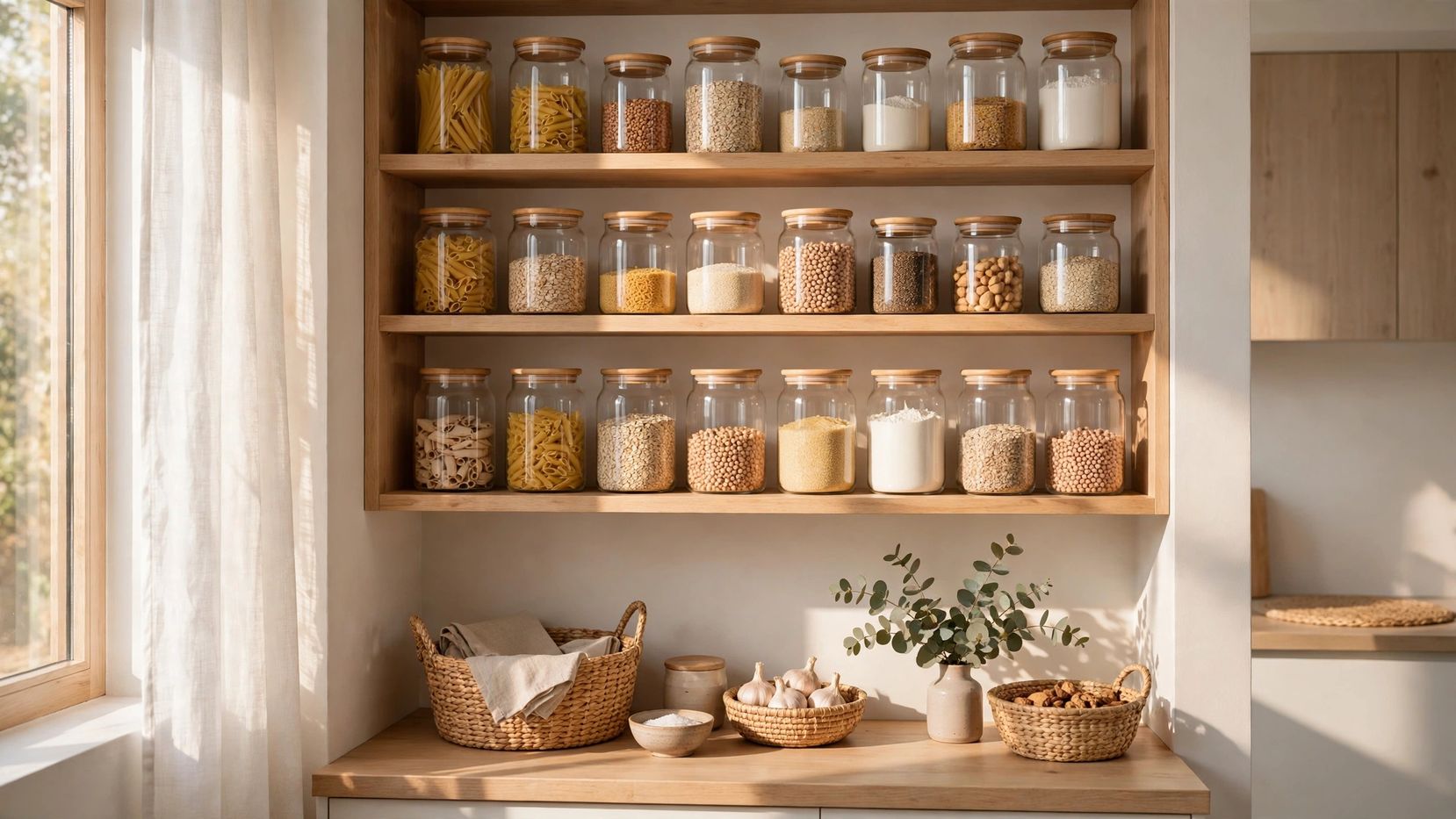
An organized pantry saves money, cuts food waste, and makes cooking faster — you stop buying duplicates of what you already own and always know what dinner options you have. Start by emptying everything and tossing expired items; you cannot organize clutter, so decluttering always comes first.
Zone Your Pantry Like a Store
Group items by use: breakfast, baking, snacks, canned goods, spices, and backstock. Zones beat alphabetizing — your brain shops by meal, not by letter. Keep daily items at eye level and heavy bulk goods low.
Clear Containers You Can See Through
Decant flour, rice, pasta, and cereal into uniform airtight containers so you instantly see what is running low. Airtight containers also keep bugs out and freshness in — worth every penny. Square containers waste less shelf space than round ones.
Label Everything (Even If You Think You Will Remember)
Labels with names and expiry dates prevent mystery jars and wasted food. Label the expiry date on the lid — it is the detail everyone forgets. Chalk labels or erasable markers let you reuse containers endlessly.
Use Vertical Space and Door Backs
Tiered risers, lazy Susans, and over-door racks turn dead space into storage. A lazy Susan for oils and vinegars ends the "shove and forget" cycle in deep corners. Stackable bins double capacity on tall shelves.
The First-In-First-Out Rule
Place new groceries behind older ones so nothing expires unnoticed. Front-loading older items is the simplest food-waste hack there is. A small "use first" basket for nearly-expired items keeps them visible.
Maintain in 5 Minutes a Week
A quick weekly scan — toss expired, wipe spills, return strays to their zones — keeps the system alive for years. Organization fails from neglect, not from bad systems — schedule the five minutes. Reassess zones seasonally as your cooking changes.