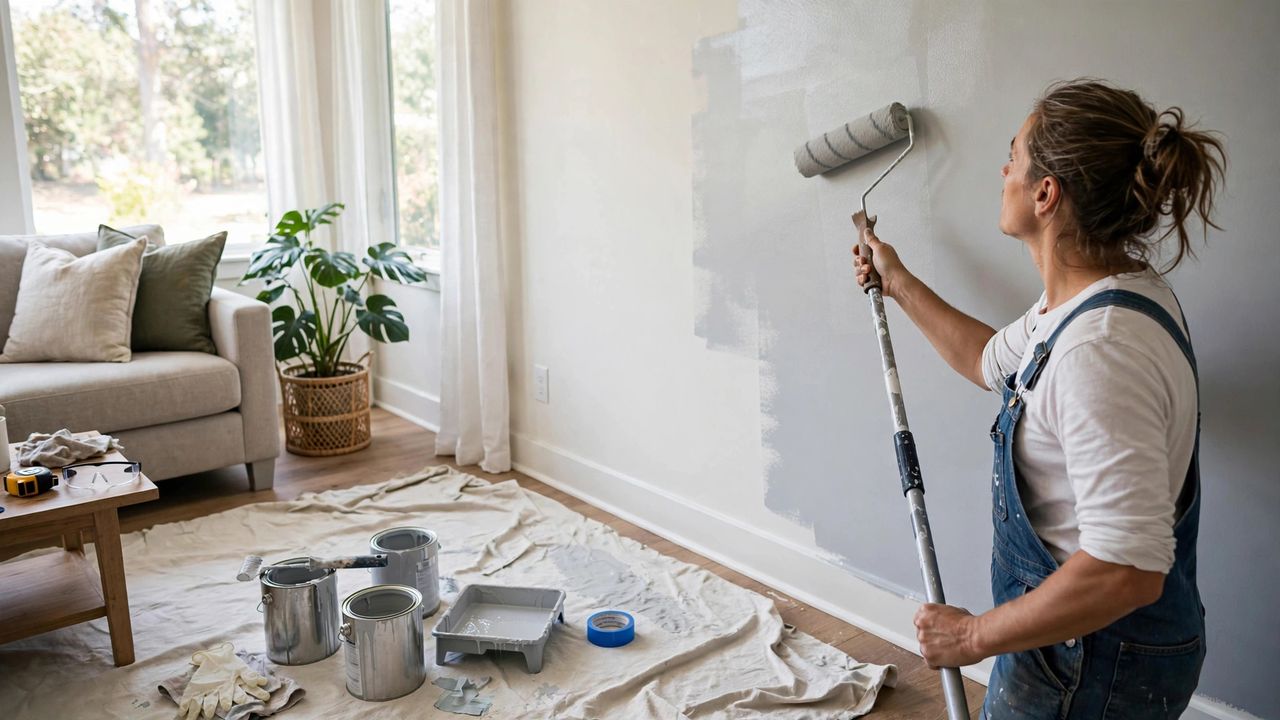
The difference between a DIY paint job and a professional one is rarely the paint — it is the preparation. Pros spend about 70% of the job on prep and only 30% painting. Copy their sequence and your first room can look like a contractor did it.
Prep Is the Job: Clean, Patch, Tape, Cover
Start by clearing the room and moving the rest to the center, covered with drop cloths. Fill nail holes and cracks with spackle, sand smooth once dry, and wipe walls with a damp cloth so dust does not end up in your finish. Use quality painter's tape on trim, ceilings, and outlets — cheap tape bleeds and peels paint off. Lay canvas drop cloths, not plastic sheets that slide underfoot.
Buy the Right Tools (Not the Cheapest)
A 2.5-inch angled brush for cutting in, a 9-inch roller with 3/8-inch nap, a tray, and an extension pole cover 95% of rooms. Cheap brushes shed bristles into your paint and leave streaks — a good brush is the cheapest upgrade in the whole project. Buy a small sample first and paint a large test swatch; colors look darker and warmer on full walls than on a chip.
Cut In First, Then Roll
With the angled brush, paint a 2–3 inch border along ceilings, corners, and trim — this is "cutting in." Then roll the wall while the edge is still wet, working in W-shaped strokes so sections blend seamlessly. Always maintain a "wet edge": overlapping dry paint creates visible lap marks. Two thin coats always beat one thick coat.
Timing, Drying, and the Finishing Touches
Wait the full recoat time on the can (usually 2–4 hours) before the second coat, and ventilate the room. Remove painter's tape while the final coat is slightly tacky, pulling at a 45-degree angle for sharp lines. Let everything cure for a day before hanging things, and save leftover paint (labeled with room and color code) for future touch-ups.
Fix the Classic Beginner Mistakes
Drips? Sand them flat once dry and repaint the spot. Roller marks mean you overworked drying paint — keep a wet edge and stop re-rolling. Paint bleeding under tape usually means the tape was not pressed down firmly — run a putty knife along the edge before painting. Stuck with the wrong color? Live with it for 48 hours before repainting; wet paint always looks different than the final result.