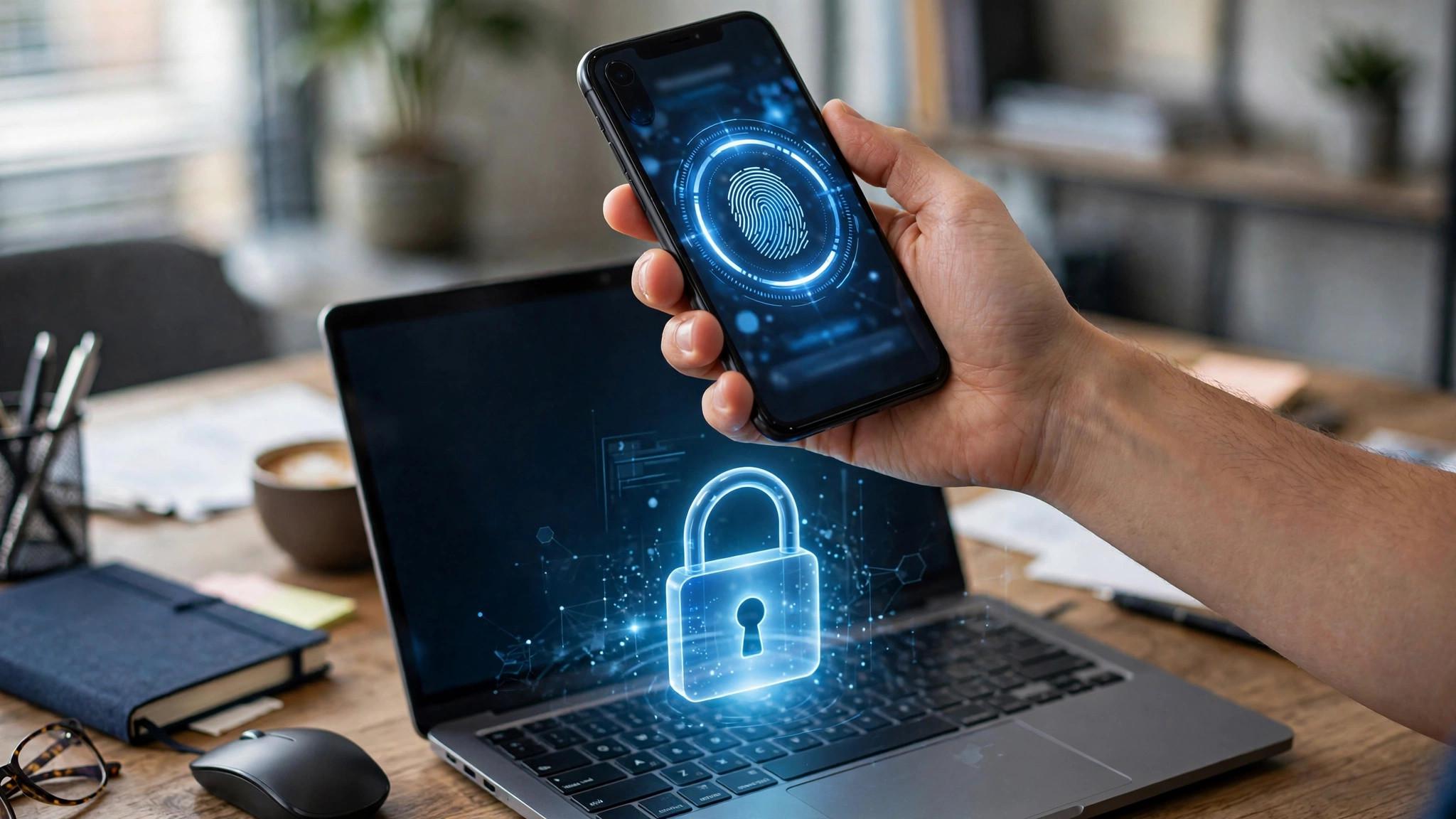
Banking from your phone is convenient — and that convenience is exactly what scammers exploit. Most online banking fraud does not break the bank's security; it tricks you into handing over access yourself. These habits close the gaps criminals look for, and none take more than a few minutes.
1. Lock down your banking app
Use a unique, strong password for your bank — never reused anywhere — and turn on biometric login plus two-factor authentication. Set the app to log out automatically after a few idle minutes, and download it only from your phone's official store, never from a link in a message.
2. Recognize phishing and scam calls
The golden rule: your bank will never ask for your full password, PIN, or one-time code by phone, text, or email. Urgent threats ("your account will be frozen!") are the classic pressure tactic. If a call feels off, hang up and dial the number on your bank card yourself.
3. Use transaction alerts as an early warning
Turn on instant notifications for every login, transfer, and card purchase. An alert about a transaction you did not make is often your first — and fastest — warning of fraud. Check your statements monthly at minimum; catching a small test charge early can stop a larger theft later.
4. Be careful on public WiFi and shared devices
Never log into your bank on public WiFi without a VPN, and never use a shared computer for banking. Keep your phone's operating system updated — security patches close holes attackers target. At ATMs, cover the keypad and check for anything loose around the card slot.
5. Act fast if something looks wrong
See an unfamiliar transaction? Call your bank immediately using the number on your card — speed matters because banks can often reverse recent fraud. Freeze or lock your card in the app right away, change your password, and file a report. In most countries, reporting quickly also strengthens your legal protection.
6. Add extra layers: virtual cards and limits
Many banks offer virtual card numbers for online shopping — a number you can freeze or limit without touching your real card. Set low daily transfer limits and raise them temporarily when needed. These small frictions stop criminals more than they slow you down.