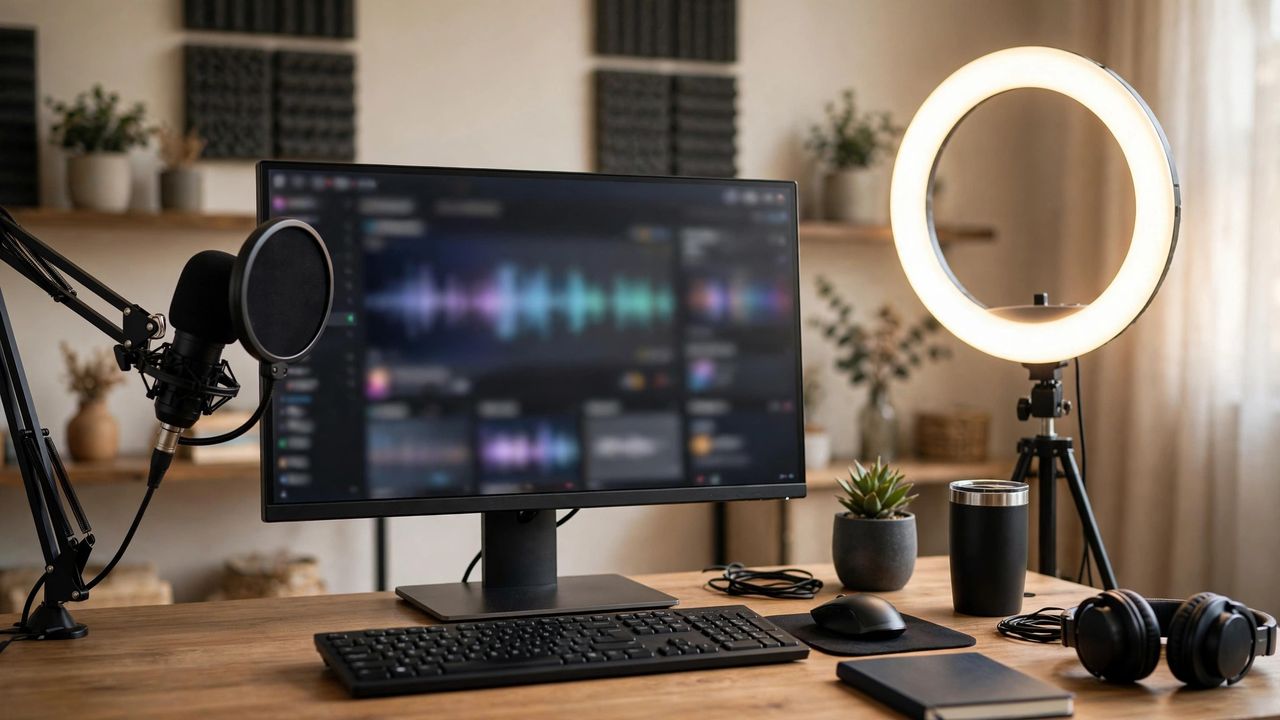
OBS Studio is free, open-source, and powers everyone from Twitch streamers to YouTube creators to corporate webinars. But the first launch is overwhelming — scenes, sources, encoders, bitrates. This 2026 beginner's guide cuts through the jargon and gets you from installation to a polished recording or live stream with settings that actually work.
Install and Run the Auto-Configuration
Download OBS from obsproject.com and run the Auto-Configuration Wizard first — it tests your hardware and picks sensible base settings for recording or streaming. Choose your main use case honestly: streaming needs stable upload bandwidth, recording needs disk space and CPU. Do not skip the wizard; its defaults beat most beginners' manual guesses. Run the Auto-Configuration Wizard before touching any setting — it prevents 90% of beginner performance problems.
Build Scenes and Sources
Scenes are layouts; sources are what fills them. Create a "Main" scene with a display capture or game capture source, add your webcam as a video capture device in the corner, and add your microphone as an audio input. Make a second "Be Right Back" scene with an image and text for breaks. Switch scenes with one click or hotkeys during streams. Two scenes — Main and Be Right Back — cover nearly every beginner streaming situation.
Fix Audio Before Anything Else
Viewers forgive mediocre video but abandon bad audio instantly. Set your microphone as the default input, add a noise suppression filter to kill keyboard and fan noise, and add a limiter so loud laughs do not distort. Test levels: your voice should peak in the yellow zone, never red. Record a 30-second test and listen on headphones. Good audio matters more than good video — fix your microphone chain before upgrading your camera.
Settings for Smooth HD Output
For recording: 1080p at 60 fps with the hardware encoder (NVENC or AMF) gives crisp files without melting your CPU. For streaming to Twitch or YouTube: 1080p at 6000 kbps works on most connections — test your upload speed first and use 75% of it. Record in MKV format to survive crashes, then remux to MP4 inside OBS afterward. Use your GPU's hardware encoder — it delivers smooth 1080p60 with a fraction of the CPU load of software encoding.
OBS rewards one afternoon of setup with years of free, professional-grade recording and streaming. Configure it today, hit Start Recording, and you are officially a creator.