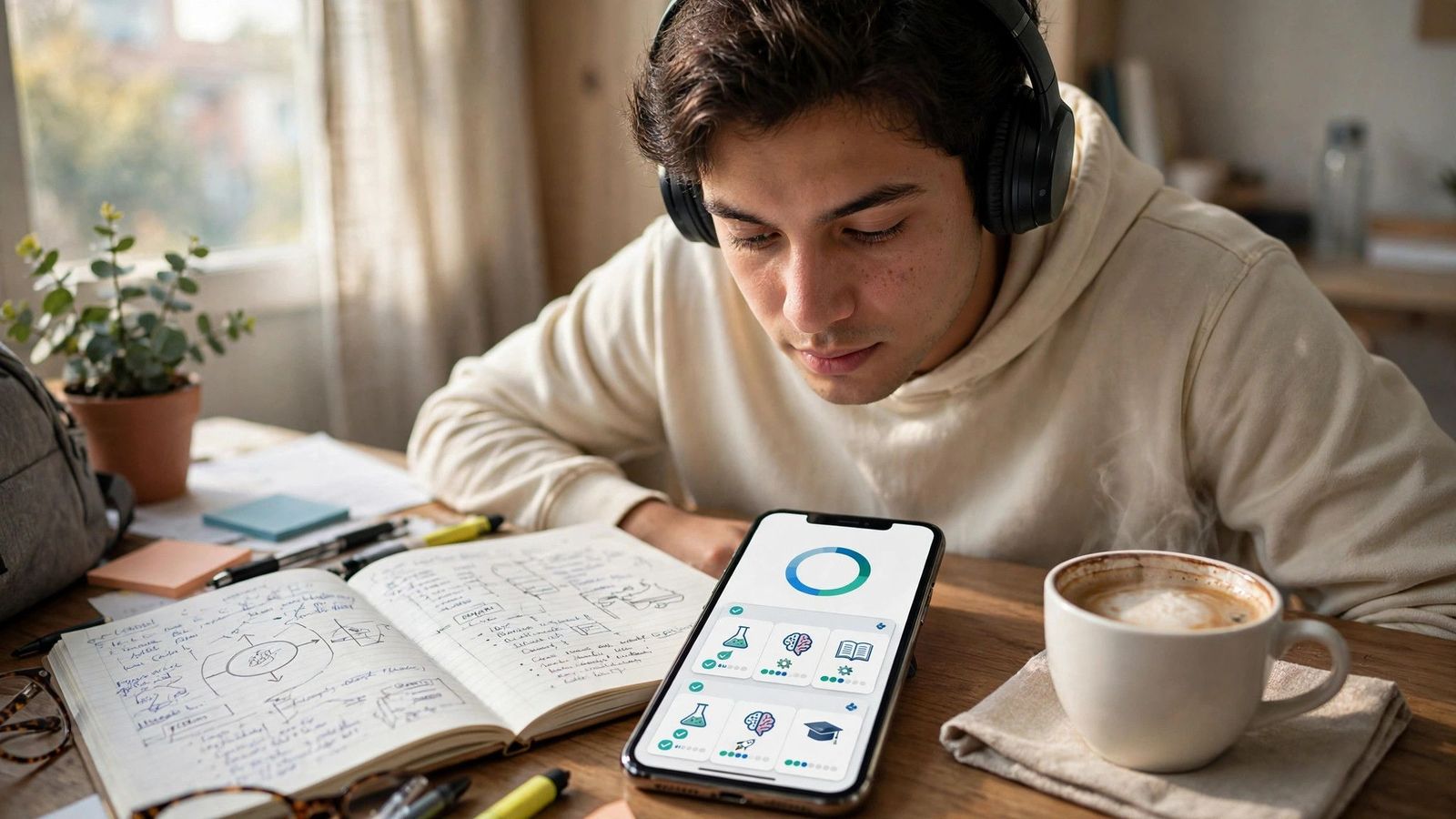
'I don't have time to learn' is usually 'I don't have 3 free hours.' Micro-learning flips the model: 15 focused minutes a day builds real skills faster than occasional marathon sessions. Here is the science and the system.
Why Small Beats Big
Spaced repetition beats cramming — your brain consolidates learning during sleep, so daily sessions compound. 15 minutes has zero activation energy: you will actually start. Attention stays sharp for short bursts; hour three of a binge is mostly wasted. Studies show distributed practice improves retention by up to 2x versus massed practice.
Design Your 15 Minutes
One skill, one micro-goal per session: 'learn 10 Spanish verbs' beats 'learn Spanish'. Use dead time: commute, queues, coffee brewing. Apps help: flashcards (Anki), language (Duolingo), coding (bite-size challenges). End each session by writing one sentence about what you learned — recall cements it.
The Compounding Effect
15 minutes × 365 days = 91 hours a year — a university course's worth of study time. Track streaks: a simple calendar with X marks is weirdly motivating. Review weekly: 15 minutes on Sunday revisiting the week's notes multiplies retention. Miss a day? Never miss twice — the streak mindset matters more than perfection.
What to Learn This Way
Micro-learning suits languages, coding, music theory, drawing, and professional skills perfectly. It suits deep creative work less well — writing a novel needs longer sessions. Stack skills: 15 min language + 15 min coding = two growing skills. After 90 days, reassess: keep what compounds, drop what doesn't.
You don't need more time — you need smaller sessions. Start tonight: 15 minutes, one skill, one tiny goal. A year from now, you'll wish you had started today.