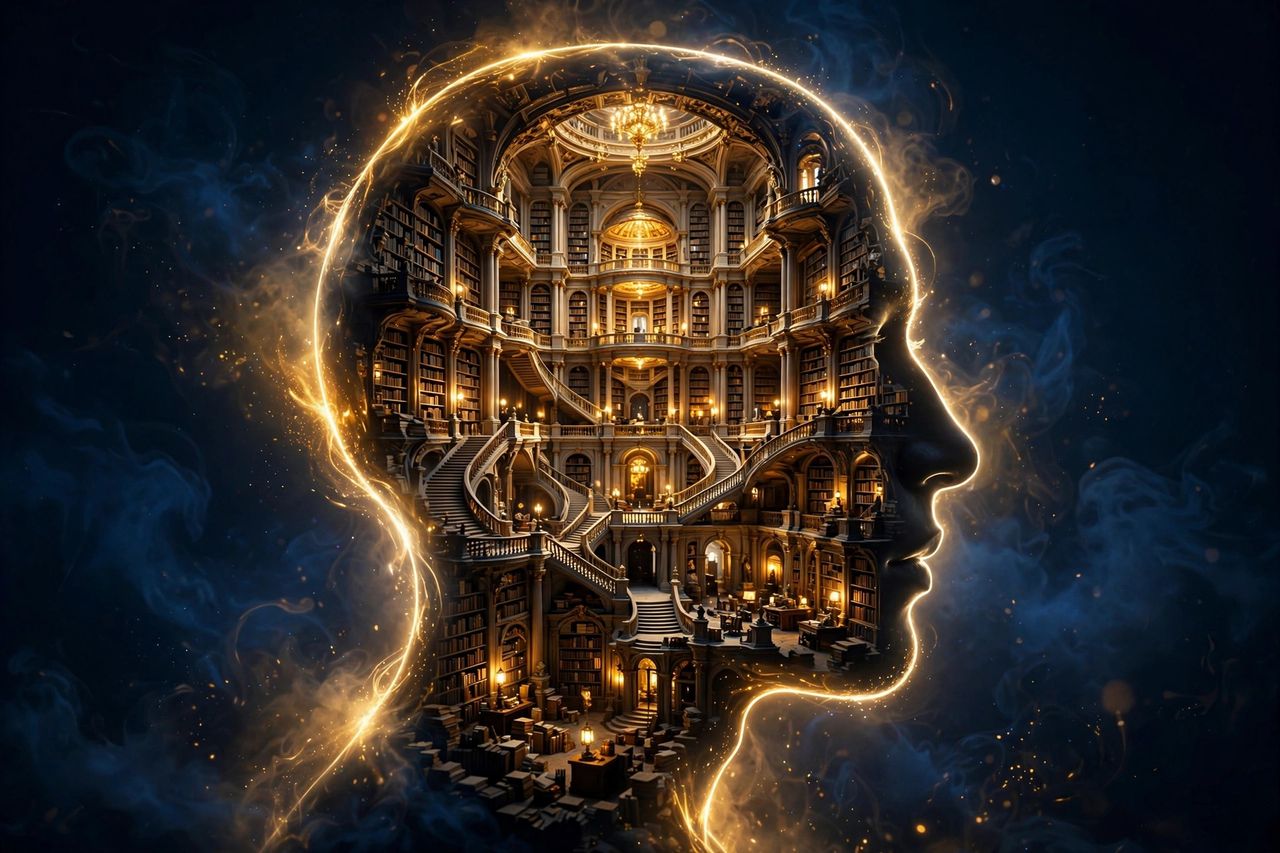
Memory champions can memorize hundreds of digits in minutes — and they don't have photographic brains. They use the memory palace technique, a 2,500-year-old method that turns any list into a vivid mental walk through a familiar place. It works for students, professionals, and anyone tired of forgetting names. Here's how to build your first one.
How the Memory Palace Works
Your brain is excellent at remembering places and images but mediocre at raw facts. The memory palace exploits that: you pick a location you know intimately — your home, your daily commute — and mentally place each thing you want to remember at specific spots along a fixed route. To recall the list, you simply walk the route in your mind and pick up each item. The weirder and more visual the image, the stickier the memory.
Step 1: Choose Your Palace
Start with your own home. Define a clear route with 10 distinct stops: front door, hallway, living-room sofa, coffee table, kitchen counter, and so on. Write the route down and use it in the same order every time — consistency is what makes recall reliable. For bigger jobs you can use your office, a childhood home, or even a favorite video-game map.
Step 2: Create Ridiculous Images
Suppose you need to remember a shopping list: milk, eggs, bread, coffee, batteries. Place a giant milk carton flooding the front door, eggs hatching on the sofa, a bread loaf wearing sunglasses on the coffee table. Exaggerate size, add movement and emotion — boring images fade. Action and absurdity are your superpowers here.
Step 3: Walk and Review
Walk the route mentally forward, then backward. Review after 10 minutes, then an hour, then a day — spaced repetition locks it in. Most beginners memorize a 10-item list on their first try and are stunned it worked. Scale up gradually: one palace per subject keeps topics from blurring together.
The memory palace feels strange for about fifteen minutes — then it feels like a superpower. Try it on tomorrow's to-do list tonight. Ask US AI's free chat for practice exercises tailored to exams, speeches, or languages.