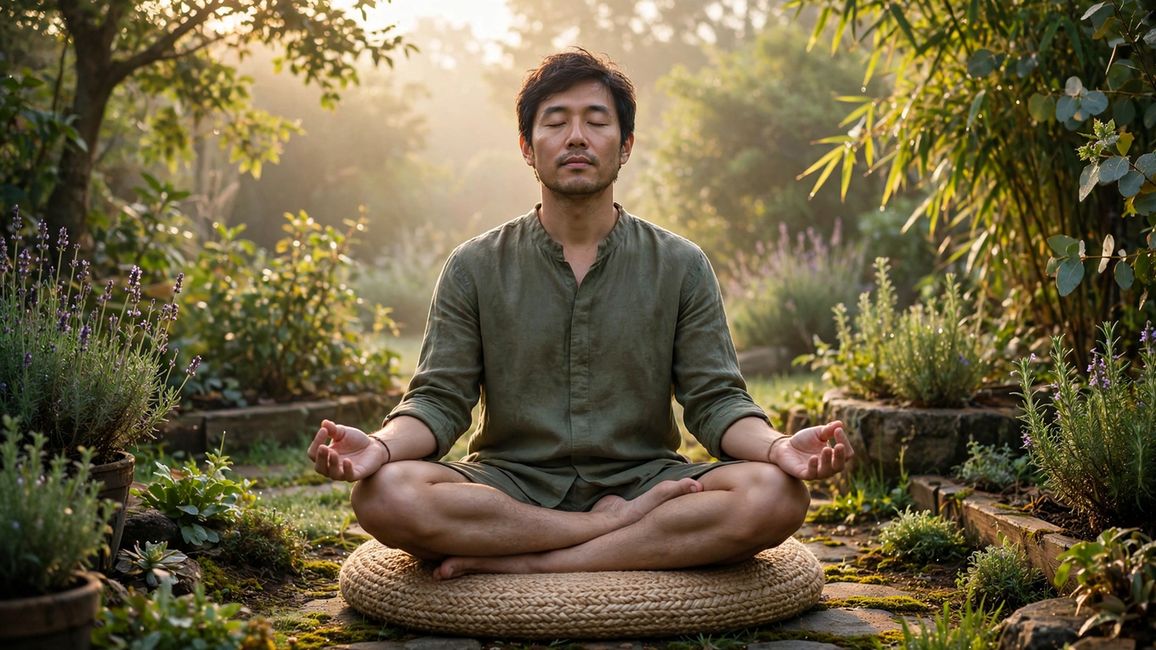
Meditation is not about emptying your mind — it is about noticing your thoughts without being dragged along by them. Ten minutes a day measurably reduces stress and improves focus within weeks. You need no special equipment, no experience, and no belief system — just ten quiet minutes. You cannot fail at meditation; every return to the breath is a rep.
Set Your Time and Place
Meditate at the same time daily — mornings work best before the day's noise begins. A quiet corner, a cushion, and your phone on silent are enough. Set a gentle alarm so you are not watching the clock during your sit. Consistency of place builds the habit faster than perfect silence does.
Sit Comfortably
Sit with a straight but relaxed spine — a chair, cushion, or the floor all work. Rest your hands on your knees or lap. Comfort enables stillness; pain guarantees distraction. Never force yourself into the lotus position.
Anchor on the Breath
Breathe naturally and follow the sensation at your nostrils or the rise of your belly. Count breaths from 1 to 10, then restart. The breath is always available — it is the perfect beginner's anchor.
Handle Wandering Thoughts
Your mind will wander — that is normal, not failure. Notice it kindly and return to the breath without judgment. Smiling slightly can ease tension and make the session feel lighter. Noticing you drifted IS the meditation working. Even experienced meditators wander constantly.
Try Guided Sessions
Free meditation apps and online guided sessions give structure when sitting alone feels hard. Start with 5 to 10 minute sessions and lengthen gradually. Guidance is training wheels — useful now, optional later.
Build the Habit
Link meditation to an existing habit — right after brushing your teeth, before your morning coffee. Track your streaks; missing one day is fine, missing two is the danger zone. Ten minutes daily beats an hour on Sundays.