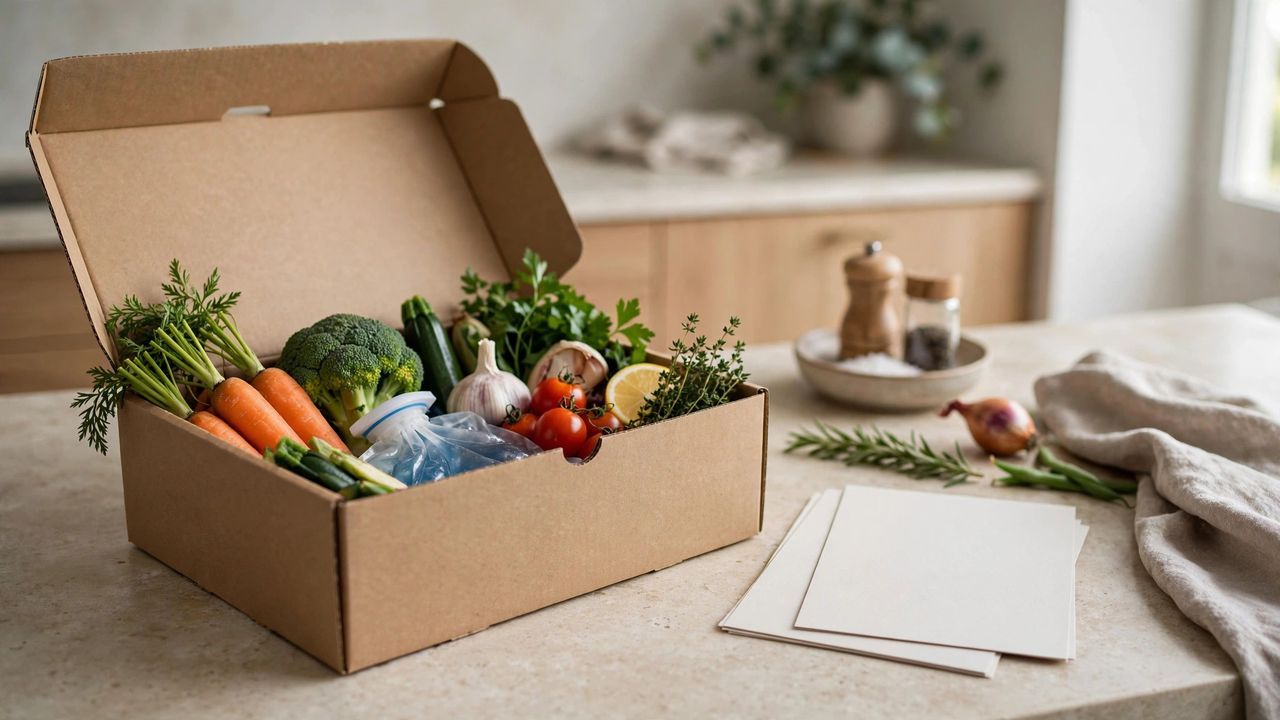
Meal kit ads promise savings, but the math surprises most shoppers. In 2026, a meal kit serving costs roughly double the same home-cooked meal from groceries. Yet millions keep subscribing. The real question is not which is cheaper per serving, but which one saves you money in your actual life.
Compare the true cost per meal
A typical meal kit charges eight to twelve dollars per serving, while cooking the same dish from groceries costs three to five. The gap comes from packaging, delivery, and recipe development. However, groceries require buying full-size ingredients, so the comparison only holds if you actually use everything you buy. Per serving, groceries win by a wide margin — but only if your food does not end up in the trash. Track your real grocery waste for a month before deciding.
Factor in waste, time, and takeout
The average household throws away a shocking share of fresh groceries. Meal kits eliminate waste almost entirely with pre-portioned ingredients. More importantly, a kit sitting in your fridge prevents the thirty-dollar takeout order on tired evenings. Value your cooking time honestly: kits cut prep and planning to nearly zero. Meal kits often win on total spending because they replace expensive takeout, not because they beat groceries per serving.
Know which households benefit most
Small households of one or two people waste the most groceries and benefit most from kits. Confident cooks who meal-plan weekly usually save more with groceries. Beginners learning to cook gain skills faster with guided kits. Families with picky eaters often find kits too rigid. The winner depends on your household: small and busy favors kits, large and organized favors groceries.
Try the hybrid approach
You do not have to choose forever. Many people use kits two or three nights a week and cook from groceries the rest. Rotate between kit services using introductory discounts, then pause subscriptions freely. Keep pantry staples from the grocery store and let kits handle the fresh variety. A hybrid routine captures kit convenience and grocery savings at the same time.
Run the numbers for your own household for one month: kit cost plus remaining groceries versus full grocery spending plus takeout. The answer is personal, and the math will tell you which side you are on.