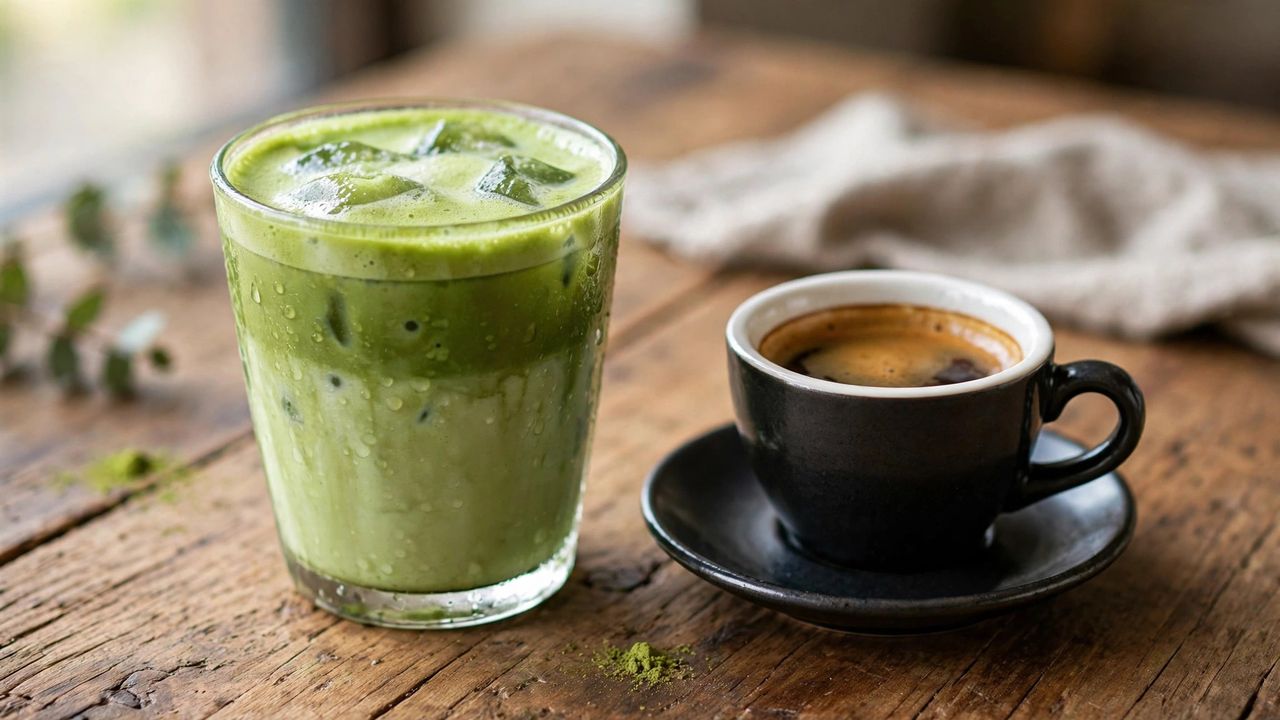
Coffee is the world's productivity fuel; matcha is its calm, green rival. Both contain caffeine and antioxidants, but they deliver energy in completely different ways — and one may suit your body far better than the other. Here is an honest comparison to help you choose.
The Energy Difference: Spike vs Wave
Coffee hits fast and hard — peak alertness in 30–45 minutes, then the familiar crash for sensitive drinkers. Matcha's caffeine comes bound with L-theanine, an amino acid that smooths absorption into a 4–6 hour wave of calm focus without jitters. If coffee makes you anxious or jittery, matcha's L-theanine is the difference-maker.
Health Benefits Compared
Both are antioxidant-rich: coffee brings chlorogenic acids linked to metabolic benefits, while matcha delivers catechins like EGCG plus the whole leaf's nutrients. Matcha is gentler on the stomach and less likely to disrupt sleep when drunk in the morning; coffee's acidity bothers some people. Neither is unhealthy in moderation — the "better" one is the one your body tolerates well.
Cost, Ritual and Practicality
Good ceremonial-grade matcha costs more per serving than home-brewed coffee and takes two minutes of whisking — though the ritual itself is part of the appeal. Coffee wins on convenience, variety, and café culture. Matcha demands a small ritual and a bigger budget; coffee fits any schedule and wallet.
Which One Fits You?
Choose matcha if you want calm sustained focus, are caffeine-sensitive, or get anxious from coffee. Stick with coffee if you love the taste ritual, need maximum caffeine per dollar, or simply feel great on it. Many people keep both — coffee for the morning kick, matcha for the afternoon. There is no universal winner; the right choice is the one that gives you energy without side effects.
Try a two-week matcha experiment if coffee has been giving you jitters or crashes — you might find your new default. Or keep your beloved coffee with zero guilt. Either way, you are drinking one of the healthiest beverages on earth.