Matcha has gone from a niche Japanese tea to a global daily ritual — but most café versions are overpriced and poorly made. Good matcha is vibrant green, naturally sweet, and packed with compounds coffee can't match. Once you taste real ceremonial matcha, the dull brown café powder is ruined for you forever.
What Makes Matcha Special
Matcha is shade-grown green tea ground into a powder you drink whole — so you consume the entire leaf, not just an infusion. It's rich in L-theanine, an amino acid that promotes calm focus and smooths out the caffeine buzz into hours of steady energy without jitters. It's also loaded with antioxidants, particularly EGCG. L-theanine is matcha's superpower: calm, focused energy instead of coffee's spike-and-crash.
Grades: Ceremonial vs. Culinary
Ceremonial grade is first-harvest, stone-ground, vivid green, and meant for drinking — it's the good stuff. Culinary (or latte) grade is duller and more bitter, fine for smoothies and baking where milk and sweetener mask the flavor. If a label doesn't name the grade or the region in Japan, assume it's low quality. For drinking, buy ceremonial grade from Uji or Nishio — anything else is for cooking.
How to Make It Right
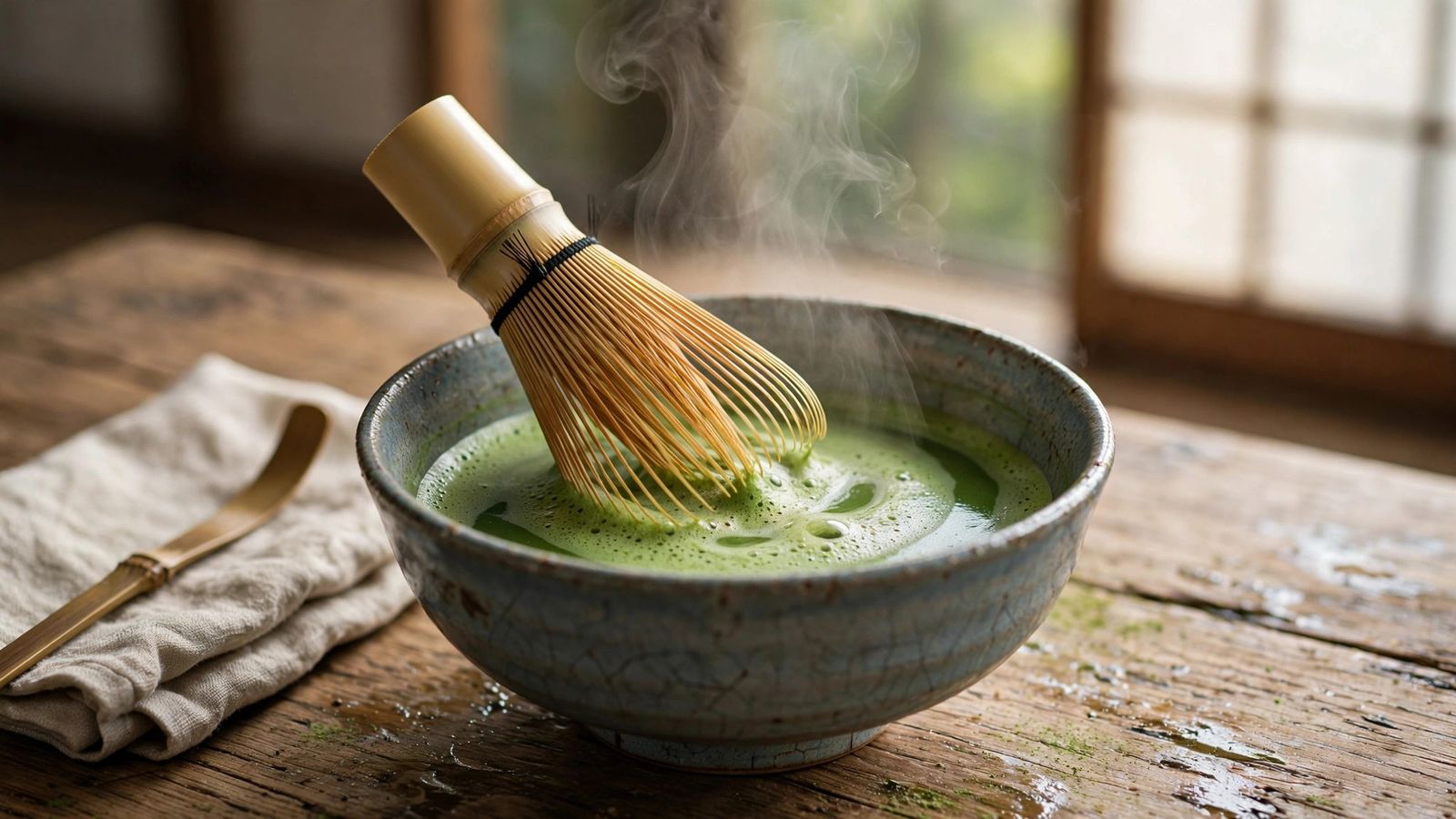
Sift 2 grams (about a teaspoon) through a fine mesh to kill clumps. Add 70ml of water at 175°F (80°C) — never boiling, which makes it bitter. Whisk in a rapid "W" motion with a bamboo chasen (or a small milk frother) until a thin foam forms, about 20 seconds. Drink it fresh; matcha oxidizes fast. Sift, don't boil, whisk fast — those three steps fix 90% of bad homemade matcha.
Matcha Latte Done Well
Whisk the matcha with a splash of hot water first, then pour in warm milk — oat milk is the crowd favorite. Sweeten lightly with honey or vanilla syrup; good matcha needs very little. Iced: whisk with cold water, pour over ice, add milk. Always whisk in water before adding milk, or you'll get floating green lumps.