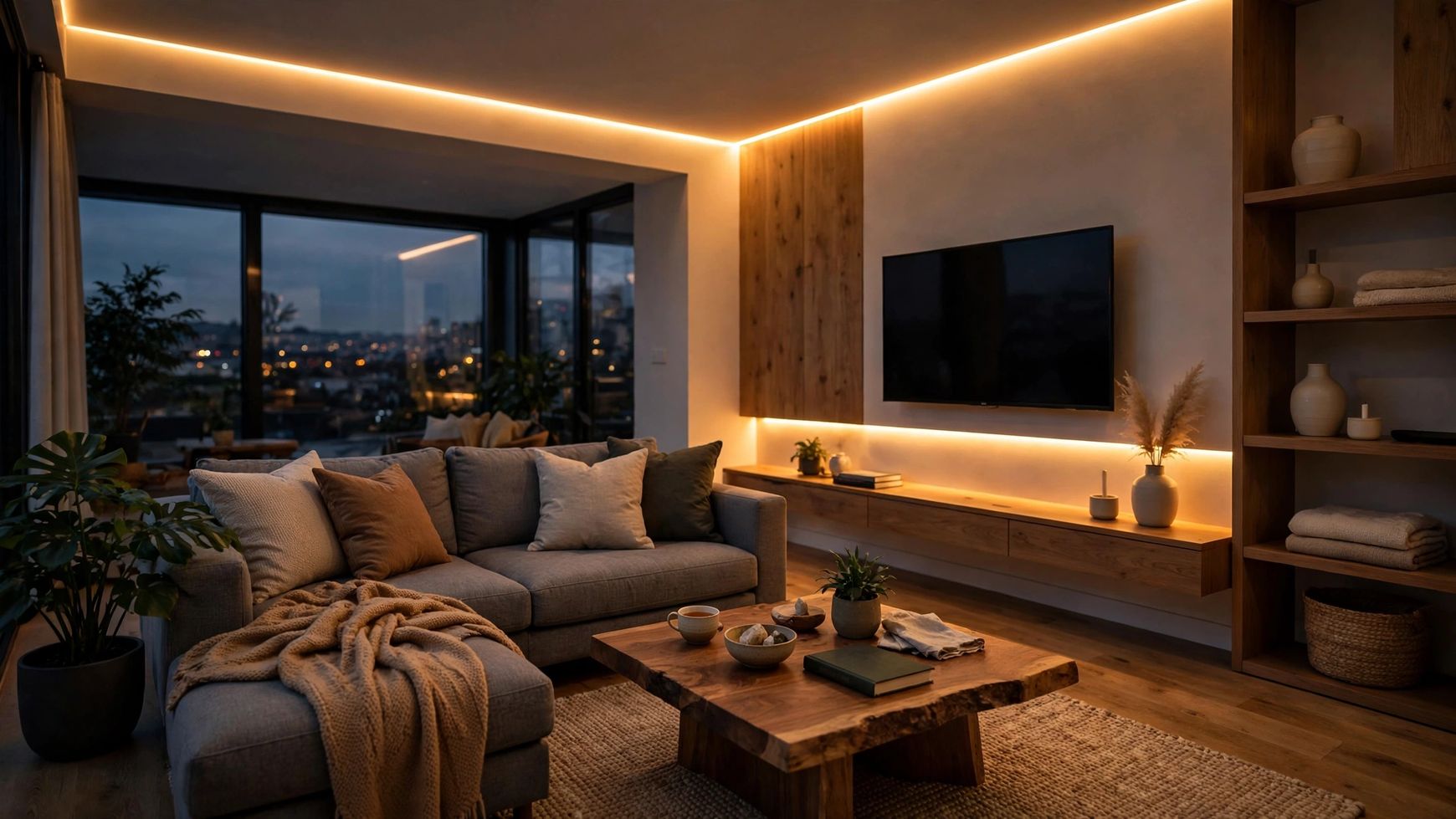
LED bulbs use up to 85 percent less energy than old incandescent bulbs and last 15 to 25 times longer. For most homes, swapping every bulb pays for itself within months. The savings start immediately and continue for the 15-plus-year life of each bulb. Lighting is the easiest energy upgrade in your home — no electrician required.
Why LEDs Win
A 10-watt LED matches a 60-watt incandescent's brightness while lasting around 25,000 hours. LEDs run cool, which also cuts your air-conditioning load. Every incandescent you replace starts saving money the day you screw in the LED.
Lumens, Not Watts
Shop by lumens (brightness), not watts (energy). 800 lumens roughly equals an old 60W bulb; 1600 lumens equals 100W. For color: 2700K is warm and cozy, 4000K is neutral, 5000K-plus is daylight. Match color temperature across a room or it will feel "off" even if you cannot say why.
Room-by-Room Guide
Living rooms: warm 2700K and dimmable. Kitchens: bright 4000K with under-cabinet task lights. Bedrooms: warm and low. Bathrooms: neutral 3500 to 4000K near mirrors. Layer your light — overhead plus task plus accent beats one harsh ceiling bulb.
Smart LED Options
Smart bulbs add dimming, schedules, and color control from your phone. Start with high-use rooms; you do not need every bulb in the house to be smart. Automate lights to turn off when you leave — the savings compound silently.
Calculate Your Savings
Replacing ten 60W bulbs used 5 hours daily with 10W LEDs saves roughly 900 kWh per year — often over a hundred dollars annually depending on your rates. Do the math once and you will never buy an incandescent again.
Dispose Responsibly
LEDs contain small electronics — recycle them at e-waste points, not in household trash. Old CFL bulbs contain mercury and need hazardous-waste handling. Recycling the old bulbs completes the upgrade properly.