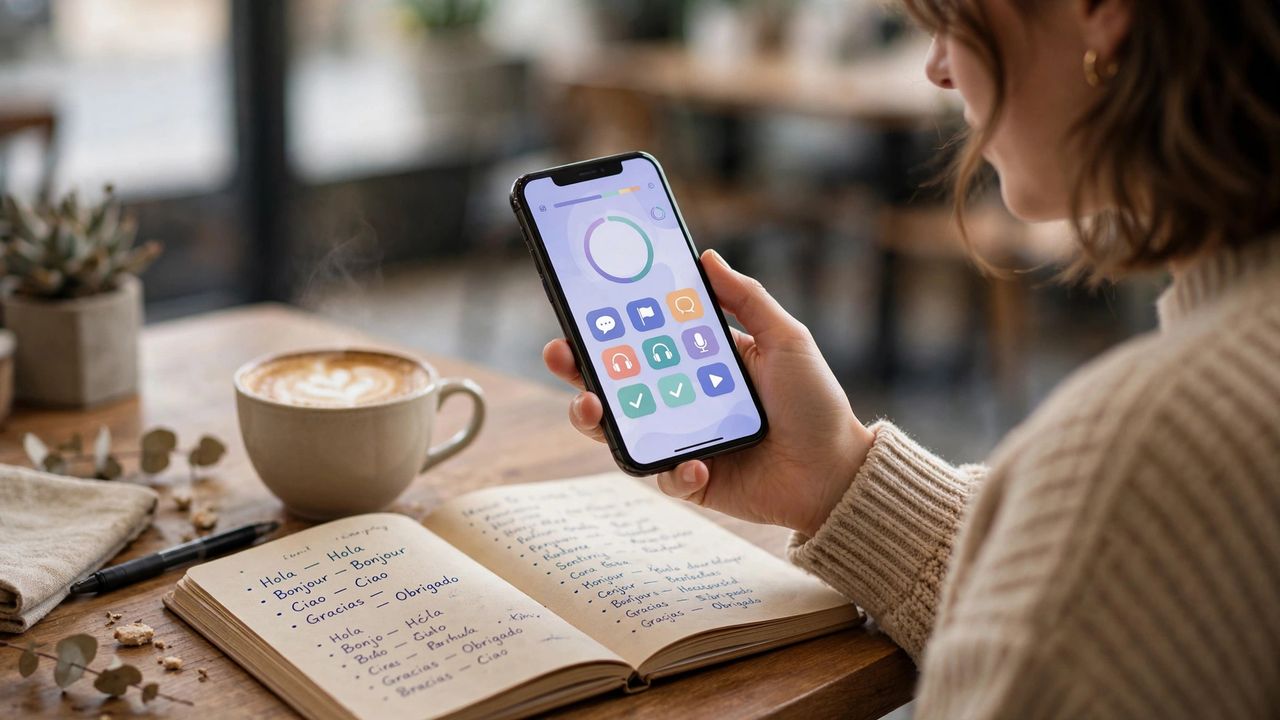
There has never been a better time to learn a language from your phone — but most learners stall because they pick the wrong app for their goal, or use a great app badly. The app is only 30% of the equation; the other 70% is how you use it daily. Here is how to choose wisely and actually get fluent in 2026.
Pick the Right App for Your Goal
Different apps serve different goals: gamified apps are great for building a daily vocabulary habit as a beginner; structured course apps teach grammar properly; conversation-exchange apps connect you with native speakers; AI tutors now give instant speaking feedback. Match the app to your weakest skill — if you can read but cannot speak, you need conversation practice, not more flashcards. Try free tiers for a week before paying for anything.
Build a Daily Habit That Sticks
Fifteen focused minutes every day beats a three-hour Sunday binge — language learning runs on spaced repetition. Anchor the habit to something existing: app session right after morning coffee. Streaks work because they make skipping feel like losing something; protect the streak, but never let a broken one end the journey — restart the same day. Review old lessons regularly; forgetting and relearning is how memory actually forms.
Practice Speaking From Day One
Most learners wait "until they're ready" to speak — that day never comes. Say every new phrase out loud, shadow native audio by repeating immediately after it, and record yourself weekly to hear progress. Speaking is a physical skill like swimming; you cannot learn it by reading about water — embarrassment is the tuition fee and it gets cheaper fast. Even five minutes of daily out-loud practice transforms your confidence within a month.
Combine Apps With Real Immersion
Apps teach you the language; life makes it stick. Switch your phone's language, follow creators in your target language, watch shows with subtitles, and label objects around your house. The learners who become fluent are not the ones with the most apps — they are the ones who turned the language into part of their day, not a separate chore. One real conversation a week is worth a month of tapping exercises.