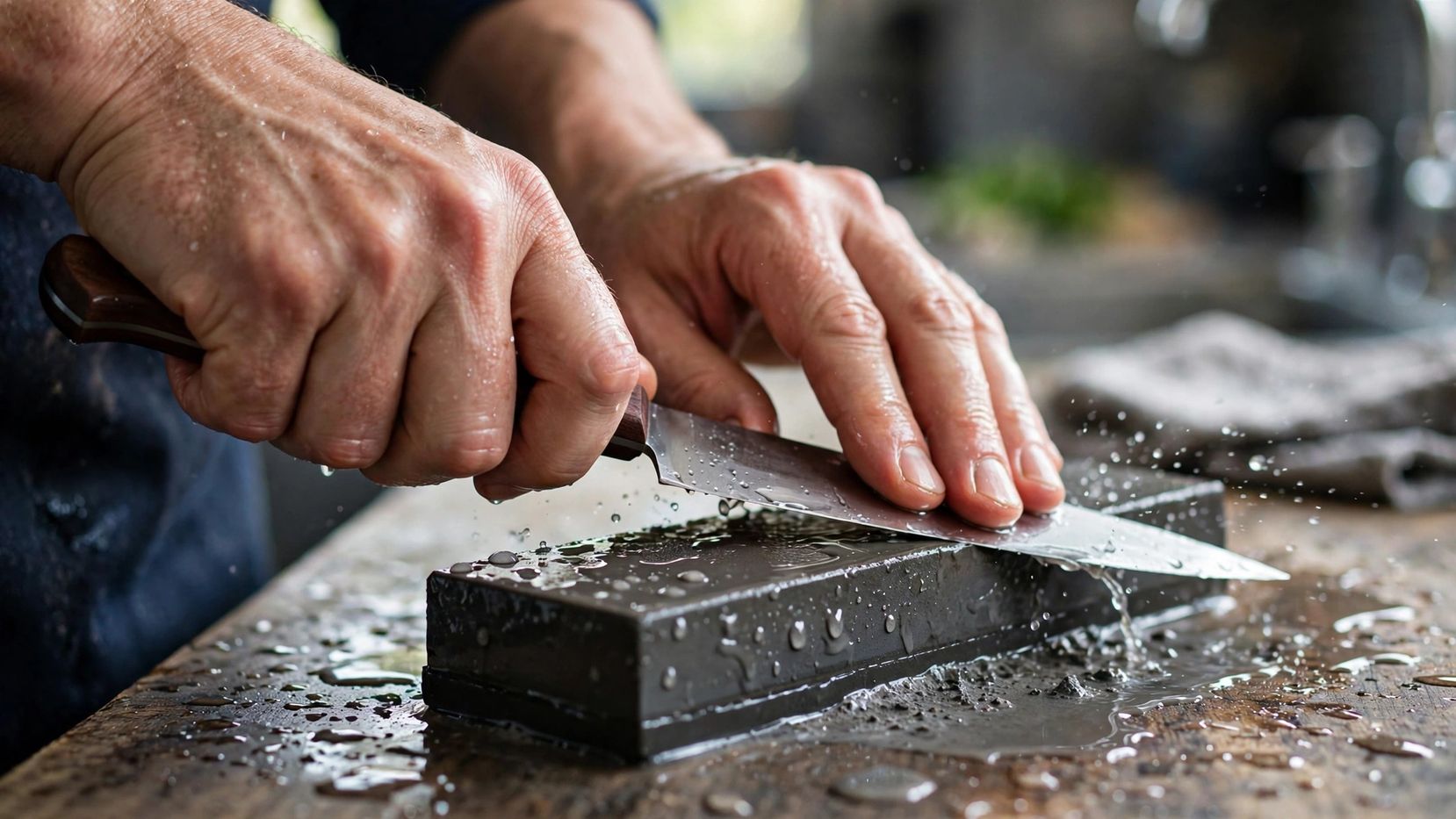
A sharp knife is safer, faster, and more enjoyable than a dull one — and sharpening it yourself takes just minutes. The single most important skill is holding a consistent angle; everything else is refinement.
Whetstone vs Other Sharpeners
Whetstones give the sharpest, longest-lasting edges, while pull-through sharpeners are quick but remove excess metal. A single 1000-grit whetstone handles 90% of home sharpening needs. Electric grinders work fast but can overheat and ruin temper on quality blades.
Finding the Right Angle
Most Western kitchen knives sharpen at 20 degrees per side; Japanese knives use 15 degrees for a finer edge. Match the factory angle — changing it wastes steel and time. Stack two coins under the spine as a rough 15-degree guide while you learn.
The Basic Sharpening Motion
Soak the stone, place the blade at your angle, and sweep heel to tip with steady pressure, alternating sides. Count strokes per side to keep both sides even — uneven sharpening bends the edge. Feel for a burr (a tiny wire edge) along the whole blade before switching grits.
Honing vs Sharpening: Know the Difference
A honing rod straightens a rolled edge between sharpenings but removes almost no metal. Hone weekly, sharpen monthly — most "dull" knives just need honing. If honing no longer restores the bite, it is time for the stone.
Stropping for a Razor Finish
A leather strop polishes off the burr and refines the edge to shaving sharp. Ten light strokes per side on a strop is the difference between sharp and scary-sharp. Even a denim strop on a wooden board works in a pinch.
Keeping Edges Sharp Longer
Cut on wood or plastic boards, hand-wash and dry immediately, and store knives in a block or on a magnetic strip. Never put good knives in the dishwasher or a crowded drawer — that is how edges die. A sharp knife stored well needs sharpening far less often.