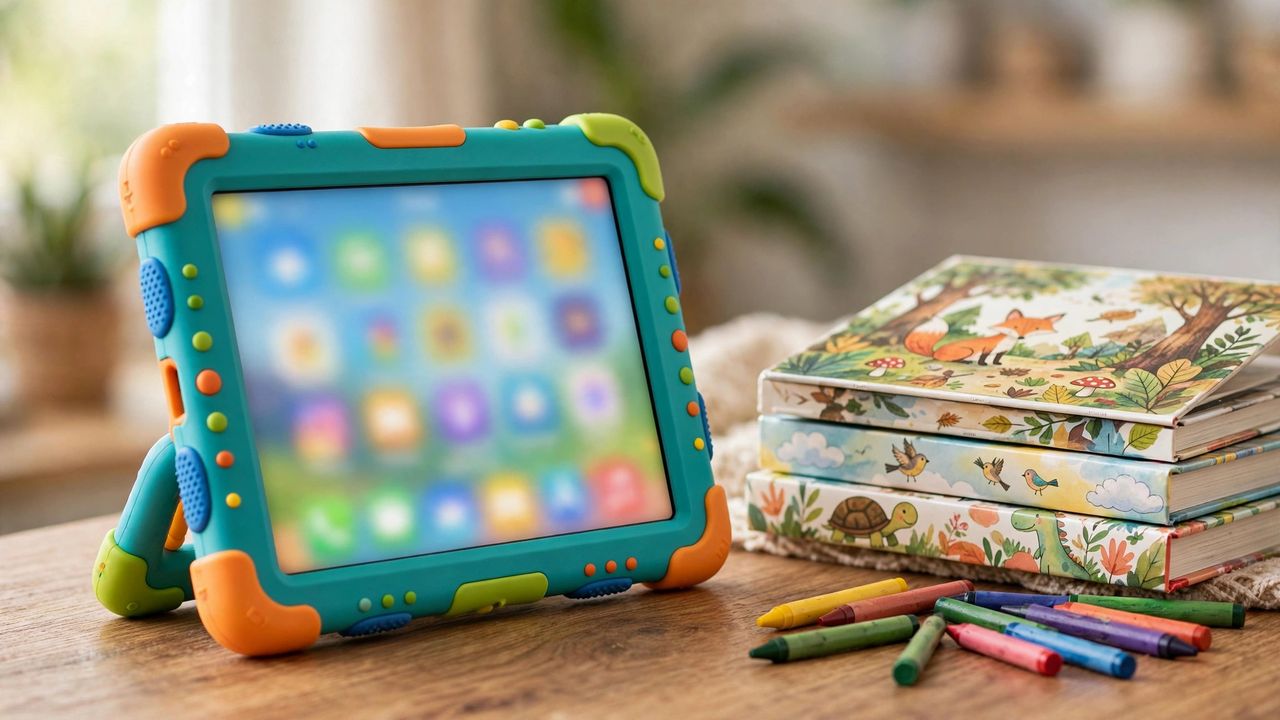
A kids tablet has two jobs: survive being dropped down the stairs, and be worth the screen time. The market is full of cheap tablets with cartoons slapped on — and a few genuinely excellent devices. Here is how to tell them apart in 2026.
Durability First, Everything Else Second
Kids drop things. It is physics. Look for a thick bumper case included in the box — not as a $30 accessory — and a screen that survives the inevitable face-plant onto tile. The best kids tablets come with worry-free replacement guarantees: break it, get a new one, no interrogation. That guarantee alone is worth more than any spec sheet.
Parental Controls That Work
You want age-based content filtering, daily time limits, and bedtime lockout managed from your phone. The good systems let you approve apps remotely and set educational goals ("30 minutes of reading unlocks games"). Test the parent dashboard before buying — clunky controls you never open are the same as no controls at all.
Actually Educational — Not Just "Educational"
Many tablets boast "1,000 educational apps" that are thinly disguised ad machines. Look for curated, ad-free kids' content libraries with real learning apps: reading programs with leveled books, math games that adapt to skill, and creative tools for drawing and music. No ads, no in-app purchases, no chat with strangers — these are non-negotiable for young kids.
Specs That Matter (and Ones That Don't)
Battery life matters — 10+ hours survives long car rides. An 8–10 inch screen is the sweet spot for little hands and eyes. Storage: 32GB minimum, expandable preferred. What does not matter: camera megapixels, 5G, or flagship processors. Spend the savings on a good case and a content subscription instead of silicon your kid will never stress.
The best kids tablet is the one you do not have to think about: tough enough to hand over without flinching, locked down enough to walk away, and genuinely teaching something while you are gone.