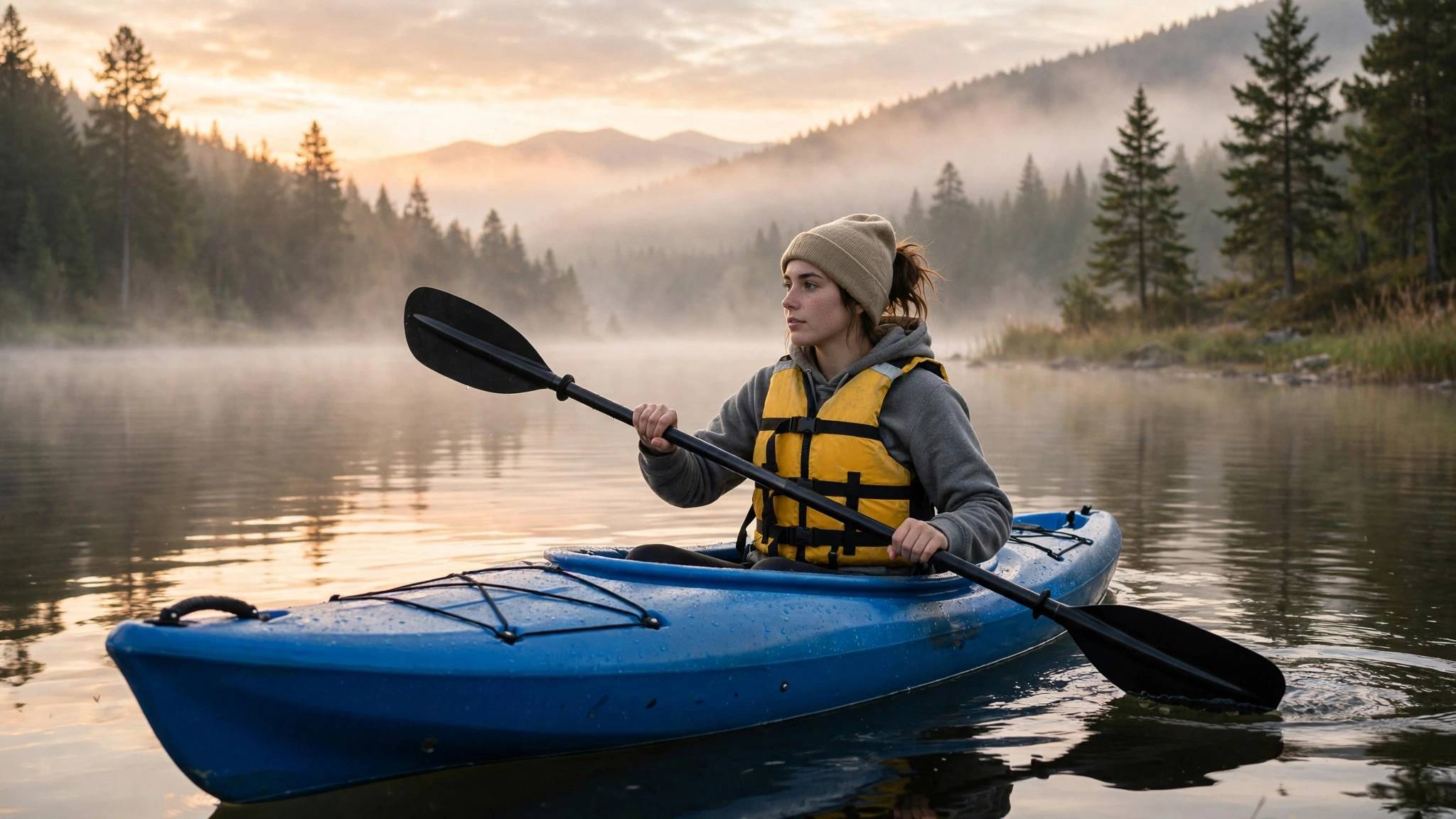
Kayaking is one of the most accessible water sports — calm lakes and slow rivers welcome total beginners. Start on flat, calm water with a stable recreational kayak; whitewater and ocean crossings come much later.
Choosing Your First Kayak
Wide, short recreational kayaks (9–12 feet) are stable and easy to turn; longer touring kayaks track straighter but feel tippier. Stability beats speed for beginners — a boat you trust is a boat you enjoy. Inflatable kayaks are a great low-storage starter option in 2026.
Essential Gear Checklist
You need a properly fitted life jacket (PFD), a paddle sized to your height and boat width, and a bilge pump or sponge. Wear your PFD every single time — most kayaking fatalities involve boaters who owned one but did not wear it. Add a dry bag for phone, snacks, and a first-aid kit.
The Forward Stroke Basics
Power comes from rotating your torso, not pulling with your arms — plant the blade near your feet and unwind your core. Torso rotation is the whole technique; arm-paddling exhausts you in twenty minutes. Keep your top hand at about eye level and your strokes short.
Steering and Stopping
Sweep strokes (wide arcs) turn the boat; dragging a blade alongside acts as a brake and rudder. Practice turning and stopping in shallow water before you need them for real. Leaning slightly into turns helps, but keep your head centered over the boat.
What to Do If You Capsize
Stay calm, hold onto your paddle and boat, and practice a wet exit and re-entry in waist-deep water first. Rehearsing a capsize in safe water removes 90% of the fear — never let your first flip happen far from shore. A paddle float and a buddy make re-entry much easier.
Planning Your First Trips
Pick short routes on calm water, check weather and wind, tell someone your plan, and paddle with a buddy. Wind is the beginner's biggest enemy — it tires you out and pushes you off course, so check the forecast. Mornings are usually calmest on lakes.