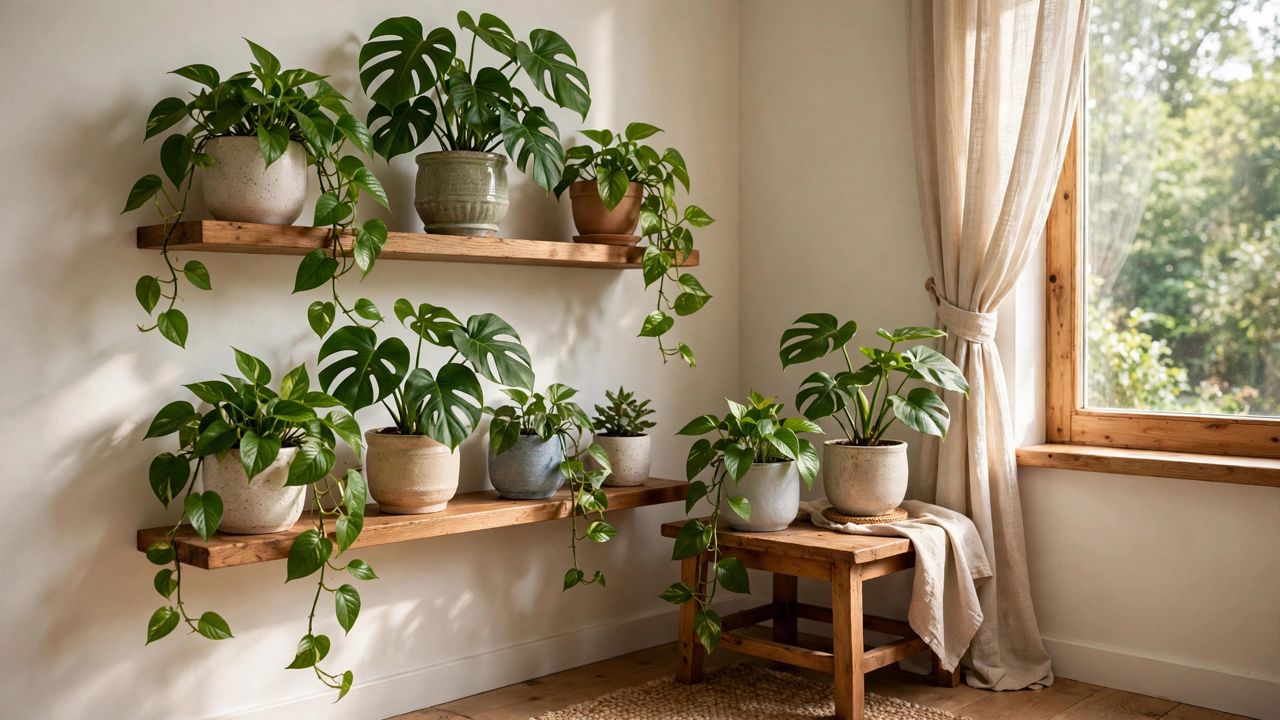
Most houseplants don't die from neglect — they die from too much love, especially too much water. Indoor plant care in 2026 is simpler than the internet makes it look. Master four basics — light, water, soil, and the right plant — and your home will be green all year.
Light Is the #1 Factor
Before buying any plant, know your windows. South-facing windows give the most light, north-facing the least. Most popular houseplants want bright, indirect light: near a window, but not in the harsh beam. Yellow leaves plus leggy, stretched growth almost always mean "more light, please." No good window? A $20 LED grow bulb turns any corner into plant paradise.
Water Less Than You Think
Overwatering kills more plants than anything else. The fix is simple: stick your finger an inch into the soil. Dry? Water thoroughly until it drains out the bottom. Still damp? Walk away. Always use pots with drainage holes — decorative pots without holes are plant coffins. In winter, most plants need half as much water as in summer.
Soil, Pots & Repotting
Regular garden soil compacts indoors and suffocates roots. Use a quality indoor potting mix, and add perlite or orchid bark for plants like monsteras that hate wet feet. Repot only when roots circle the bottom or water runs straight through — usually every 1–2 years. Go just one pot size up; a giant pot holds too much wet soil.
Best Plants for Beginners
Start with the forgiving ones: pothos, snake plant, ZZ plant, and spider plant. They tolerate low light, irregular watering, and general beginner mistakes. A pothos cutting in water is practically indestructible and grows into a full plant. Buy one, keep it alive for six months, then buy the dramatic fiddle-leaf fig.
Houseplants reward consistency, not expertise. Check light once, water only when dry, and choose plants that forgive you. Your jungle starts with a single surviving pothos.