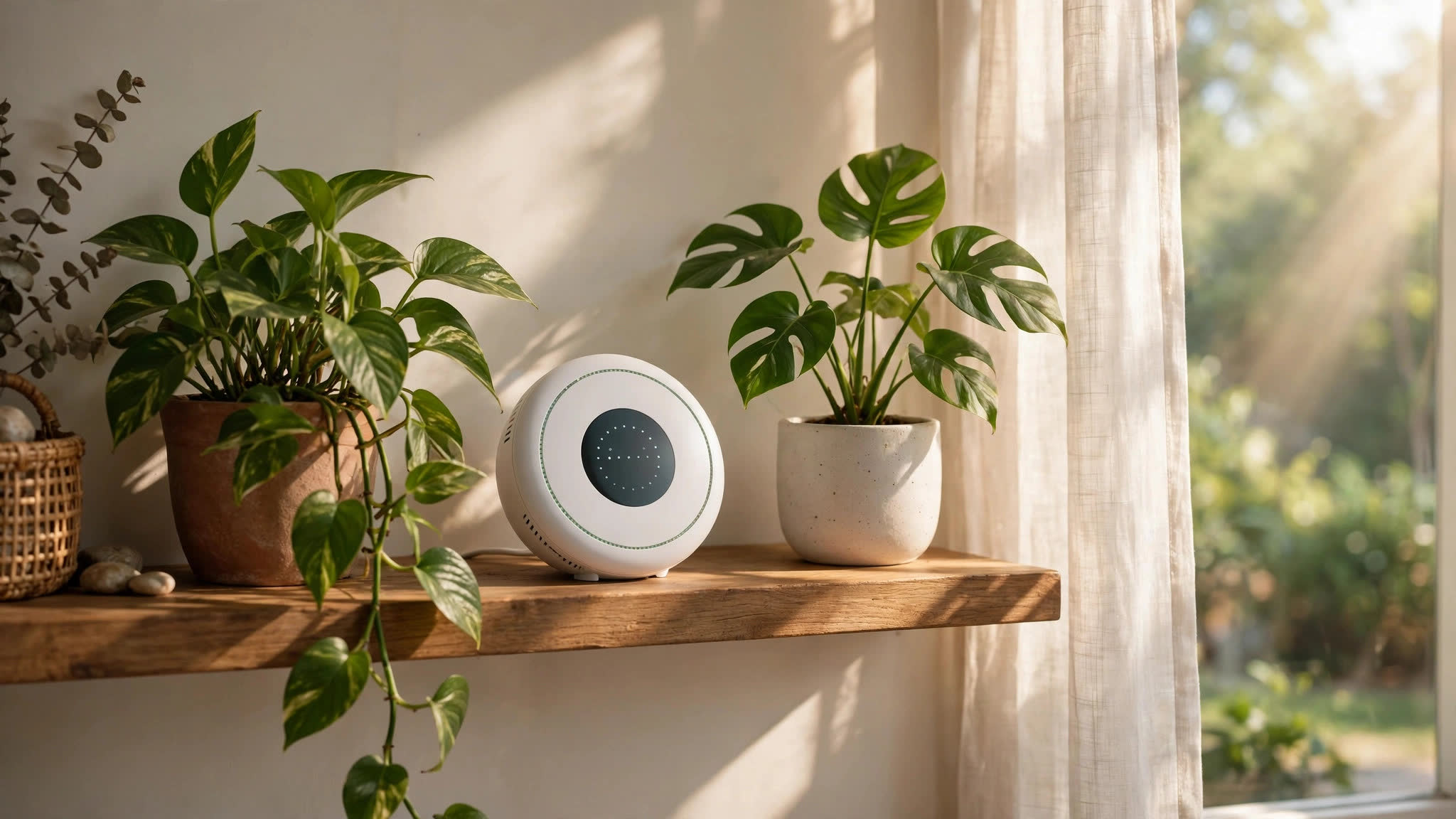
Cooking smoke, cleaning chemicals, dust, and stale air make indoor air up to five times more polluted than outdoor air, according to the EPA. You can't see it — but an indoor air quality (IAQ) monitor can measure it. Here's what these devices track and how to choose one.
What They Measure
Good monitors track several pollutants. PM2.5 (fine particles) from cooking, candles, and wildfire smoke — the most important reading for most homes. VOCs (volatile organic compounds) from paints, cleaners, and new furniture, which cause headaches and irritation. CO₂ levels reveal how stuffy a room is; above 1,000 ppm, drowsiness and poor focus set in. Some also measure humidity, temperature, radon, and formaldehyde. PM2.5 and CO₂ are the two sensors that matter most for everyday use.
What to Look for When Buying
Sensor quality decides everything — look for monitors that name their sensor chips and show raw numbers, not just a colored "good/bad" dot. Real-time app alerts let you act when cooking spikes PM2.5. Battery-powered portable models let you test each room and even take the device to the office. Skip monitors that need a paid subscription for basic history. Expect $100–$250 for a solid multi-sensor monitor; ultra-cheap models often use inaccurate sensors that are worse than nothing.
Where to Place It
Placement makes or breaks your readings. Put the monitor at breathing height in the room you use most — typically the bedroom or living room. Keep it away from windows, vents, and direct cooking steam, which skew readings. Don't hide it behind furniture; sensors need circulating air. One monitor per floor is a practical rule, and testing the kitchen during cooking reveals how much your range hood actually helps.
Reading the Numbers
Learn the targets: PM2.5 should stay under 12 µg/m³ (EPA's annual guideline); cooking can spike it to 10× that temporarily. CO₂ under 800 ppm is ideal, 1,000+ means ventilate. Humidity between 30–50% prevents both mold and dry-air irritation. VOCs should drop to low levels within hours of ventilation — persistently high readings point to an ongoing source like a new rug or cleaner. Track readings for a week to learn your home's normal pattern before reacting to one spike.
Acting on What You Find
A monitor only helps if you act. High PM2.5 while cooking? Always use the range hood — vented outside, not recirculating — or crack a window. Stuffy high-CO₂ bedroom? Ventilate before sleep or add an HRV/ERV vent. Persistent VOCs? Switch to fragrance-free cleaners and air out new furniture. Pair the monitor with a HEPA air purifier sized to the room — you'll literally watch the numbers fall. Small changes, measured, beat expensive gadgets bought blind.