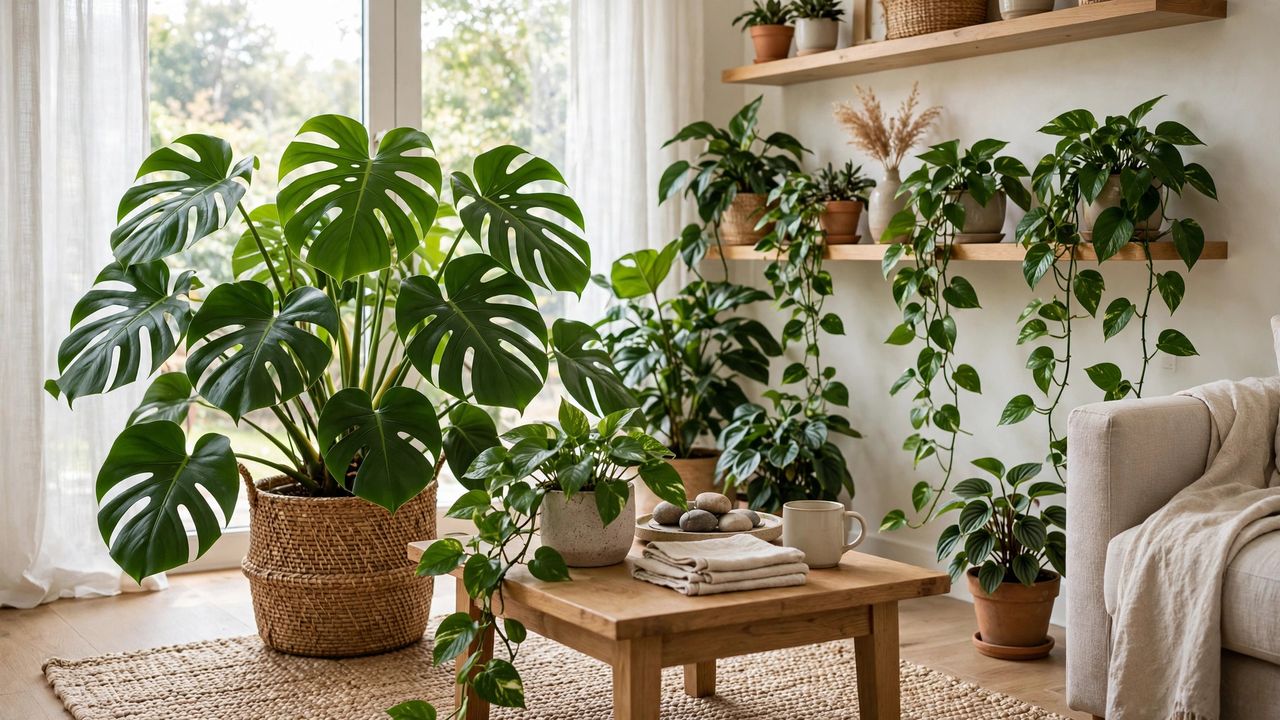
You buy a beautiful plant, and a few weeks later the leaves are yellow, drooping, or falling off. You are not alone — most houseplant deaths come from a handful of common mistakes that are easy to fix once you know them. Whether you are a beginner or have killed more plants than you can count, this guide covers the seven mistakes that kill most indoor plants and exactly how to fix each one.
Overwatering: the number one plant killer
More houseplants die from too much water than too little. Soggy soil rots the roots, and once roots rot, the plant usually cannot recover. The fix is simple: check the top two inches of soil before watering, and only water when it feels dry. When in doubt, skip the watering — underwatered plants recover, overwatered ones often do not.
Wrong light: too dark or too direct
Most popular houseplants want bright, indirect light — near a window but not in harsh midday sun. Dark corners starve them slowly, while direct afternoon sun scorches leaves. If leaves are stretching toward the window or turning pale, the plant needs more light. Move your plant closer to a bright window before you buy fertilizer or a new pot.
Pots without drainage holes
Decorative pots without drainage trap water at the bottom and drown the roots. Always use a pot with drainage holes — you can keep the pretty outer pot as a cover, with a plastic nursery pot inside. Empty the saucer after watering so roots never sit in standing water. No drainage hole means no long-term survival — repot immediately.
Ignoring humidity and pests
Central heating and air conditioning dry the air far below what tropical plants like. Group plants together or use a pebble tray with water to raise humidity. Check the undersides of leaves regularly for spider mites and mealybugs — catching pests early makes them easy to wipe away with a damp cloth. A two-minute leaf inspection once a week prevents most pest disasters.
Fix these four basics — water less, fix the light, ensure drainage, and watch for pests — and your plants will thrive in 2026. Most "dying" plants are not sick; they are just getting one of these simple things wrong.