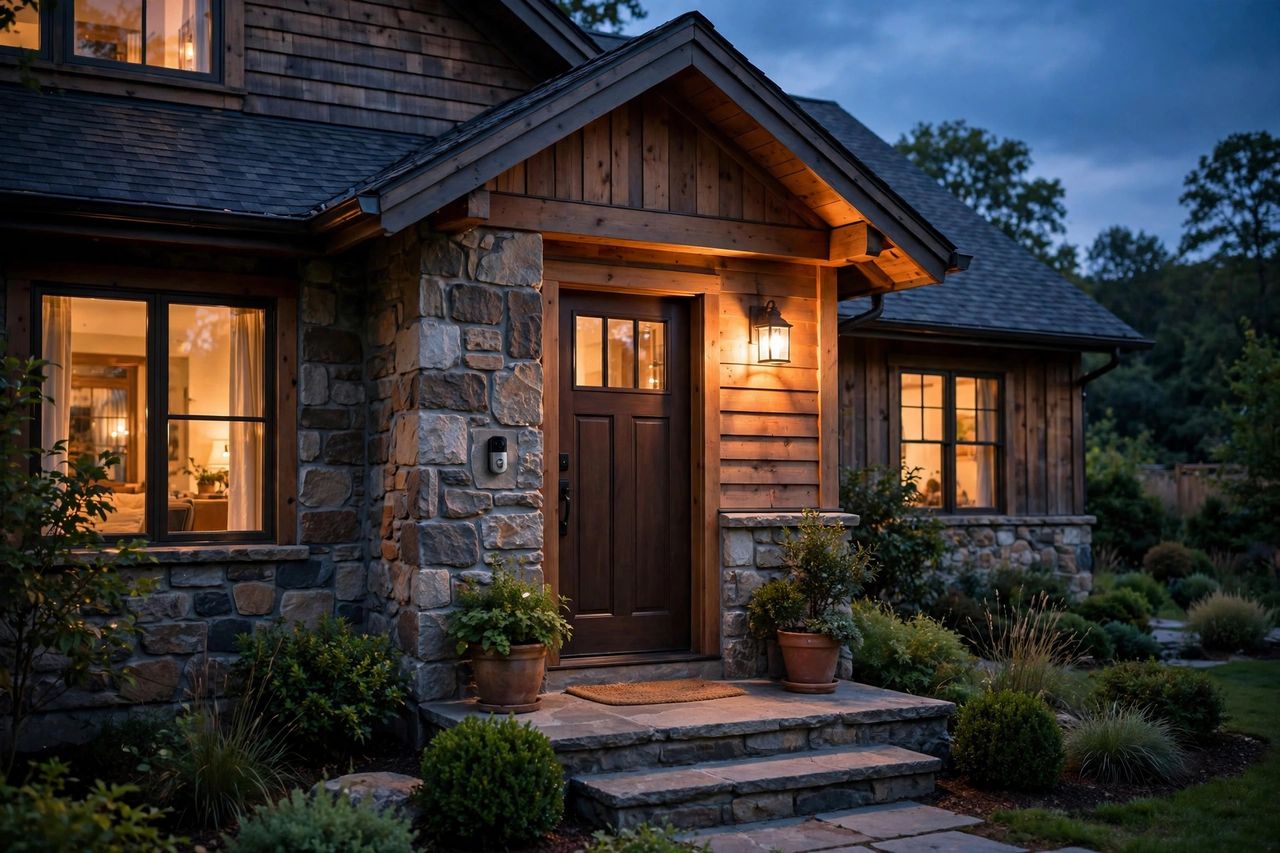
You don't need a $50-a-month monitoring contract to be safe. Most burglaries are quick, opportunistic jobs — the intruder wants an easy target, not a challenge. Security is really about psychology: make your home look harder to crack than the one next door. These tips cost little or nothing.
Start With Doors and Locks
A third of burglars walk straight through the front door — often because the lock or frame is weak. A solid deadbolt and a reinforced strike plate (the metal piece the bolt slides into) turn a 10-second kick into a noisy, failed attempt. Swapping short strike-plate screws for 3-inch ones costs a few dollars and takes ten minutes. Sliding doors get a simple security bar.
Light It Up
Darkness is a burglar's best friend. Motion-sensor lights over entrances and dark corners startle intruders and alert neighbors — and solar-powered ones need no wiring. Put indoor lamps on timers when you're away. A well-lit home tells a burglar the occupants are paying attention.
A Camera Changes the Game
A single video doorbell or one visible camera covering the entrance deters far more crime than it records. Modern cameras cost little, install in minutes, and send alerts to your phone. Visible cameras deter more crime than hidden ones — let yours be seen. Add a small 'video surveillance' sign for extra effect.
Make It Look Lived-In
Piled-up mail, an overflowing mailbox, and permanently dark windows scream 'empty house.' Ask a neighbor to collect deliveries, leave a car in the driveway, and vary your lights with smart plugs. An 'empty' house is an invitation — never advertise your absence.
The Free Habits That Matter Most
Lock every window, not just doors — ground-floor windows are a favorite entry point. Don't post vacation plans on social media until you're home. Trim bushes that hide entrances, and get to know your neighbors: watchful streets are safe streets. The most expensive lock in the world fails when you leave the window open.