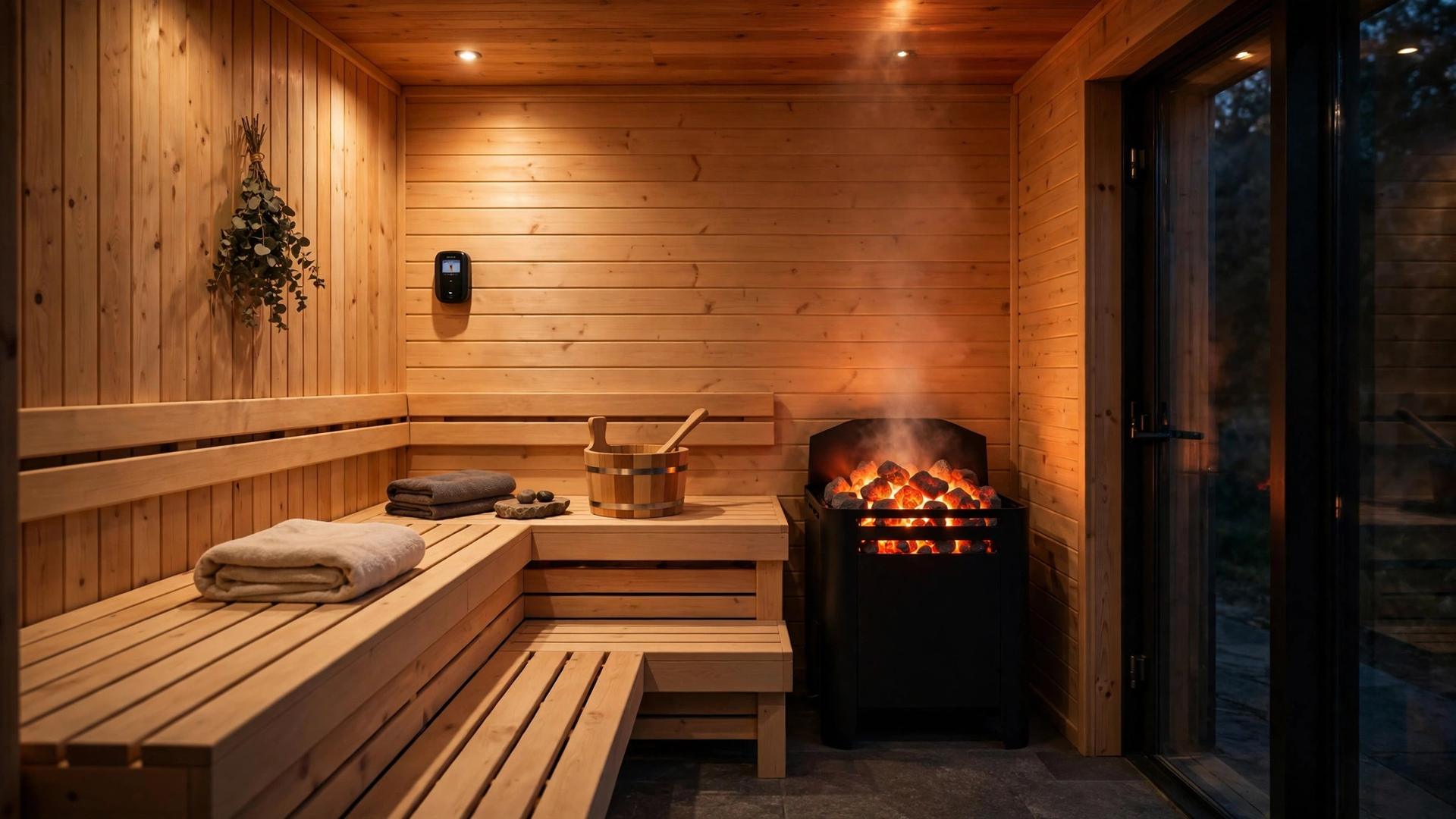
Home saunas have gone mainstream in 2026 — what was once a luxury spa feature now fits in a spare corner of the house. Regular heat sessions are linked to better cardiovascular health, muscle recovery, and deeper sleep, and compact models have brought prices down dramatically. Here's what the research says and how to pick the right type for your home.
Real Health Benefits (and Limits)
Studies link frequent sauna use (4–7 sessions per week) with improved cardiovascular health, lower blood pressure, and reduced risk of certain heart conditions. Heat relaxes muscles and speeds workout recovery, and an evening session helps many people fall asleep faster. But keep expectations honest: saunas support wellness, they don't cure disease. Pregnant people and anyone with heart conditions should check with a doctor first, and always hydrate well before and after.
Traditional vs Infrared: The Big Choice
Traditional (Finnish) saunas heat the air to 150–190°F (65–90°C) with hot stones — the classic intense, steamy experience. They need a dedicated circuit and proper ventilation. Infrared saunas use light panels to warm your body directly at lower air temperatures (110–140°F / 43–60°C) — gentler, plug into a standard outlet, and usually cheaper. Choose traditional for the authentic ritual; choose infrared for easy installation, lower running costs, and milder heat.
Sizing & Space Requirements
Two-person infrared cabins start around 4×4 feet — small enough for a bedroom corner or large bathroom — while traditional units need more room plus clearance. Measure your space including door swing and ventilation before ordering. Budget roughly $1,500–$4,000 for a quality infrared cabin and $3,000–$8,000+ for a traditional one, plus any electrical work. Outdoor barrel saunas are a popular middle ground with great heat retention.
Using It Safely & Effectively
Start with 10–15 minute sessions at moderate heat and build up to 20–30 minutes. Drink water before, during, and after — dehydration is the most common rookie mistake. Cool down gradually (a cool shower feels amazing), and skip alcohol entirely around sessions. Clean benches with a mild, non-toxic cleaner after use, and leave the door open to air-dry the wood. With simple care, a good sauna lasts 15–20 years.
A home sauna is one of the few wellness purchases people actually use for decades. Pick the type that fits your space and electrical setup, start with short sessions, and make it a habit. Want help choosing between specific models? Ask US AI's free chat anytime.