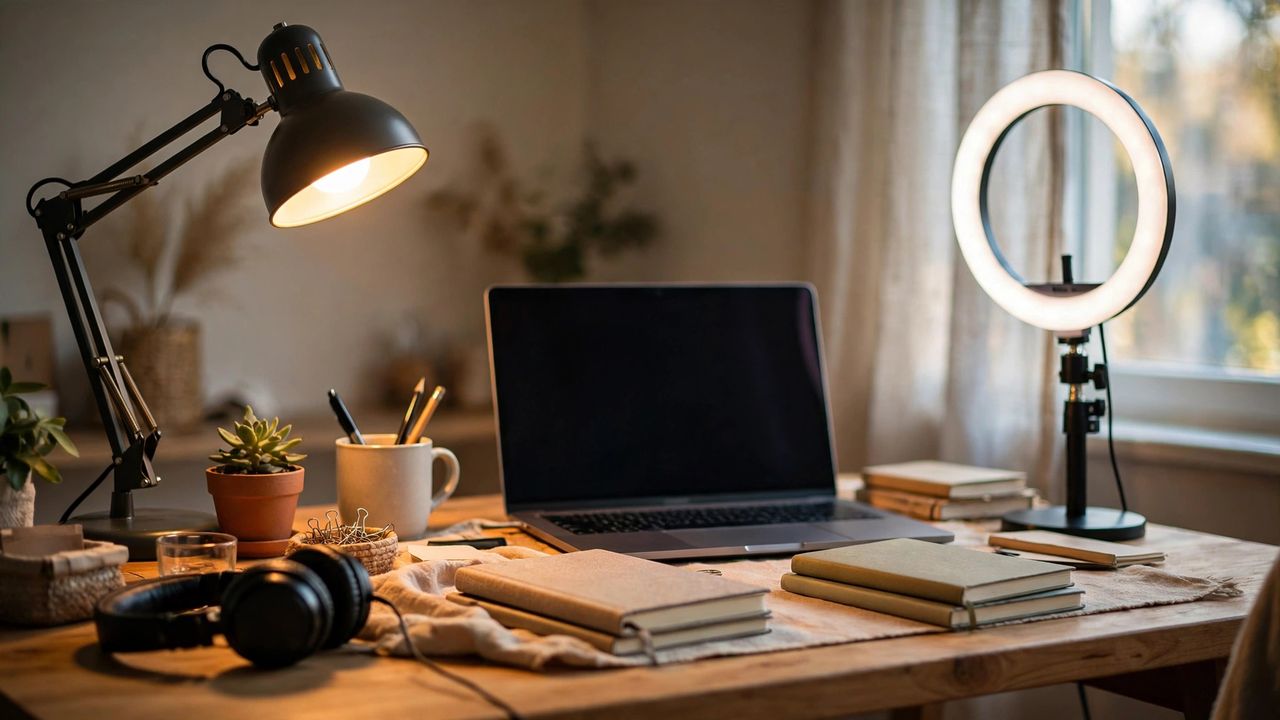
Bad lighting quietly ruins remote work: it causes eye strain, afternoon headaches, and makes you look like a shadowy figure on video calls. The good news is that great home office lighting in 2026 is cheap and simple — a couple of well-placed lamps beat one harsh overhead light every time. Here is how to light your workspace for health, focus, and a camera-ready look.
Layer your light like a designer
Professional lighting uses three layers: ambient light for the room, task light for your desk, and accent light for depth. In a home office, that means a soft ceiling or floor lamp, a desk lamp aimed at your work surface, and a small light behind your monitor to reduce contrast. Never rely on a single overhead light as your only source. One harsh source creates glare and shadows; three gentle sources create comfortable, even illumination.
Choose the right color temperature
Light color, measured in Kelvin, affects both mood and alertness. Cool daylight (5000–6500K) keeps you alert during focused work, while warm light (2700–3000K) relaxes you in the evening. Smart bulbs let you shift automatically through the day. Use cool white for work hours and warm light after 6 PM. Matching your light to the time of day supports your natural energy rhythm and helps you wind down at night.
Position light for video calls
For video calls, the key light should face you — never sit with a bright window behind you. A simple ring light or desk lamp at eye level, slightly to one side, flatters your face and keeps you clearly visible. Test how you look on camera before important meetings. Light your face, not your background. Viewers forgive a plain background, but a dark, backlit face makes you look unprofessional no matter how good your ideas are.
Protect your eyes from strain
Eye strain comes from contrast: a bright screen in a dark room forces your eyes to constantly adjust. Keep room lighting at a moderate level, match your screen brightness to the room, and follow the 20-20-20 rule — every 20 minutes, look at something 20 feet away for 20 seconds. Reduce screen glare before blaming your eyes. Most "tired eyes" are actually a lighting problem: reposition lamps so no light reflects directly off your screen.
Good home office lighting is one of the cheapest upgrades with the biggest daily payoff: less eye strain, more energy, and a professional presence on every call. Layer your sources, tune the color temperature, face the light on camera, and your workspace will feel dramatically better by tonight.