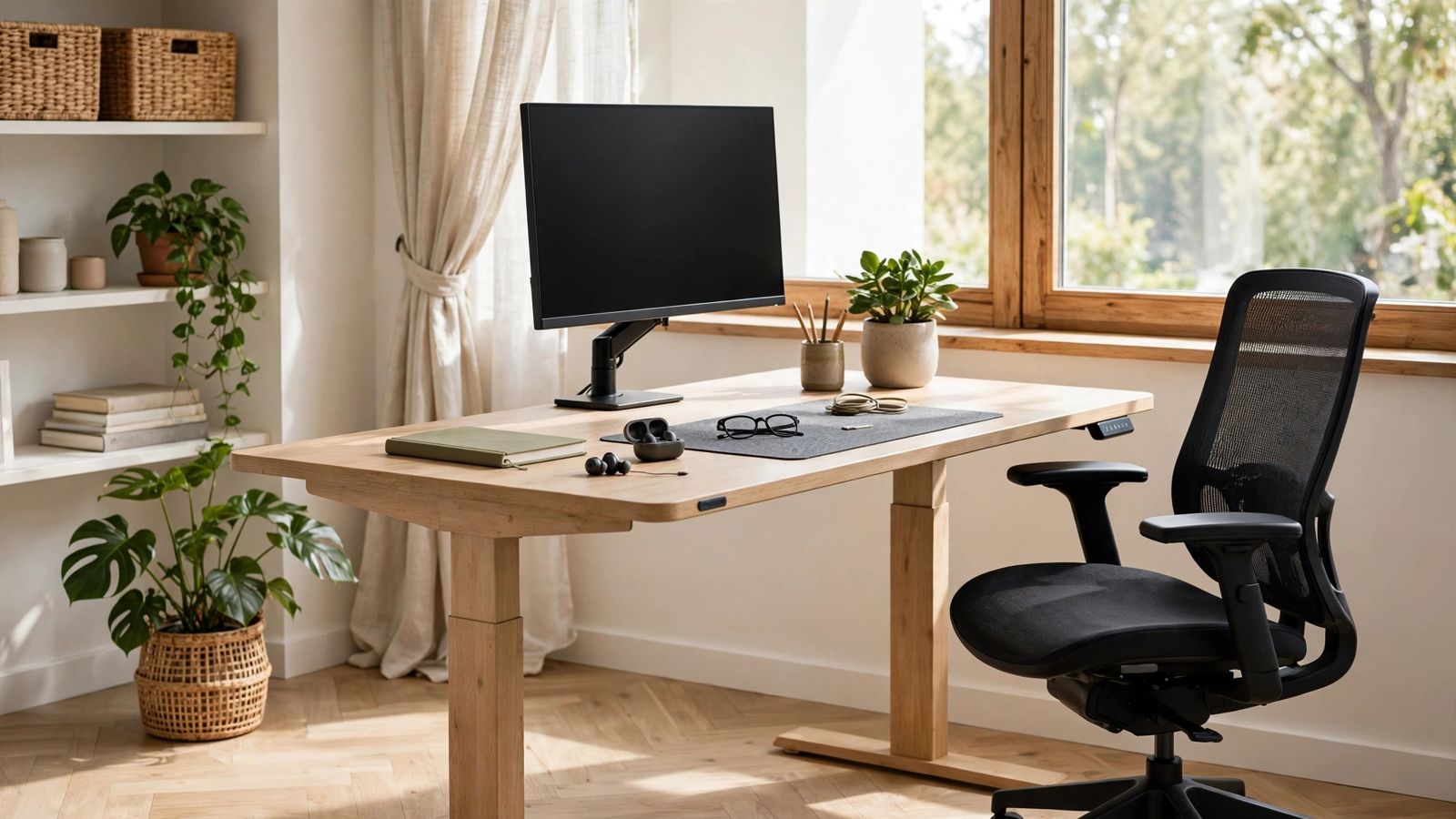
If your neck aches by 3 PM, your desk is the problem — not your body. Good home office ergonomics is not about expensive gear; it is about angles. Get four things right and most pain disappears within weeks.
The Chair: Your Biggest Lever
Feet flat on the floor, knees at roughly 90 degrees, lower back touching the backrest — that is the whole checklist. If your feet dangle, get a footrest (or a sturdy box). Lumbar support matters more than padding — a rolled-up towel at your lower back works on any chair. Skip "gaming" aesthetics; an adjustable office chair with armrest height control beats a flashy one every time.
Monitor Height: Stop Craning Down
The top of your screen should sit at or just below eye level, about an arm's length away. Laptop users: a stack of books plus an external keyboard is a legitimate, cheap fix — hunching over a laptop screen is the #1 cause of tech neck. If you use two monitors, center the one you use most; angling your neck sideways all day is worse than any bad posture. Increase text size instead of leaning in.
Desk, Keyboard, and Mouse Position
Elbows at roughly 90 degrees with shoulders relaxed — if you are shrugging, your desk is too high or your chair too low. Keep the mouse at the same level as the keyboard and close to your body; reaching forward strains the shoulder. A vertical mouse or trackpad can help wrist pain, but the cheapest fix is a gel wrist rest and fewer death-grip clicks. If you stand part of the day, a fatigue mat and supportive shoes matter more than the desk itself.
The Habit No Furniture Fixes
Movement beats equipment. Set a timer: stand and stretch for 2 minutes every 45–60 minutes — roll your shoulders, look 20 feet away for 20 seconds, walk to get water. Sitting perfectly still in a perfect chair still hurts; your spine needs position changes. Light matters too: place your desk near a window (screen perpendicular to it) to cut glare and eye strain. Small tweaks, big payoff.
Smart start: fix monitor height today (free), add lumbar support tomorrow (nearly free), and schedule movement breaks. Those three changes solve most home-office pain — buy new gear only after your angles are right.