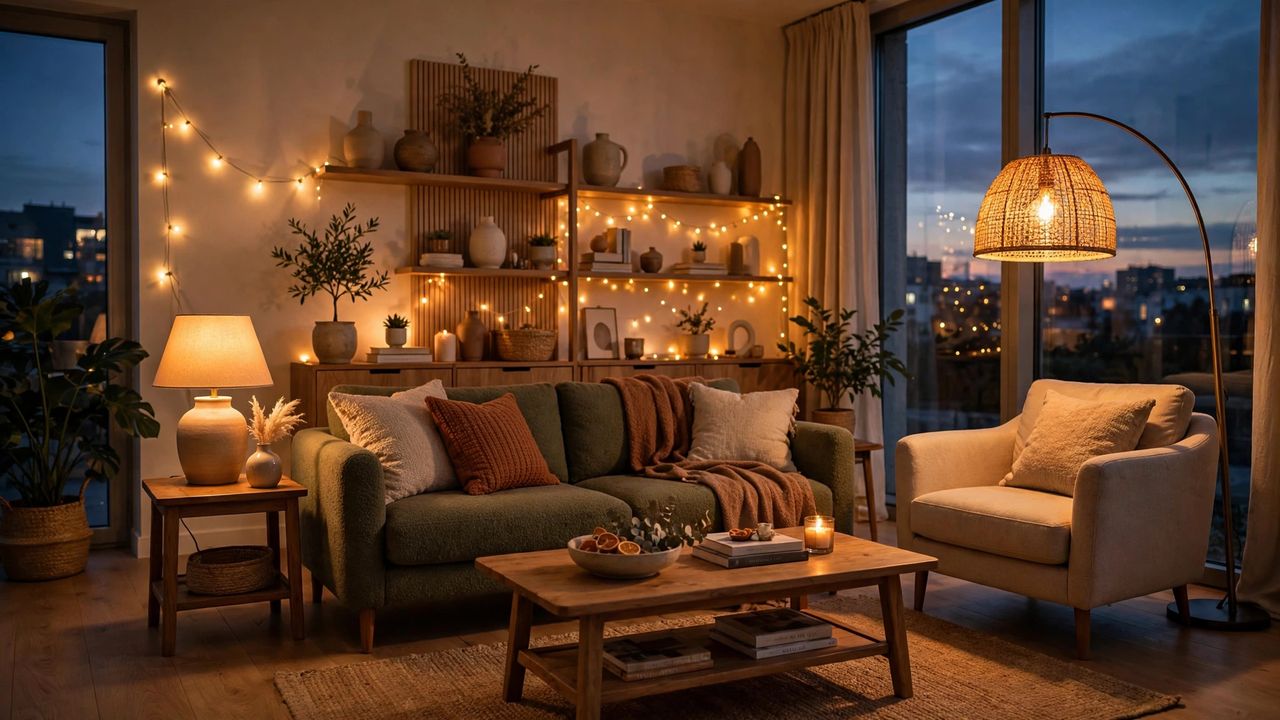
Lighting is the cheapest room makeover there is. A few well-placed lamps change how a space feels more than new furniture. Here's how to design home lighting in 2026 without hiring a designer.
Layer Three Types of Light
Every room needs ambient (general glow), task (reading, cooking), and accent (highlighting art or corners) light. Most homes have only harsh overheads — the fix is simple: add a floor lamp for ambient, a desk or reading lamp for task, and a small accent light for mood. Three light sources per room is the magic number.
Go Warm, Not Clinical
Color temperature changes everything: 2700K–3000K (warm white) feels cozy; 4000K+ (cool white) feels like an office. Swap living room and bedroom bulbs to warm white immediately — it's the single biggest mood upgrade. Dimmable bulbs are worth it: full brightness for cleaning, low glow for evenings.
Placement Tricks Designers Use
Bounce light off walls and ceilings instead of pointing it down — it feels softer and makes rooms look bigger. Put lamps at different heights (floor, table, shelf) to create depth. Light a dark corner and the whole room feels larger. LED strips behind a TV or under shelves add a premium glow for very little money.
Smart Bulbs: Worth It in 2026
Smart bulbs have gotten cheap — a color-tunable bulb now costs little more than a regular LED. Start with one or two in the bedroom or living room: warm dim light in the evening genuinely helps you wind down. Set schedules so lights fade on at sunset and dim before bed. Voice control is a bonus, not the point — the point is mood.
You don't need a renovation — you need layers, warmth, and variety. Change your bulbs this weekend and you'll wonder why the room ever felt flat.