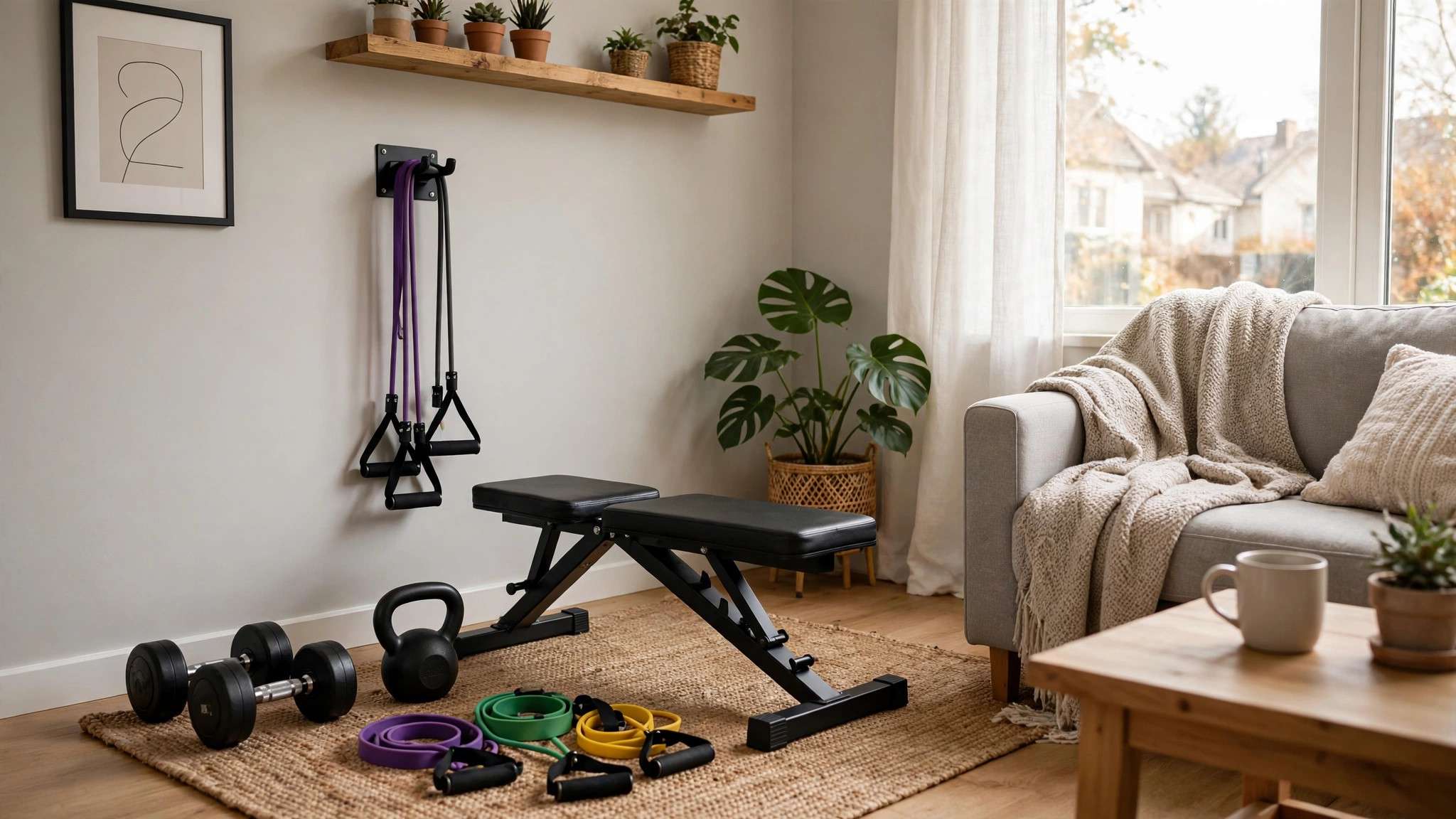
You do not need a $2,000 machine to get strong at home — a handful of cheap, versatile tools covers 90% of training. Here is the buy-first order that actually works.
Equipment Priority: Buy in This Order
1. Adjustable dumbbells — one pair replaces a whole rack and handles presses, rows, lunges, and curls. 2. A pull-up bar that fits a doorframe — the best upper-body tool per dollar. 3. Resistance bands — dirt cheap, travel-friendly, and great for warm-ups and assistance work. 4. A flat/incline bench — unlocks proper pressing and step-ups. 5. A jump rope for conditioning. Stop here for months — add a kettlebell or barbell only when these feel limiting.
Small-Space Setup
You need about 2×2 meters of clear floor. Push furniture aside, roll out a folding exercise mat, and you are training. Store dumbbells under the bed or in a corner rack, hang bands on a hook, and fold the bench flat after sessions. Adjustable equipment beats fixed equipment in small spaces every time — one item, many weights, tiny footprint. Train early morning or late evening when shared rooms are free.
Bodyweight: The Zero-Cost Gym
Your body is free equipment. Push-ups, squats, lunges, planks, and glute bridges build serious strength when done with progressive overload — more reps, slower tempo, harder variations. Elevate your feet for harder push-ups, do single-leg squats when two legs get easy, and add pauses to kill momentum. A sturdy table edge works for inverted rows. Track reps in a notebook; progression, not gear, builds muscle.
Avoid the Budget Traps
Do not buy gimmicky all-in-one machines first — they cost more and do less than dumbbells plus a bar. Buy used: weights are weights, and secondhand markets are full of barely-used gear. Check weight ratings on benches and bars for safety. And skip the expensive pre-workout stack — consistency beats supplements every single time.
Smart start: dumbbells + pull-up bar + a notebook for tracking. Train three days a week for a month before buying anything else.