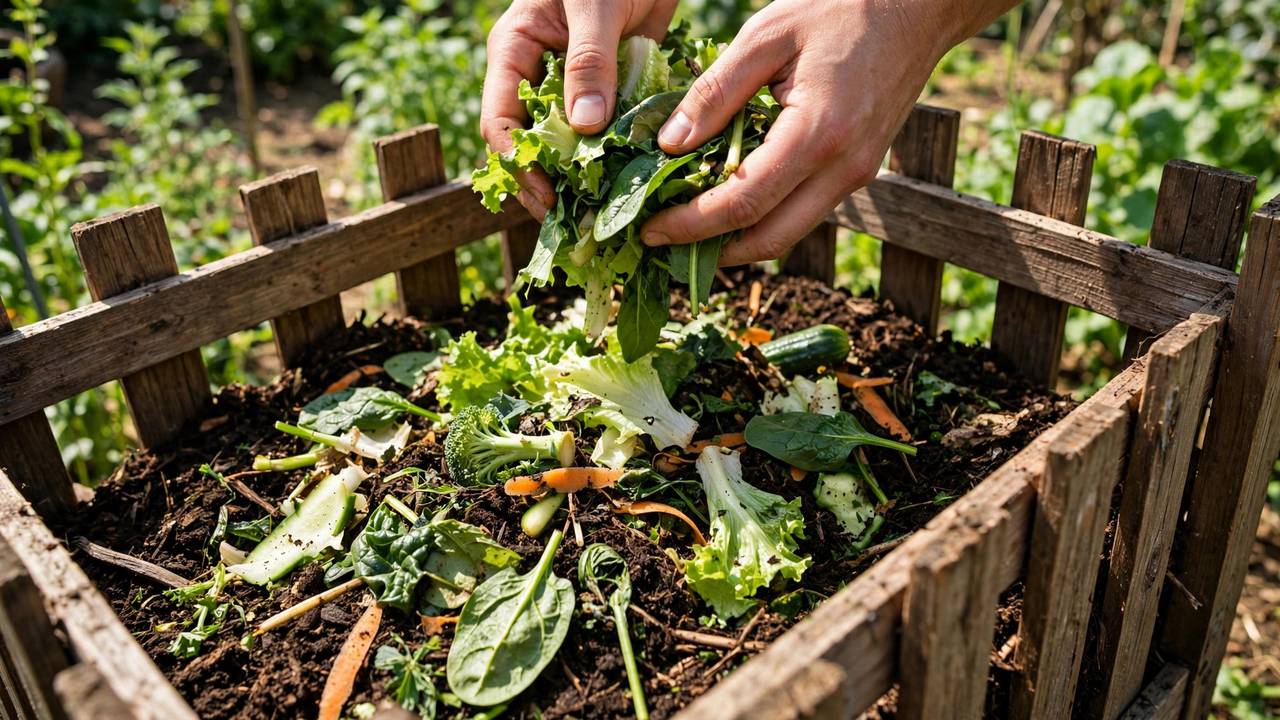
About a third of household waste is compostable — and in landfills it produces methane, a potent greenhouse gas. Home composting is free, takes minutes a week, and gives you rich fertilizer your plants will love. Here is everything a beginner needs.
1. Know What Goes In (and What Does Not)
Compost fruit and vegetable scraps, coffee grounds, eggshells, dry leaves, shredded cardboard, and yard trimmings. Skip meat, dairy, oils, pet waste, and glossy printed paper — they attract pests and smell. When in doubt, leave it out: one wrong item can ruin weeks of progress.
2. Master the Green-Brown Balance
"Greens" (food scraps, grass) provide nitrogen; "browns" (leaves, cardboard) provide carbon. Aim for roughly three parts browns to one part greens by volume. This balance is the whole secret — get it right and your pile stays odor-free and breaks down fast.
3. Pick a Bin That Fits Your Space
Options range from a simple backyard pile to tumbler bins, worm bins (vermicomposting), and countertop electric composters for apartments. Beginners should start with a basic outdoor bin or a worm bin — both are cheap, forgiving, and need almost no maintenance.
4. Turn It and Keep It Damp
Compost needs air and moisture. Turn the pile with a fork every week or two, and keep it as damp as a wrung-out sponge. A neglected pile still composts — it just takes longer; turning simply speeds everything up. Chop scraps smaller to accelerate the process.
5. Troubleshoot Common Problems
Smelly pile? Add more browns and turn it. Not heating up? Add greens and water. Fruit flies? Bury food scraps under browns. Almost every compost problem has the same fix: adjust the green-brown balance and add air.
6. Harvest and Use Your Compost
Finished compost is dark, crumbly, and smells like forest soil — usually ready in 2–6 months. Spread it on garden beds, mix into potting soil, or top-dress your lawn. Homemade compost outperforms most store-bought fertilizers, and it cost you nothing but kitchen scraps.