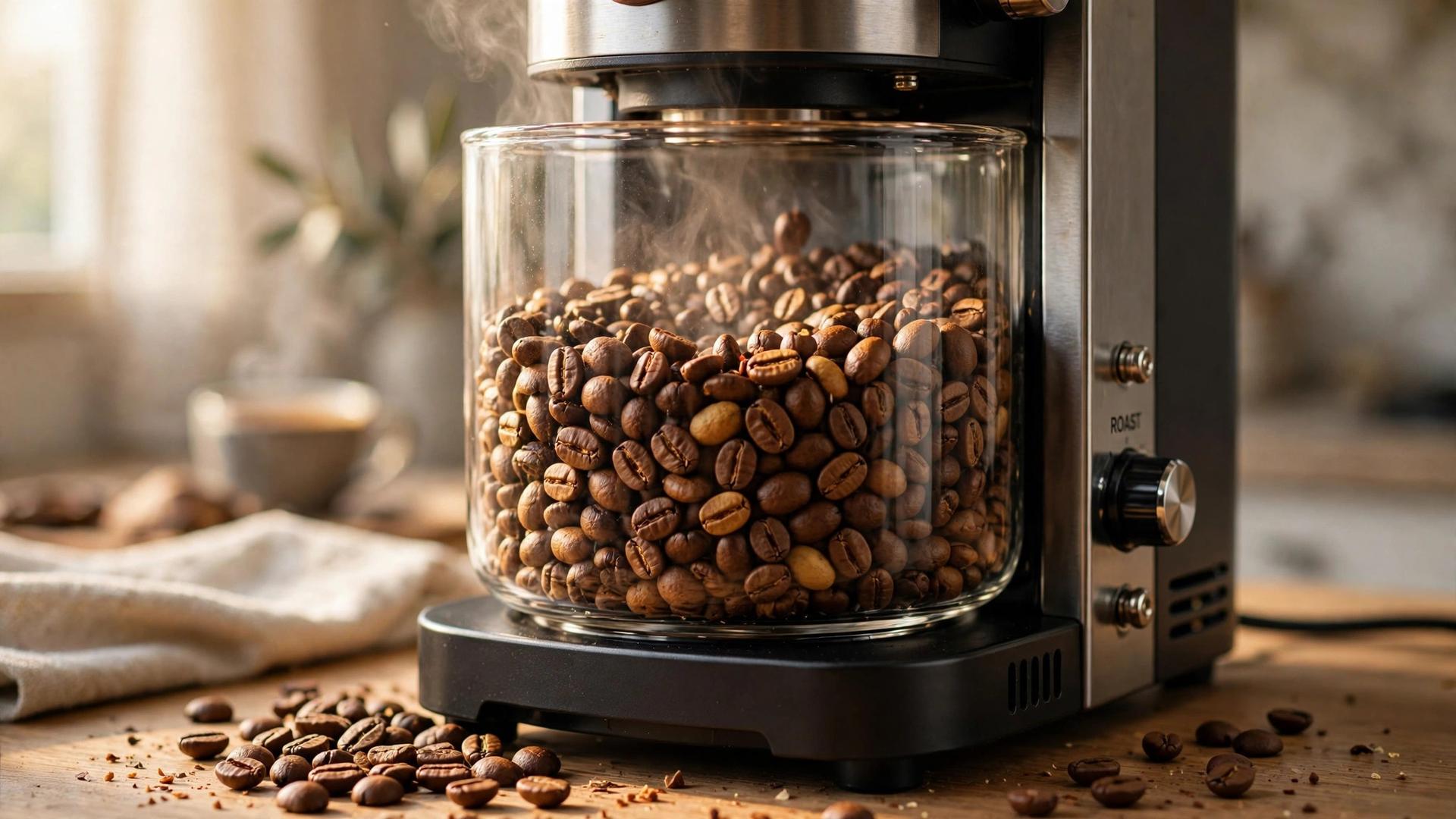
The coffee in your cup was probably roasted weeks ago — and coffee peaks just days after roasting. That's the secret behind home coffee roasting: green coffee beans plus a little heat give you a cup fresher than almost any café sells, at a fraction of the price of specialty bags. In 2026, affordable home roasters have made this easier than ever. Here's your beginner's roadmap.
Start With the Right Gear
You don't need an expensive machine to begin. A popcorn popper (hot-air style) can roast a small batch in about 5 minutes — it's the classic cheap entry point. A step up is a dedicated home roaster like a drum-style countertop unit, which roasts half a pound or more with more even results and less smoke. Either way, buy green beans from a reputable supplier (start with a forgiving Brazilian or Colombian bean), a kitchen scale, and a bowl for cooling.
Understanding Roast Levels
Listen for the "first crack" — an audible popping around 8–10 minutes in — that marks the start of drinkable coffee. Stop right after it for a light roast (bright, fruity, more origin flavor). Go 1–2 minutes further for medium (balanced sweetness). Past the "second crack" you get dark roast (bold, smoky, less acidity). For your first batch, aim for medium — it's the most forgiving zone, and small timing differences won't ruin the cup.
Rest Before You Brew
Fresh off the roast, beans are full of CO₂ and taste flat or sour. Let them rest 12–24 hours (longer for light roasts, up to a few days) in a bag with a one-way valve or a loosely covered jar. After resting, grind right before brewing and use them within 2–3 weeks. This resting step is the most commonly skipped beginner mistake — and the easiest to fix.
Beginner Mistakes to Avoid
First: roast near ventilation — roasting produces smoke and a papery skin called chaff, so work near an open window or a range hood. Second: keep notes — record bean, weight, time, and how it tasted, so good batches are repeatable. Third: don't roast indoors without airflow, especially dark. And finally, start with small batches (80–100g) until your timing is consistent — green beans are cheap, but nobody wants to waste a full bag on learning.
Your first great home-roasted cup is about a week of experimenting away. Once you taste coffee roasted two days ago, store-bought bags will never hit the same. Curious which roaster or green bean to buy first? Ask US AI's free chat for a recommendation matched to your budget.