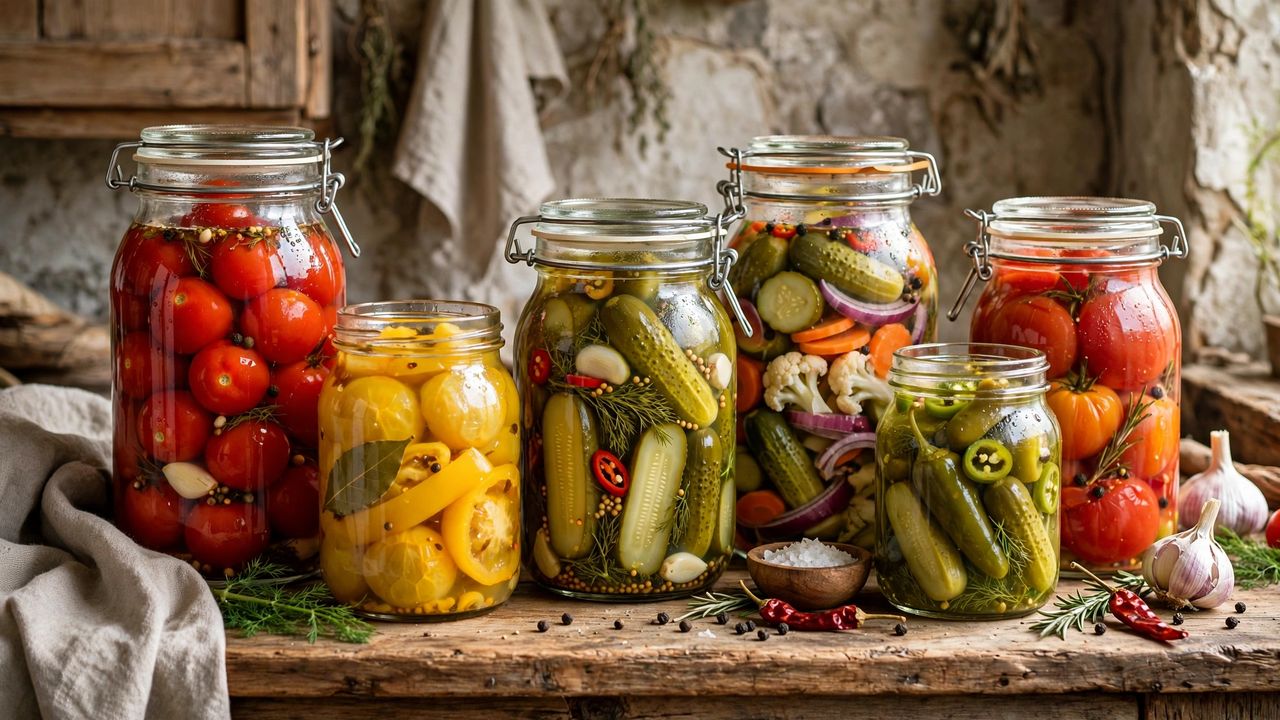
Home canning turns a summer garden glut into winter pantry gold — jams, pickles, tomatoes, and sauces that last for years. It is deeply satisfying and genuinely economical. It is also one of the few kitchen hobbies where cutting corners can be dangerous, so learn the safety rules first and the craft becomes easy.
Water Bath vs Pressure Canning
There are exactly two safe methods, and the food's acidity decides which one. High-acid foods (jams, pickles, most fruits, properly acidified tomatoes) go in a water-bath canner. Low-acid foods (vegetables, meats, soups, beans) must go in a pressure canner, because only pressure reaches the temperature that kills botulism spores. Never water-bath green beans or meat "because grandma did" — that is how people get hurt.
The Equipment You Actually Need
Start with mason jars, new lids (always new — seals are single-use), rings, a jar lifter, a wide funnel, and either a water-bath canner or a pressure canner. That is the whole starter kit. Buy from canning brands or reputable kitchen suppliers; random decorative jars are not heat-rated. A simple kit costs less than a month of store-bought jam.
The Safety Rules That Matter Most
Follow tested recipes from trusted sources (university extensions, the National Center for Home Food Preservation) — never improvise processing times. Never skip or shorten processing times, and never reuse lids. Check every sealed jar after cooling: the lid should be concave and not flex when pressed. Store jars in a cool, dark place, and discard anything with bulging lids, leaks, or off smells — when in doubt, throw it out.
Your First Project: Simple Jam
Strawberry or berry jam is the perfect beginner project: high-acid, forgiving, and processed in a water bath in about ten minutes. You will learn jar filling, headspace, wiping rims, and listening for the satisfying ping of seals forming. Master jam, then move to pickles and tomatoes before ever touching pressure canning.
Canning rewards careful beginners generously. Respect the science, follow tested recipes, and your shelves will hold a year's worth of flavor you made with your own hands.