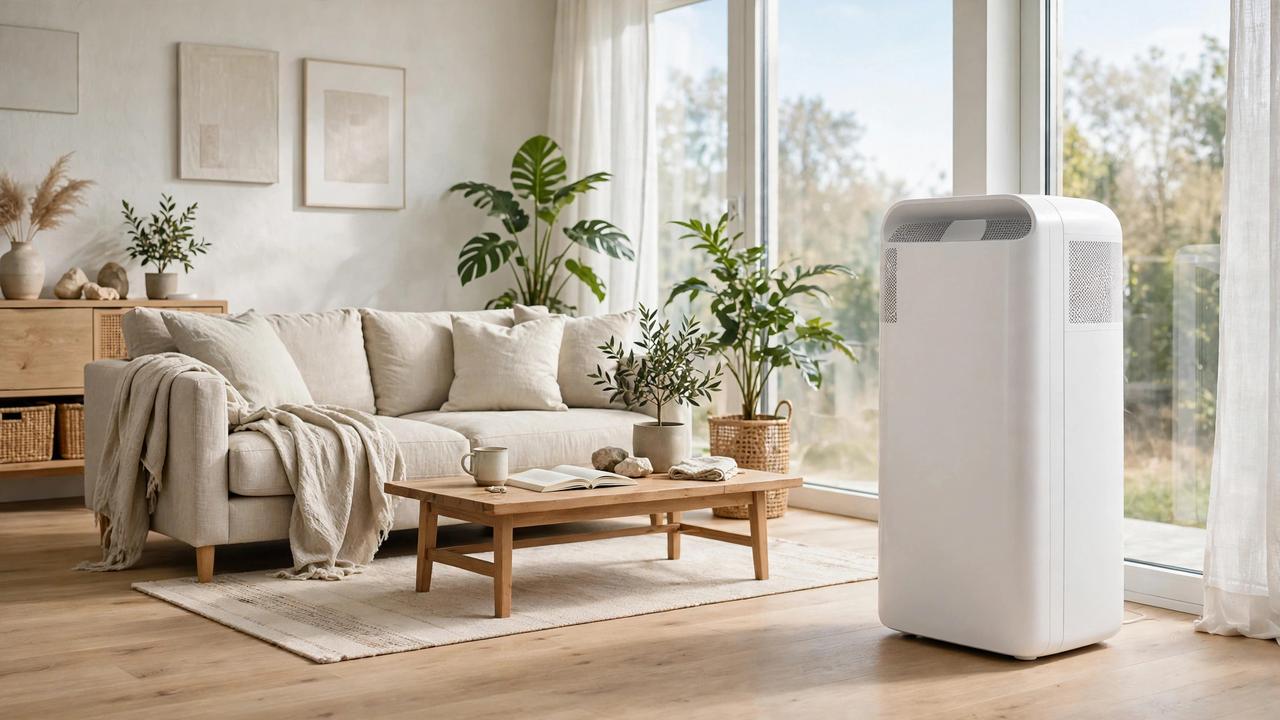
Air purifiers promise cleaner air, fewer allergies, and better sleep — but shopping for one feels like reading a chemistry textbook. HEPA, CADR, activated carbon, ionizers: the jargon piles up fast. The good news is that only a few specs actually determine whether a purifier will work in your home, and once you understand them, choosing becomes straightforward.
HEPA Is the Filter That Matters
True HEPA filters capture 99.97% of particles as small as 0.3 microns — dust, pollen, pet dander, and mold spores. Be wary of labels like 'HEPA-type' or 'HEPA-like', which are marketing terms for weaker filters. If allergies or asthma are your concern, True HEPA is non-negotiable. An activated carbon filter alongside it handles odors, cooking smells, and volatile organic compounds that HEPA alone cannot catch.
CADR and Room Size: The Numbers That Count
CADR (Clean Air Delivery Rate) tells you how much filtered air the machine delivers per minute. The rule of thumb: the CADR number should be at least two-thirds of your room's square footage. A 300 sq ft bedroom needs a CADR of about 200. Oversizing slightly is fine — you can run the purifier on a lower, quieter speed and still get full coverage. An undersized purifier running on max is just a noisy decoration.
Noise, Running Costs and Extras
Check the decibel rating on sleep mode — anything under 30 dB is bedroom-friendly. Filter replacements typically cost $30 to $80 every 6 to 12 months, so factor that into the real price. Smart features like air-quality sensors and auto mode are genuinely useful, while UV lights and ionizers add little for most homes and can produce unwanted ozone.
Placement Tips for Maximum Effect
Put the purifier where you spend the most time, keep doors and windows closed while it runs, and leave a foot of clearance around the intake. Run it on high for an hour before bed, then drop it to sleep mode. Vacuum and dust regularly too — a purifier cleans the air, but it cannot fix a home that keeps generating new dust.