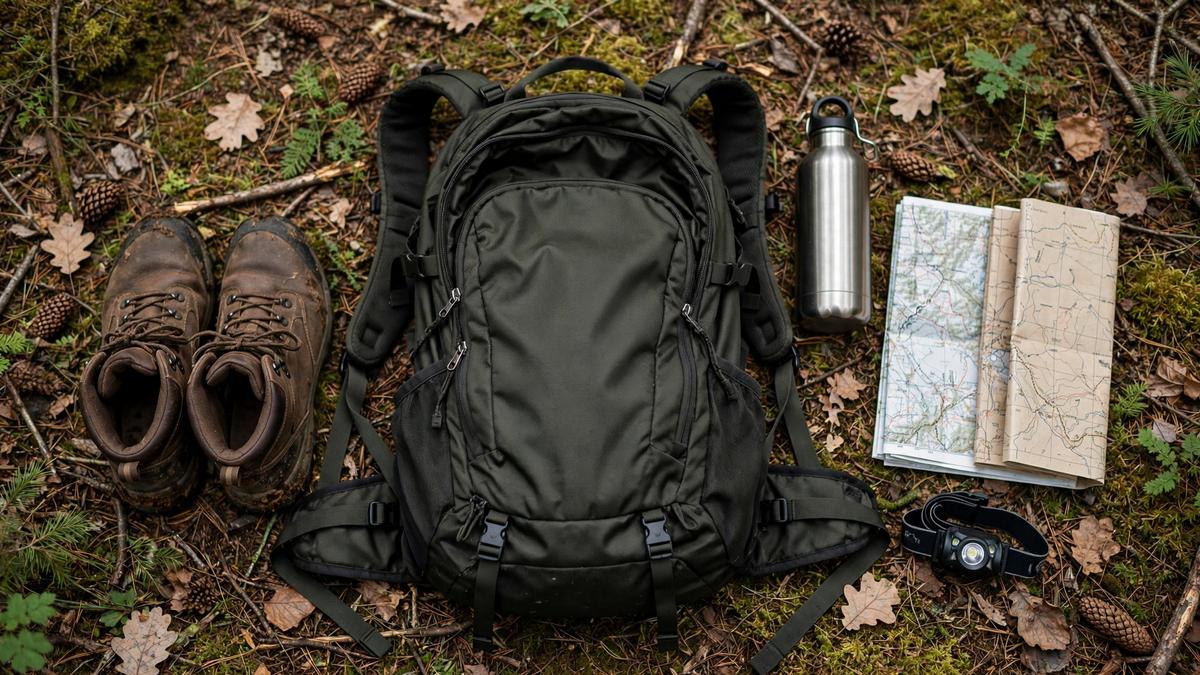
The right gear turns a miserable slog into the best day of your month. Beginners often buy too much or the wrong things — this checklist keeps it simple and affordable. Focus on comfort, safety, and the ten essentials, and you will be ready for any day hike. Pack for the hike you are doing, not the expedition you imagine.
Footwear That Fits
Trail runners or mid-height hiking boots with good grip are the beginner standard. Break them in with short walks before any real hike. Blisters end more hikes than bad weather — fit matters more than brand. Wool socks prevent blisters far better than cotton.
The Right Backpack
A 20 to 30 liter daypack fits water, food, and layers for day hikes. Look for padded hip belts that transfer weight off your shoulders. A pack that fits your torso length beats a bigger, fancier one.
Navigation Tools
Carry a paper map and compass as backup even if you use a phone app. Download offline maps before leaving — trails often have no signal. Your phone dies; a map does not. Learn to read a trail map before you actually need to.
Water and Food
Drink about half a liter per hour of hiking; carry a filter or purification tablets for refills. Pack calorie-dense snacks — nuts, bars, dried fruit — plus one extra meal. Running out of water is the most common beginner emergency.
Dress in Layers
Base layer wicks sweat, mid layer insulates, outer shell blocks wind and rain. Avoid cotton — it stays cold when wet. There is no bad weather, only bad clothing. Always pack a rain jacket, even on sunny forecasts.
Safety Essentials
Headlamp with spare batteries, basic first-aid kit, whistle, sun protection, and a fully charged phone in a waterproof pouch. Tell someone your route and return time. The ten essentials weigh little but can save your life.