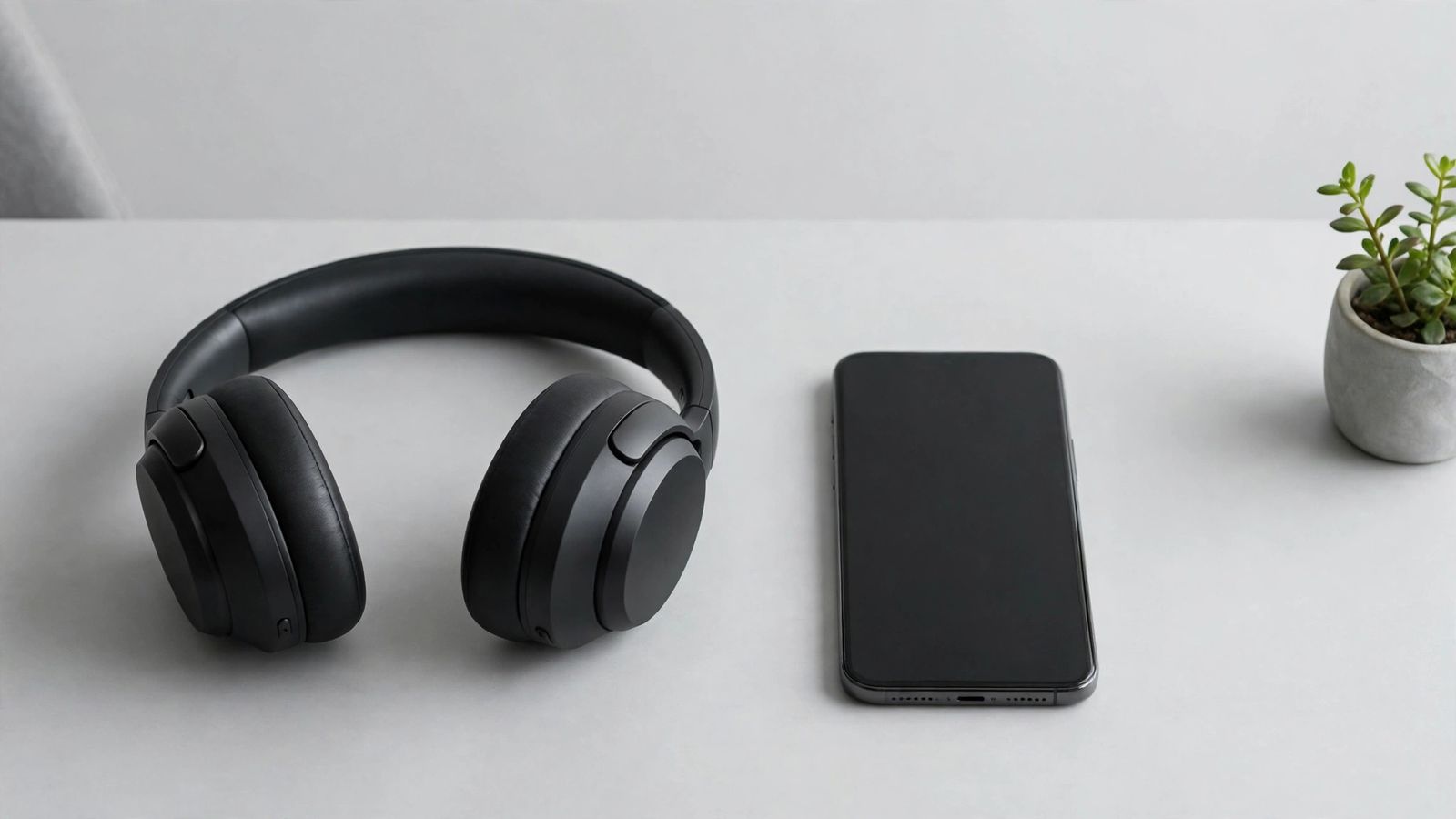
Good noise-cancelling headphones turn a noisy commute or open office into your private studio. But specs sheets are confusing, and expensive does not always mean best for you. Here is what actually matters when buying in 2026.
How ANC Works — and Its Limits
Active noise cancellation uses microphones to listen to outside noise and plays an opposite sound wave that cancels it out. It excels at steady, low-frequency drone — airplane engines, air conditioners, train rumble. It struggles more with sudden sharp sounds like a baby crying. More microphones and better chips generally mean stronger cancellation, but comfort and seal matter just as much.
Comfort and Fit Come First
You will wear these for hours, so clamping force, earcup size, and weight matter more than any spec. Over-ear cups should fully enclose your ears without pressing them; headbands should distribute weight evenly. Glasses wearers should check for pressure on the temples. If you can, try them in a store for at least 15 minutes — first impressions of comfort fade, but pressure headaches do not.
Battery Life and Bluetooth Codecs
Most premium models now offer 30–40 hours with ANC on, which means charging once a week for typical use. Budget picks often deliver 25+ hours too. On codecs: AAC and aptX support mean better sound on iPhones and Androids respectively — fine details, but not dealbreakers. Multipoint connection (two devices at once) is genuinely useful if you switch between phone and laptop.
Budget vs Premium Picks
Under $100, you can get surprisingly good ANC and solid sound — perfect for commuters and students. The $200–$300 tier buys noticeably better comfort and build quality, the sweet spot for most people. Premium $350+ models add the strongest cancellation and extra features like spatial audio. Buy the tier that matches your daily use — and always test the return policy before committing.
Decide your budget, try your top two picks in person, and trust your ears. The right headphones are the ones you forget you are wearing.