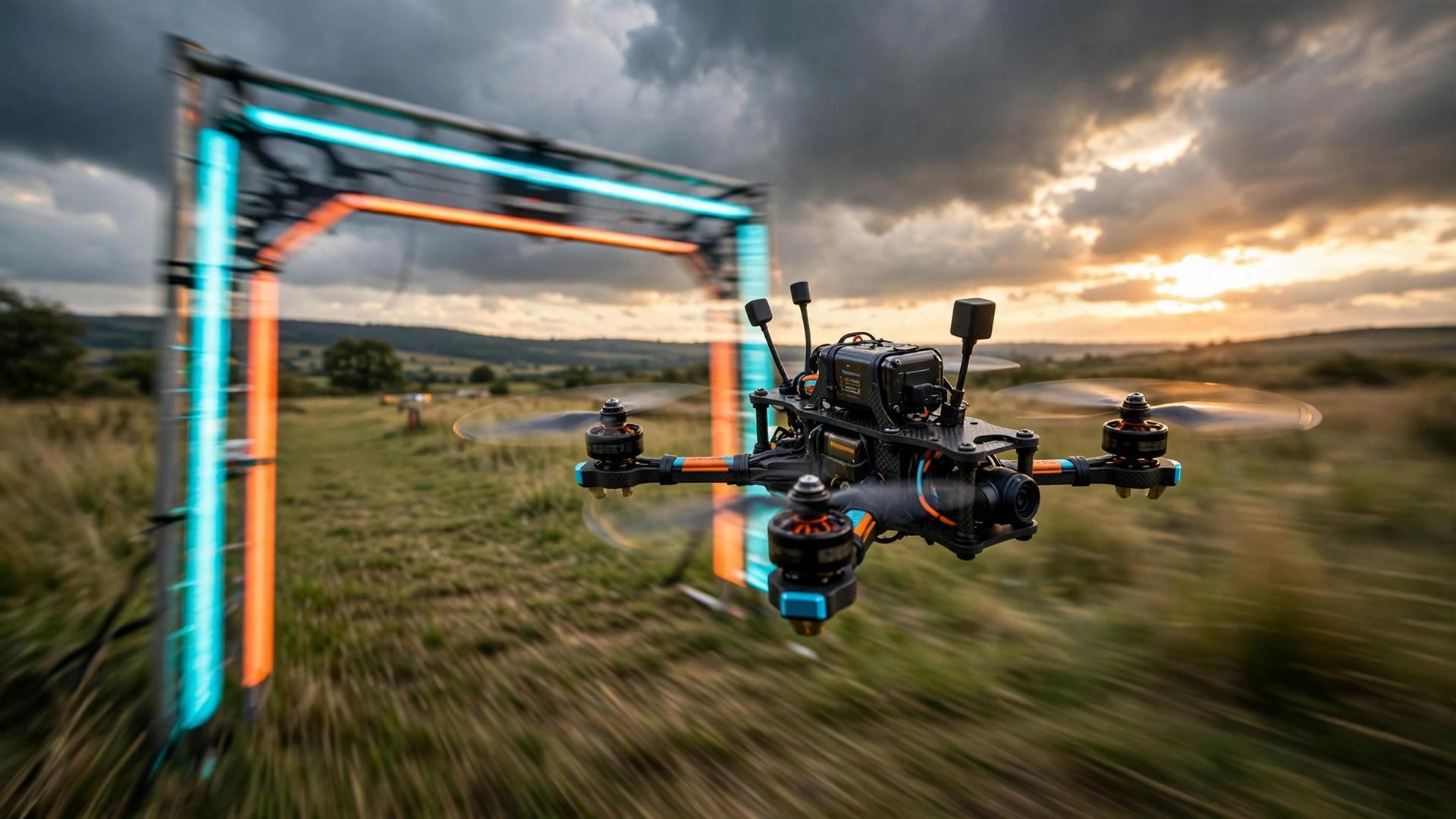
FPV (first-person view) drone racing is the closest most of us will get to flying a fighter jet: you wear goggles, see from the drone's camera, and thread gates at 100+ km/h. It looks impossible — until you learn that every pro started in a simulator, crashing a virtual drone a thousand times for free. Here's the smart path from zero to your first race.
Train in a Simulator First
This is the golden rule: 10–20 hours in a simulator before you fly a real drone. Apps like Velocidrone, Liftoff, and DRL Simulator connect to a real radio controller and teach you the muscle memory — throttle control, turns, and the dreaded yaw-roll coordination — with zero repair bills. New pilots who skip this step crash on day one and quit; pilots who do it fly confidently within weeks. A simulator plus a decent controller costs far less than rebuilding one crashed quad.
The Gear You Actually Need
A racing setup has four parts: quadcopter, FPV goggles, radio controller, and batteries + charger. Beginners should start with a tiny whoop (a small, ducted drone) — they're cheap, nearly indestructible, and safe to fly indoors. For goggles, digital HD systems are now standard in 2026 with much clearer video than old analog gear. Budget around $400–$700 for a complete beginner kit, and buy extra batteries — each one only gives 4–7 minutes of flight.
Practice Drills That Build Real Skill
Once you have a real drone, drill the fundamentals: hover and slow figure-eights first, then flying straight lines and stopping on a mark, then low-altitude laps around two trees. The classic racing drill is a figure-8 around two gates — smooth, not fast. Speed comes from smooth lines, not full throttle. Film your flights (most quads record onboard) and watch your own mistakes — it's the fastest way to improve.
Enter Your First Race
Local chapters of racing leagues run beginner-friendly race days where crashing is expected and everyone's helpful. Check community groups and racing-league sites for events near you. Register for the novice class, bring spare propellers and tools, and treat your first race as a learning day, not a podium attempt. Also check your country's drone registration and airspace rules before flying anywhere — most places require registration for quads above a certain weight.
Every jaw-dropping FPV video you've seen started with someone crashing a simulator a thousand times. Put in the sim hours, start with a tiny whoop, and join your local race scene — that's the whole formula. Questions about controllers, goggles, or local rules? Ask US AI's free chat anytime.