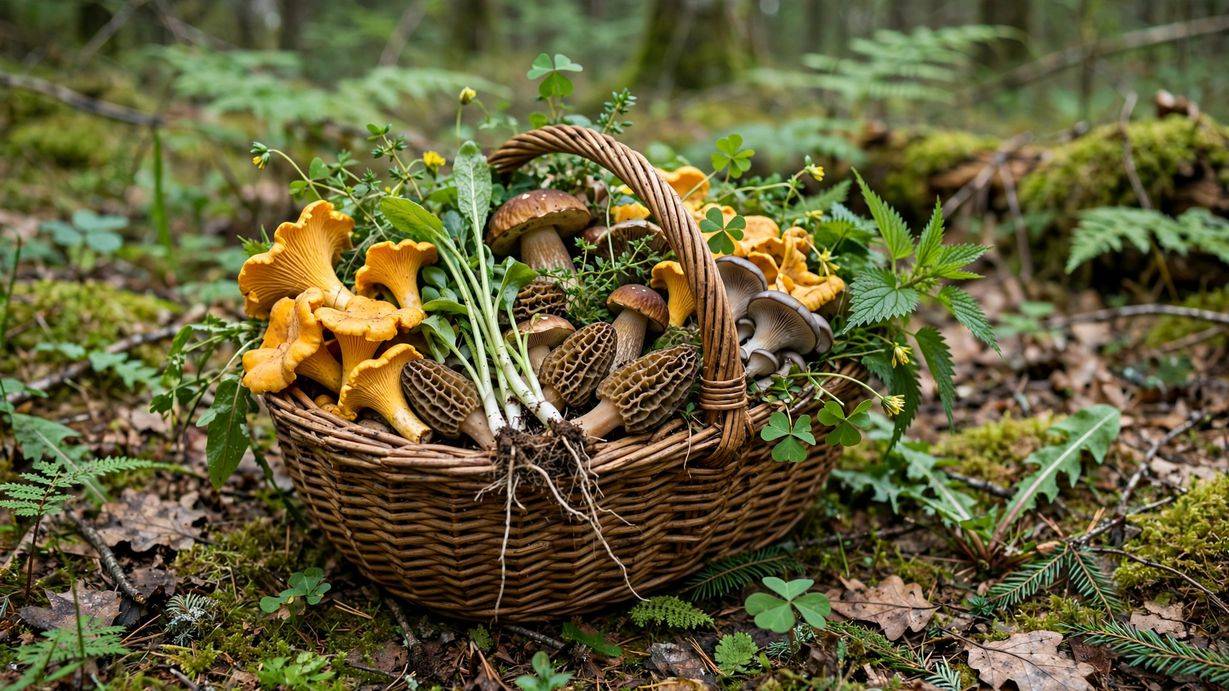
Foraging connects you to nature's pantry — wild greens, berries, and mushrooms free for the picking. The golden rule: never eat anything you cannot identify with 100% certainty; when in doubt, leave it out.
The Three Golden Rules
Positive ID, clean location, and sustainable harvest form the forager's code. Learn one new species thoroughly rather than ten superficially — depth beats breadth in foraging safety. Carry two field guides and cross-reference every find.
Easy Beginner Plants
Dandelions, nettles, wild garlic, and blackberries are abundant, distinctive, and hard to confuse with anything dangerous. Start with plants that have no poisonous lookalikes — dandelion and nettle are ideal first finds. Taste a tiny amount first and wait before eating more.
Mushrooms: Proceed with Respect
Begin with unmistakable species like chicken of the woods, giant puffballs, and chanterelles — and learn their toxic doubles. Never eat a wild mushroom identified from a single photo or app — verify with an expert or mycological society. Spore prints add a crucial identification layer.
Where to Forage (and Where Not To)
Choose areas away from roads, sprayed fields, and industrial sites; always get landowner permission. Pollution concentrates in wild foods — a pristine-looking roadside can hide lead and pesticides. Check local laws: some parks ban foraging entirely.
Harvest Sustainably
Take no more than a third of any patch, never uproot perennials, and leave plenty for wildlife and other foragers. Sustainable harvesting keeps patches productive for decades — over-picking destroys them in one season. Scatter seeds as you go to give back.
Essential Foraging Kit
Bring a basket (not plastic bags, which crush and sweat), a knife, gloves for nettles and thorns, and your field guides. A basket keeps your harvest fresh and lets mushroom spores scatter as you walk — foraging that replants itself. Add a phone for photos and GPS pins of good spots.