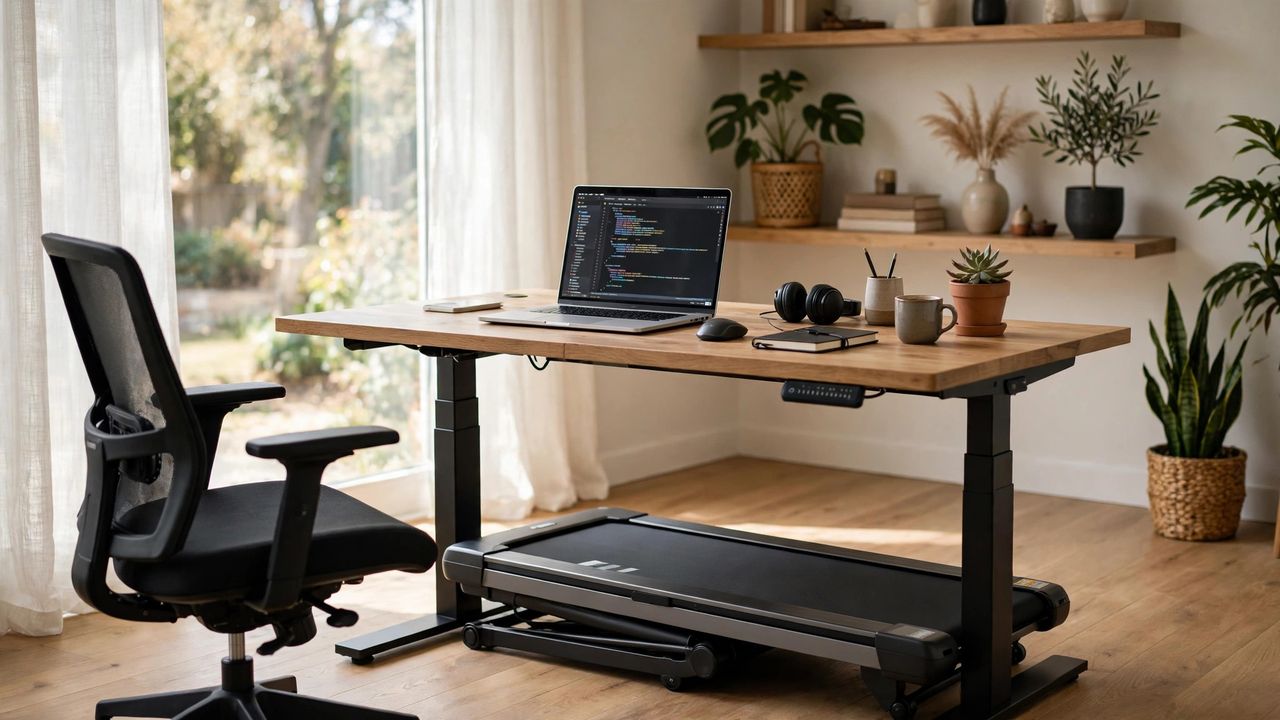
The average desk worker sits ten hours a day — and the fix doesn't require a gym membership. 2026's foldable treadmills slide under standing desks and fold flat against a wall, letting you rack up 8,000–10,000 steps while answering emails. Quiet motors, compact decks, and sub-$500 prices have made walking pads the sleeper fitness trend of the year.
Walking pad vs. full treadmill
Under-desk walking pads top out around 3–4 mph and have no handrails — perfect for work-walking but not for running. Full foldable treadmills with rails reach 8–10 mph and support real workouts, but they're bigger and louder. Buy a walking pad if work comes first; buy a foldable runner if workouts come first. Hybrid models with removable rails split the difference.
What actually matters in 2026
Motor noise under 55 dB won't wreck your Zoom calls. Belt width of at least 16 inches keeps your stride natural. Check the weight capacity (220–300 lbs is typical) and whether it has incline — even 5% incline doubles the workout. App connectivity and remote controls are nice, but a simple LED display survives longer than glitchy software.
Set up your walk-work station
Raise your monitor to eye level and your desk to elbow height so you don't hunch. Start at 1–1.5 mph for typing-heavy work and 2–2.5 mph for calls and reading. If your typing accuracy drops, slow down — the treadmill should never cost you productivity. Wear real walking shoes, not socks; your joints will thank you.
Build the habit that sticks
Start with 30 minutes a day and add ten minutes each week. Schedule walking meetings, use the treadmill during video-off calls, and keep a water bottle on the desk. Most users report better energy and sleep within two weeks — the steps compound quietly.
A foldable treadmill turns dead sitting hours into training hours. Choose the right model, set the desk up properly, and your workday becomes your workout.