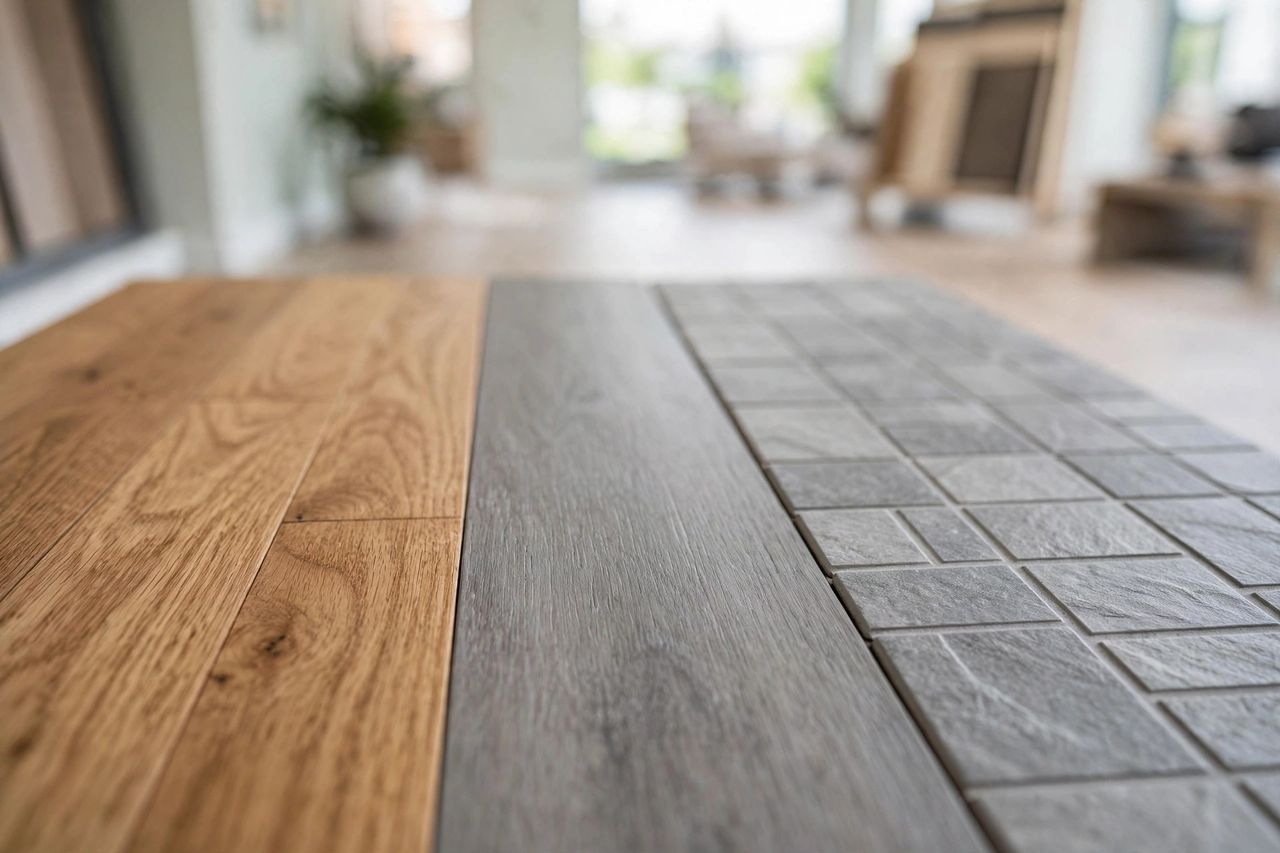
Choosing flooring is a 15-year decision, so the marketing gloss on every sample box matters less than how the material behaves in your actual home. Hardwood, laminate, and luxury vinyl plank (LVP) dominate 2026 renovations — each wins in a different category. This guide compares them honestly on cost, durability, water resistance, and comfort so you can pick with confidence.
1. Hardwood: the premium classic
Solid hardwood adds the most resale value and can be refinished multiple times, lasting 50 plus years. Expect 8 to 15 dollars per square foot installed. The downsides: it scratches under pets, hates standing water, and needs humidity control. Best for living rooms and bedrooms where looks matter most. Engineered hardwood — a real-wood top layer over plywood — gives nearly the same look with better moisture tolerance at a lower price.
2. Laminate: the budget look-alike
Modern laminate (2 to 5 dollars per square foot installed) photographs like wood and shrugs off scratches better than real hardwood — great for kids and rentals. But the photographic top layer can look flat up close, and once water seeps into the core it swells permanently. It is a dry-rooms-only material. Installation is the easiest of the three thanks to click-lock planks.
3. Luxury vinyl plank: the 2026 workhorse
LVP (3 to 7 dollars per square foot installed) is waterproof, softer underfoot, and the most forgiving for DIY installers. High-end rigid-core planks look convincingly like wood in normal light. The trade-off: it cannot be refinished, so deep gouges are permanent, and cheap vinyl can off-gas — look for FloorScore or GREENGUARD certification.
4. How to decide
Match the material to the room: vinyl for kitchens, bathrooms, and basements; hardwood where resale and feel matter; laminate where budget rules and rooms stay dry. Order samples and live with them for a week — walk on them in socks, spill water, check them in morning and evening light. Always buy 10 percent extra for cuts and future repairs, and keep a few spare planks.
There is no single best floor — only the best floor for your home. Price out the full job (material plus underlayment plus transitions plus installation), read the wear-layer warranty, and choose the option you will still be happy with in ten years.