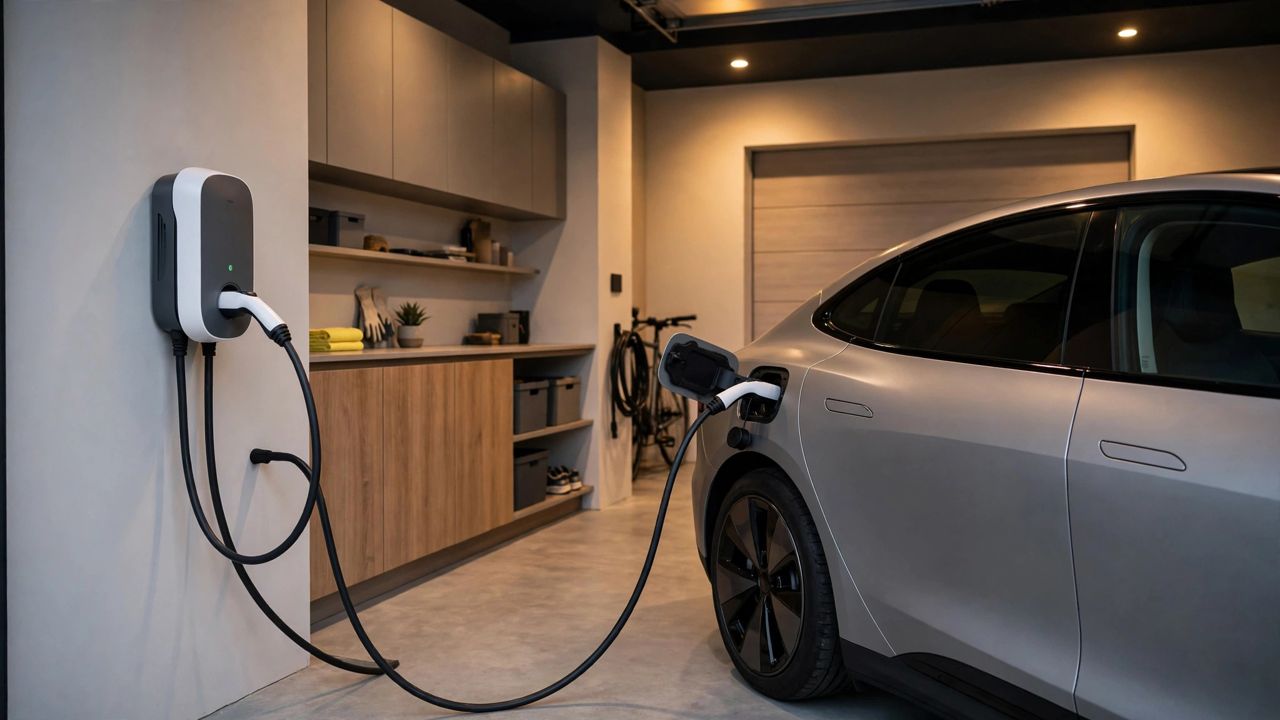
Over 80% of EV charging happens at home — wake up every morning with a full "tank" and never visit a gas station again. Setting up home charging in 2026 is easier and cheaper than most buyers expect. Here's the complete picture.
Level 1 vs Level 2: What You Actually Need
Level 1 plugs into any regular outlet and adds 3–5 miles of range per hour — fine if you drive under 30 miles a day. Level 2 uses a 240V circuit (like a dryer outlet) and adds 25–40 miles per hour, filling most cars overnight. Most EV owners end up with Level 2, but try Level 1 first — you might not need the upgrade.
Installation Costs, Honestly
A Level 2 charger unit costs $300–$700. Installation typically runs $400–$1,200 if your electrical panel has spare capacity and the garage is nearby — the electrician adds a 240V breaker and outlet. Costs spike ($1,500–$3,000) if your panel needs upgrading or the run is long. Get 2–3 quotes; prices vary wildly.
Cut Your Charging Bill
Ask your utility about time-of-use rates — overnight electricity can cost half the daytime price. Schedule charging for off-peak hours through your car's app. Many utilities and local governments still offer rebates or tax credits for chargers and installation in 2026, so check before you buy.
Choosing the Right Charger
Match the charger's amperage to your car's onboard charger — a 48-amp charger is overkill if your car accepts 32. Smart chargers with apps let you schedule sessions and track costs; "dumb" chargers are cheaper and just work. Look for UL or ETL safety certification and a cable long enough to reach your parking spot.
Home charging is the single biggest EV convenience win. A few hundred dollars and one electrician visit buys you a decade of never thinking about fuel again.