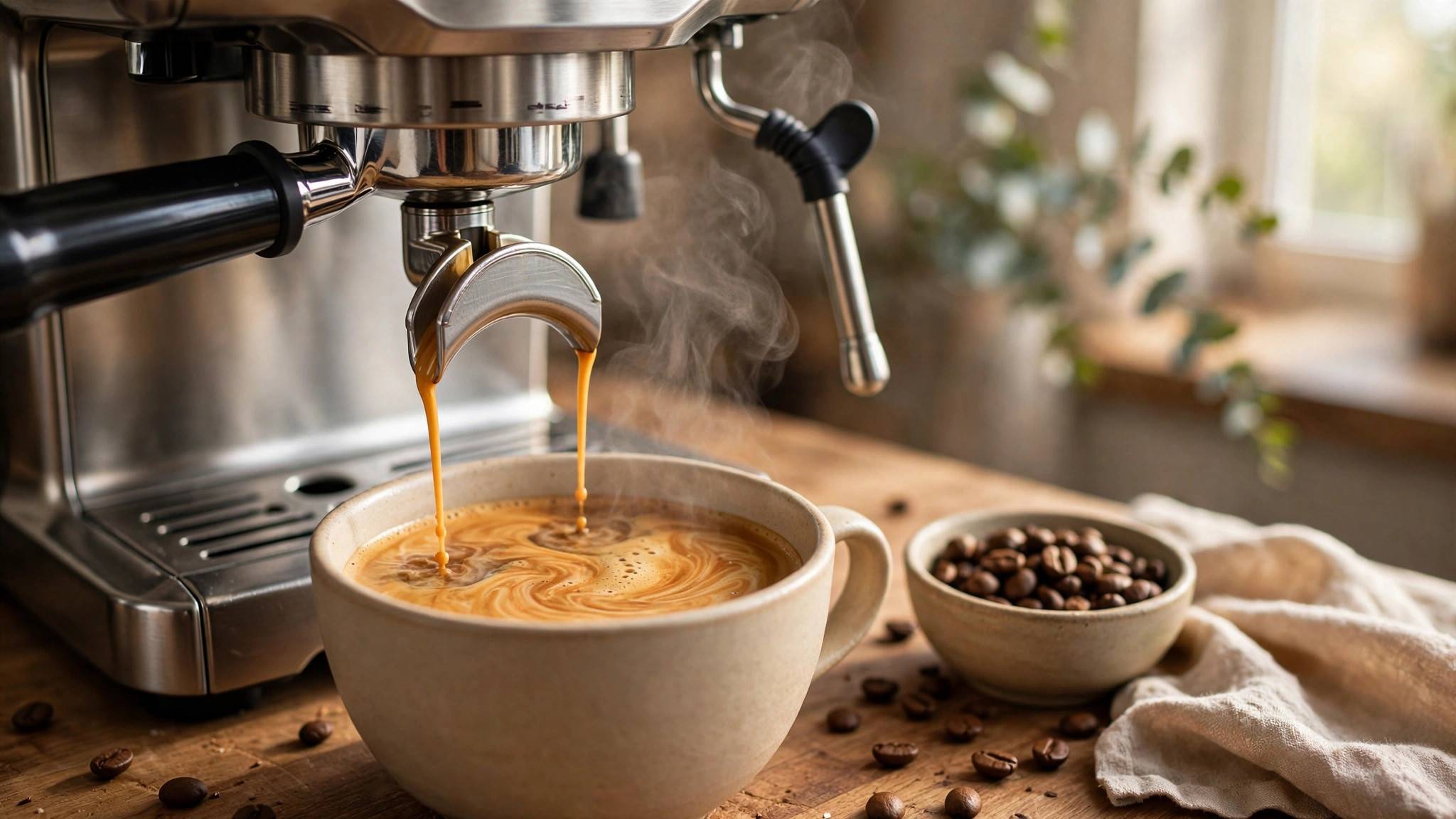
That daily café habit adds up fast — but the real reason to make espresso at home is the ritual. In 2026, entry-level machines have never been better, and a few weeks of practice will have you pulling shots that rival your favorite coffee shop. Here's what beginners need to know before brewing.
Buy the right machine, not the biggest
Beginners should look for a machine with a pressurized portafilter, a decent steam wand for milk, and a solid heater — you don't need a dual boiler yet. Budget around what you'd spend on three months of café coffee. Skip the fanciest machine and spend the difference on a good grinder — the grinder improves your cup more than the machine does.
The grinder is everything
Espresso needs a fine, consistent grind, and stale pre-ground coffee kills flavor. A burr grinder (not blade) lets you dial in the exact size, and fresh beans make the biggest difference of all. Fresh beans plus a burr grinder account for most of espresso quality — the machine just adds pressure. Buy beans roasted within the last month.
Learn the golden ratio
Start with 18 grams of ground coffee to yield about 36 grams of liquid espresso in 25–30 seconds — the classic 1:2 ratio. If it tastes sour, grind finer or pull longer; if bitter, grind coarser or pull shorter. Change only one variable at a time, and write down what works — espresso is a science experiment you get to drink.
Master milk, not latte art (yet)
Great cappuccinos need silky steamed milk, not stiff foam. Purge the steam wand first, submerge it just below the surface for a hissing sound, then deeper to heat and whirl. Textured milk, not pretty art, is the goal — pourable, glossy milk transforms every drink. Art comes naturally once the texture is right.
Home espresso is a hobby that pays for itself in flavor and savings. Get a decent machine, a good grinder, fresh beans, and practice daily — your 2026 mornings will never taste the same.