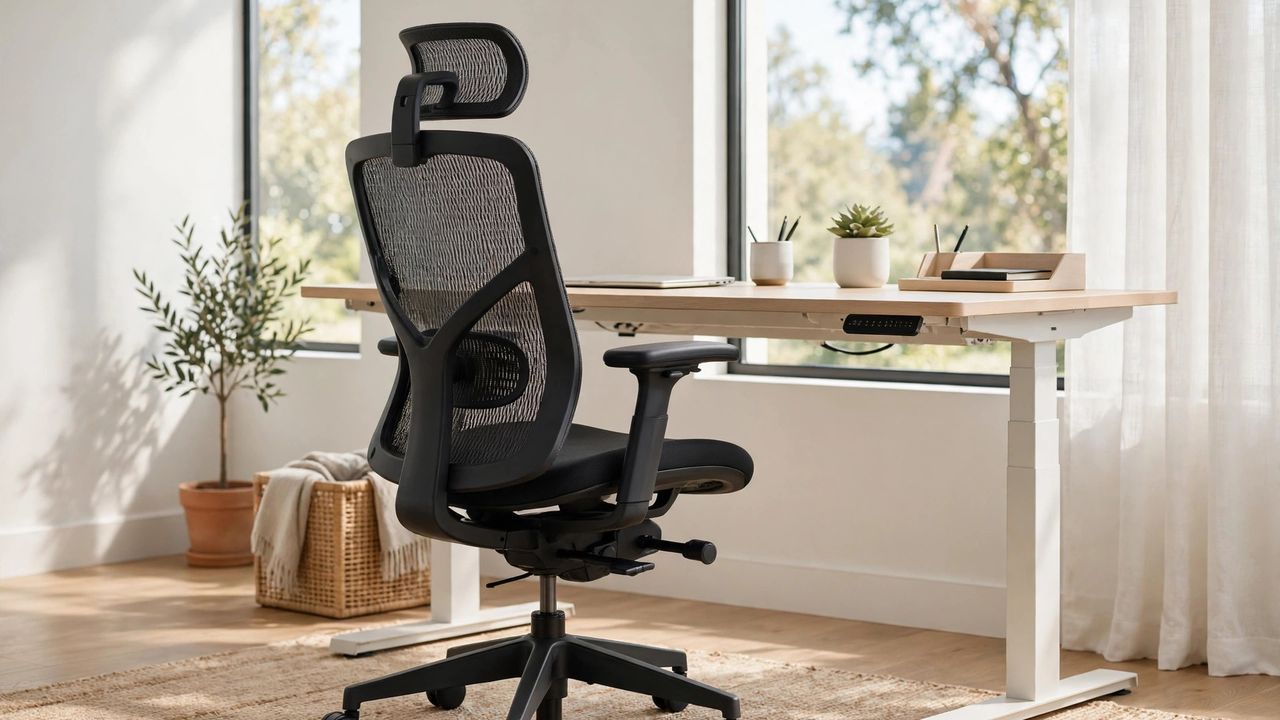
If you sit for hours every day, your chair is a health decision, not a furniture decision. Poor seating quietly creates back pain, neck strain, and fatigue — while a good ergonomic chair supports your body so you can work comfortably for years.
Why Ergonomics Matter
The human body wasn't designed for eight hours of sitting, but a well-designed chair distributes pressure and keeps your spine in its natural S-curve. Cheap chairs force your muscles to hold you up all day — that constant low-level effort is what turns into chronic lower-back and shoulder pain. Think of it this way: you spend more time in your chair than in your bed — yet most people invest far more in their mattress.
Features Worth Paying For
Adjustable lumbar support is non-negotiable — it must reach YOUR lower back, not an average person's. Seat depth adjustment keeps pressure off the backs of your thighs. Armrests that move in multiple directions (3D/4D) support your elbows without hunching your shoulders. A synchro-tilt mechanism keeps your feet on the floor as you recline. And breathable mesh backs prevent the sweaty-back problem of long summer sessions. Skip gimmicks like massage motors — adjustability is what protects your spine.
How to Choose the Right One
Match the chair to your body: check weight and height ratings, and tall users should prioritize high-back models. Test before buying if possible — sit for at least 15 minutes, since discomfort often appears late. Set a realistic budget: decent ergonomic chairs start around $150–$250, while premium models run $500+. Check the warranty — a 5-year warranty signals the manufacturer trusts the build. Read long-term reviews (6+ months) because cheap chairs feel fine on day one and fall apart by month six.
Setup Tips After You Buy
The chair only works if adjusted correctly. Set seat height so your feet rest flat on the floor with knees at roughly 90 degrees. Position lumbar support against your lower back's curve, not your mid-back. Adjust armrests so shoulders stay relaxed — not shrugged. Keep the screen at eye level so your neck stays neutral. And stand up and move every hour — even the world's best chair can't replace movement.
Final thought: buy the most adjustable chair your budget allows, then spend 20 minutes setting it up properly. Your back will quietly thank you every single day for years.