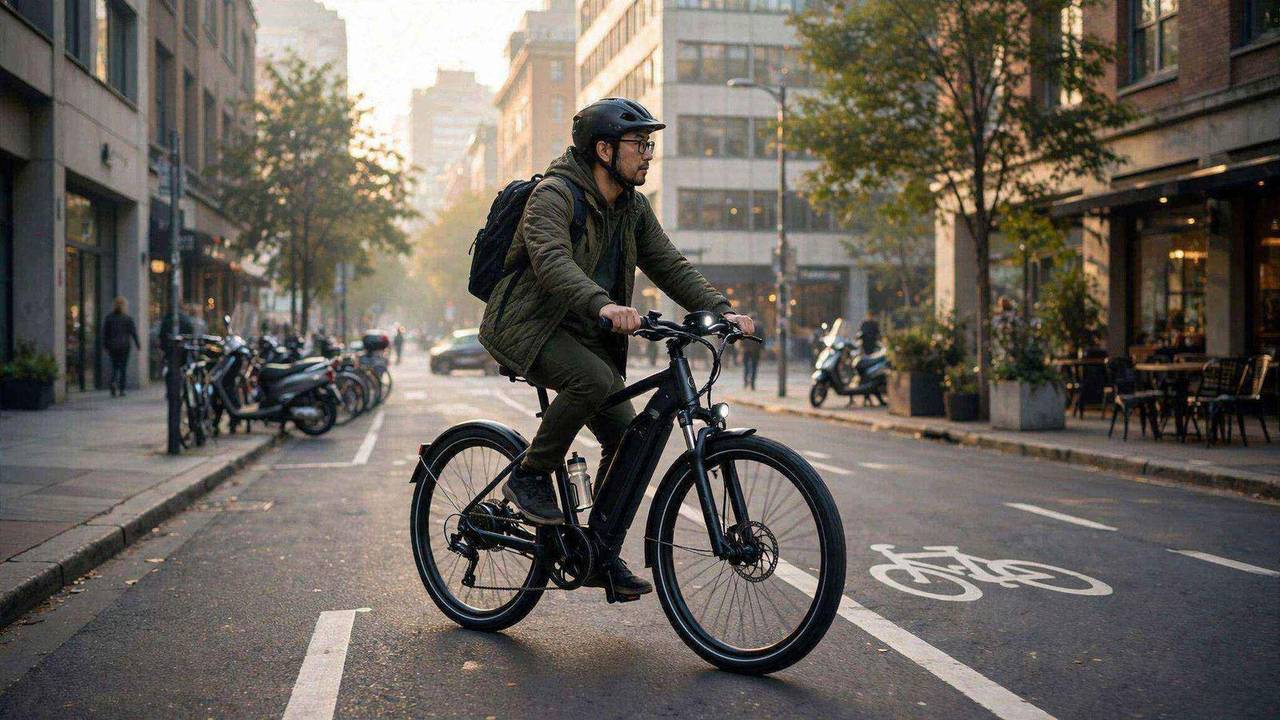
An electric bike turns a sweaty 45-minute commute into a breezy 25-minute ride — no parking fees, no gas, no gym membership required. In 2026, e-bikes are lighter, cheaper, and more reliable than ever, with solid commuters starting well under $1,500. Here is how to choose one you will actually ride every day.
How Much Bike Do You Need?
Be honest about your route: distance, hills, and road quality decide everything. Flat commutes under 10 miles do fine with a 250–350W hub motor; hilly routes deserve a mid-drive motor with more torque. If you will carry groceries or a kid, look at cargo-ready frames. Buying more bike than your route needs just means more weight to haul upstairs.
Battery and Range Reality
Manufacturers advertise optimistic ranges measured with a light rider on flat ground. In real life, expect 60–70% of the claimed range — less in cold weather, on hills, or at top assist levels. A 500Wh battery comfortably covers most 15–20 mile round-trip commutes. Removable batteries are a huge plus if you park where there is no outlet.
Motor Types Explained Simply
Hub motors (in the wheel) are affordable, quiet, and fine for flat cities. Mid-drive motors (at the pedals) climb hills beautifully and feel more natural, but cost more and wear chains faster. Torque sensors — which measure how hard you pedal — give a smooth "superpower legs" feel; cheap cadence sensors feel more like an on/off moped. Test-ride both if you can.
The Real Cost Math
A $1,200 e-bike ridden 200 days a year costs about $6 per riding day in year one — then nearly nothing, since charging costs pennies. Compare that to car payments, insurance, gas, and parking, and most commuters break even within months. Budget $100–200 yearly for maintenance: brake pads, tires, and one professional tune-up.
Test-ride before you buy, prioritize fit and comfort over specs, and start with the assist level that makes you smile. The best e-bike is not the most powerful — it is the one that replaces your car keys on the hook by the door.