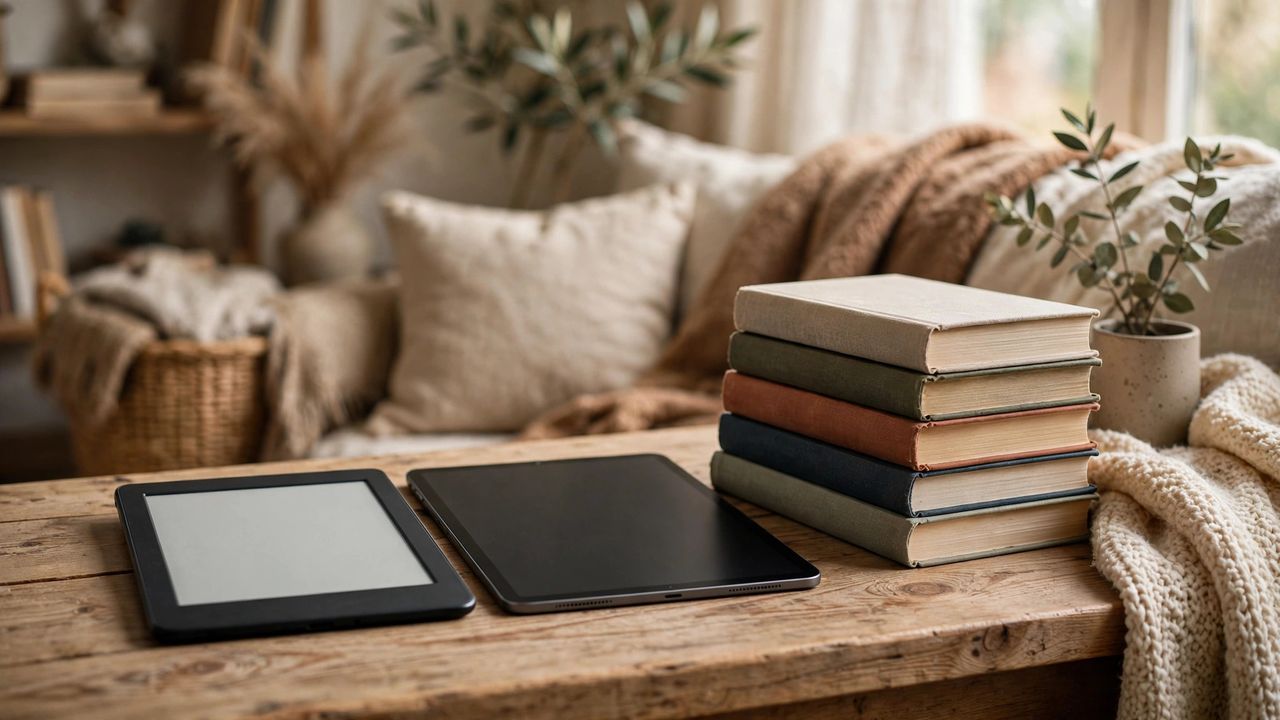
Tablets do everything, so why buy a dedicated e-reader? Because reading for hours on a tablet strains eyes, drains battery, and invites distractions. In 2026 the choice is clearer than ever: e-readers win for serious readers, tablets win for everything else. Here is how to decide.
E-ink is easier on your eyes
E-readers use e-ink displays that reflect light like paper instead of shining it into your eyes. You can read in bright sunlight with zero glare, and there is no blue light to disrupt sleep. Battery lasts weeks, not hours, so the device is always ready. For long reading sessions, e-ink feels like paper and tablets feel like staring at a lamp. If you read more than an hour daily, this difference alone justifies the purchase.
Distraction-free reading builds the habit
A tablet offers books alongside social media, games, and notifications — and willpower loses that fight daily. E-readers do one thing, which is exactly their superpower. Readers consistently finish more books on dedicated devices because nothing competes for attention. The lighter weight also matters during long sessions in bed. The device that does less helps you read more: focus is a feature, not a limitation.
Tablets win for colorful and interactive content
Magazines, comics, textbooks with diagrams, and PDFs look far better on a tablet's color screen. Note-taking with a stylus, quick web lookups, and reading while traveling with one device all favor tablets. If your reading is mostly articles, documents, and illustrated content, a tablet is the practical choice. Match the device to your content: colorful and interactive belongs on a tablet.
Consider cost, library, and waterproofing
E-readers cost less than tablets and survive drops and beach trips better. Check which bookstore ecosystem you prefer before buying, because switching libraries later is annoying. Waterproof models make bath and pool reading worry-free. Many readers own both: a cheap e-reader for novels and a tablet they already have for everything else. Buy for the reading you actually do, not the reading you imagine doing.
Track your reading for two weeks: mostly novels in bed means e-reader, mostly articles and PDFs at a desk means tablet. The right answer is the one that matches your real habits.