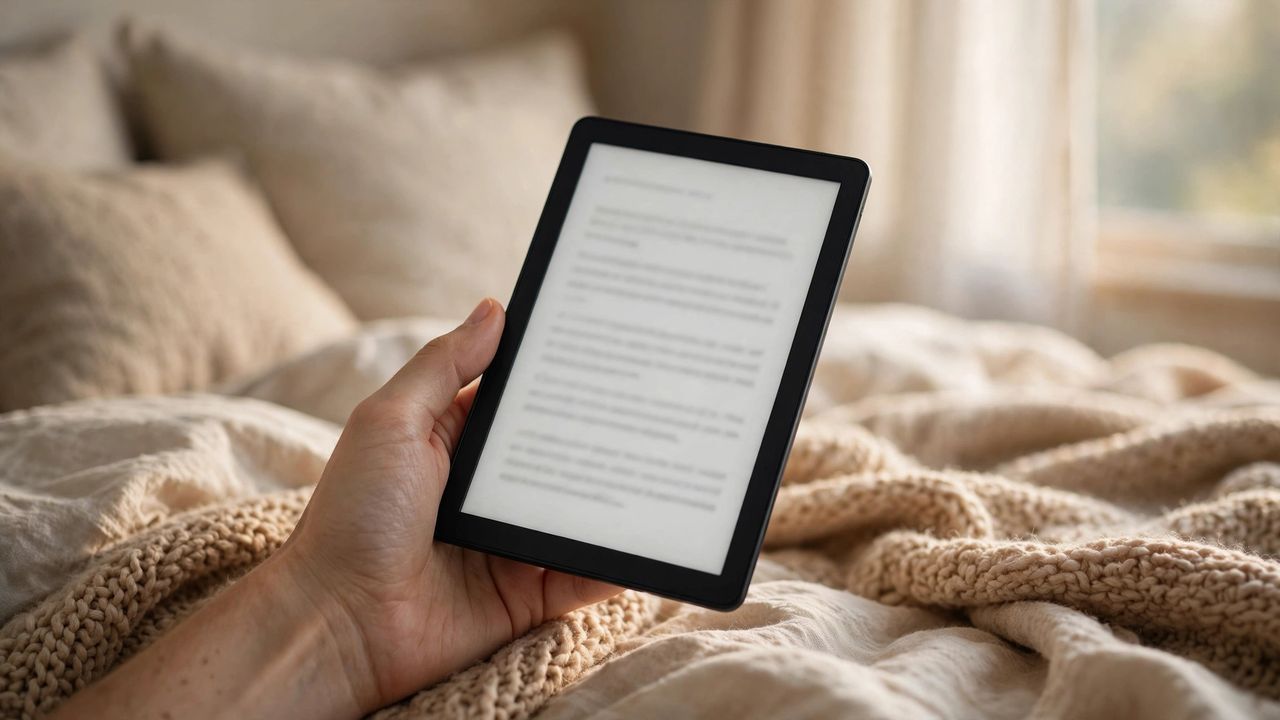
An e-reader can turn a reluctant reader into a book-devouring machine — if you buy the right one. The market is full of spec-sheet noise: more pixels, more storage, more everything. But only a handful of features actually change your reading life. Here are the six that matter.
Screen quality and lighting
E-ink resolution affects text sharpness, but anything at 300 ppi is plenty. What matters more is the front light: even illumination and warm color temperature for night reading. Warm light is the feature you will use every single night — prioritize it over a slightly sharper screen you will never notice. Test the light at low brightness; cheap lights look blotchy.
Size, weight, and one-handed reading
A six-inch reader disappears into a jacket pocket; a seven-to-eight-inch screen fits more text and PDFs but needs two hands. Weight matters more than you think — you will hold this for hours. Choose the size for where you actually read: commute and bed favor small and light, desk and couch can go bigger. Physical page-turn buttons are a delight if you read in bed.
Waterproofing and battery
Waterproofing turns the bath and the beach into reading spots without anxiety — worth it if you read near water. Battery life is measured in weeks on all modern readers, so do not overthink it. Waterproofing is cheap insurance for your most committed reading habit; a reader killed by a splash is a lesson you pay for once. USB-C charging is now standard on good models.
Ecosystem and file freedom
Some readers lock you into one bookstore; others happily open library books and your own files. Check library borrowing support and which formats it reads before you commit. Your book collection should outlive your device — pick the reader that respects your files, not the one that traps them. Library integration alone can save hundreds a year.
The best e-reader is the one that is always within reach. Nail the screen light, the size, and the ecosystem — and you will wonder how you ever read on a phone.