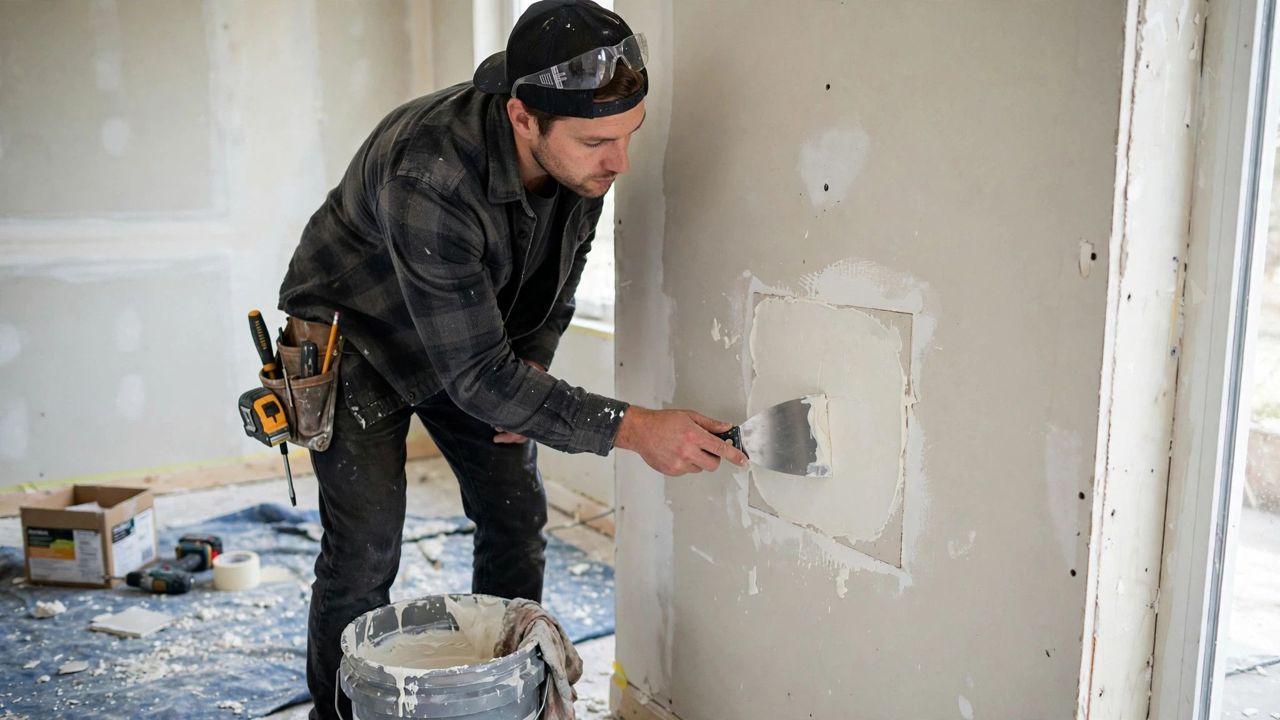
Doorknobs, moving furniture, and settling houses leave drywall full of dents, cracks, and the occasional fist-sized hole. Hiring a handyman for every ding gets expensive fast — but drywall is one of the most forgiving DIY materials there is. With basic tools and the right technique, your patch can be genuinely invisible. Here is the complete 2026 beginner's method, from tiny nail holes to big cutouts.
Small Holes: The 5-Minute Fix
Nail and screw holes need only spackling paste, a putty knife, and sandpaper. Push paste into the hole with the knife, scrape flush with the wall, let it dry fully, then sand smooth with 120-grit paper. Larger dents get the same treatment, possibly with a second thin coat after the first shrinks. Let spackle dry completely — usually one hour — before sanding; wet spackle gouges and ruins the smooth finish.
Medium Holes: Self-Adhesive Patches
For holes between one and six inches, self-adhesive mesh patches are a beginner's best friend. Clean loose debris around the hole, stick the mesh patch over it, and spread joint compound over the mesh with a 6-inch knife, feathering the edges wide. Apply two to three thin coats, sanding lightly between each. Feather each coat of compound 2–3 inches wider than the last — the wide, thin blend is what makes patches disappear.
Big Holes: Cut and Patch Properly
Holes larger than six inches need a real drywall patch. Cut the damaged area into a clean rectangle, cut a replacement piece to fit, and screw it to a wood backing strip placed behind the opening. Apply paper tape over the seams, embed it in joint compound, and build up thin feathered coats. Sand, prime, and paint. Always prime patched areas before painting — raw compound absorbs paint differently and will flash through as a visible dull spot.
Cracks and Texture Matching
Hairline cracks from settling get a V-groove scrape, tape, and compound like small patches. For textured walls, buy a matching texture spray can and practice on cardboard first — orange peel and knockdown textures are forgiving if you keep the can moving. Paint the whole wall section, not just the patch, to blend sheen. Match your paint sheen exactly — even the right color looks wrong in flat versus eggshell under room lighting.
Drywall repair rewards patience more than skill: thin coats, full drying, and careful sanding. Master this once and you will never pay for wall repairs again.