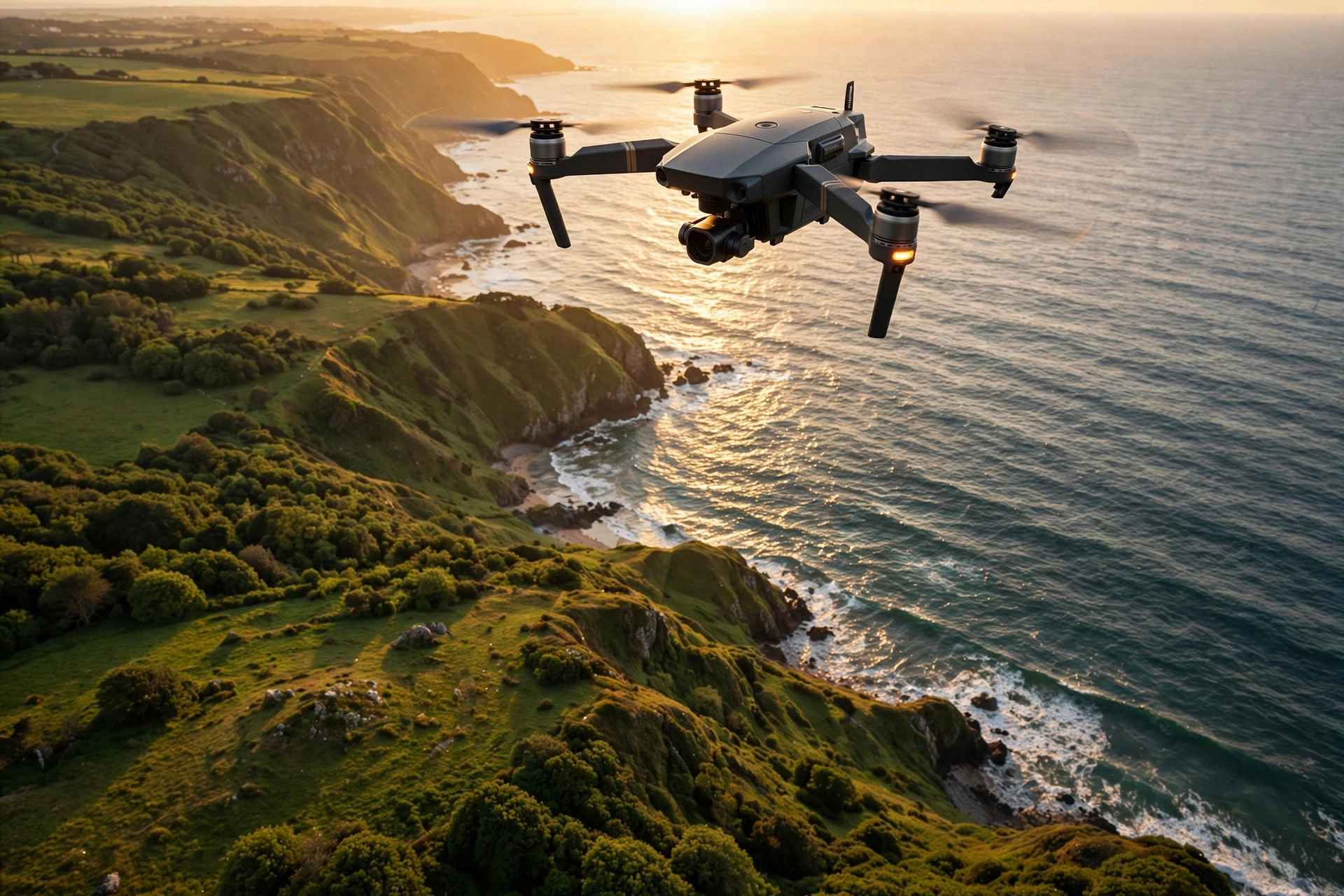
A drone turns every landscape into a brand-new angle nobody else has — and in 2026, beginner-friendly models with obstacle sensors and 4K cameras cost less than a mid-range phone. Here is how to start safely and shoot shots you will be proud of.
Picking Your First Drone
Start with a sub-250g drone. In most countries, lighter drones face far fewer registration and licensing rules, so you spend your time flying, not filling forms. Look for GPS hold, automatic return-to-home, and at least 25 minutes of flight time. Buy two extra batteries — flight time vanishes fast when you are learning. Skip fancy zoom features at first; a reliable basic camera beats a shaky advanced one.
Flight Safety: Non-Negotiable Rules
Learn your local drone laws before your first flight. Common rules everywhere: stay below 120m (400ft), keep the drone in sight, and never fly near airports, crowds, or emergency sites. Check a no-fly-zone map app before every session. Practice in a big empty field with zero wind — master take-off, hovering, and landing before touching camera controls. Never fly over people or roads, and always keep spare battery margin for return-to-home.
Camera Settings That Matter
Shoot in RAW or the highest quality photo mode — aerial shots often need exposure recovery. Set ISO as low as possible (100–200) for clean skies, and lock white balance to daylight so your panoramas match. Use AEB (auto exposure bracketing) for sunrise shots; you can merge them later. Turn off digital zoom — fly closer instead. A circular polarizer is impractical on tiny drones, so underexpose slightly and lift shadows in editing.
Composition From the Sky
Altitude is your new zoom. Start low (10–20m) for dramatic near-ground shots, then climb for patterns. Top-down shots of roads, rivers, and coastlines turn ordinary geography into abstract art. Use leading lines — paths and shorelines pull the eye through the frame. Golden hour doubles aerial drama: long shadows reveal texture invisible at noon. Finally, fly slow — the biggest beginner giveaway is a jerky, rushed clip.
Smart start: one empty field, three batteries, and twenty practice flights before your first "real" shoot. The sky is patient — learn the controls, then chase the light.